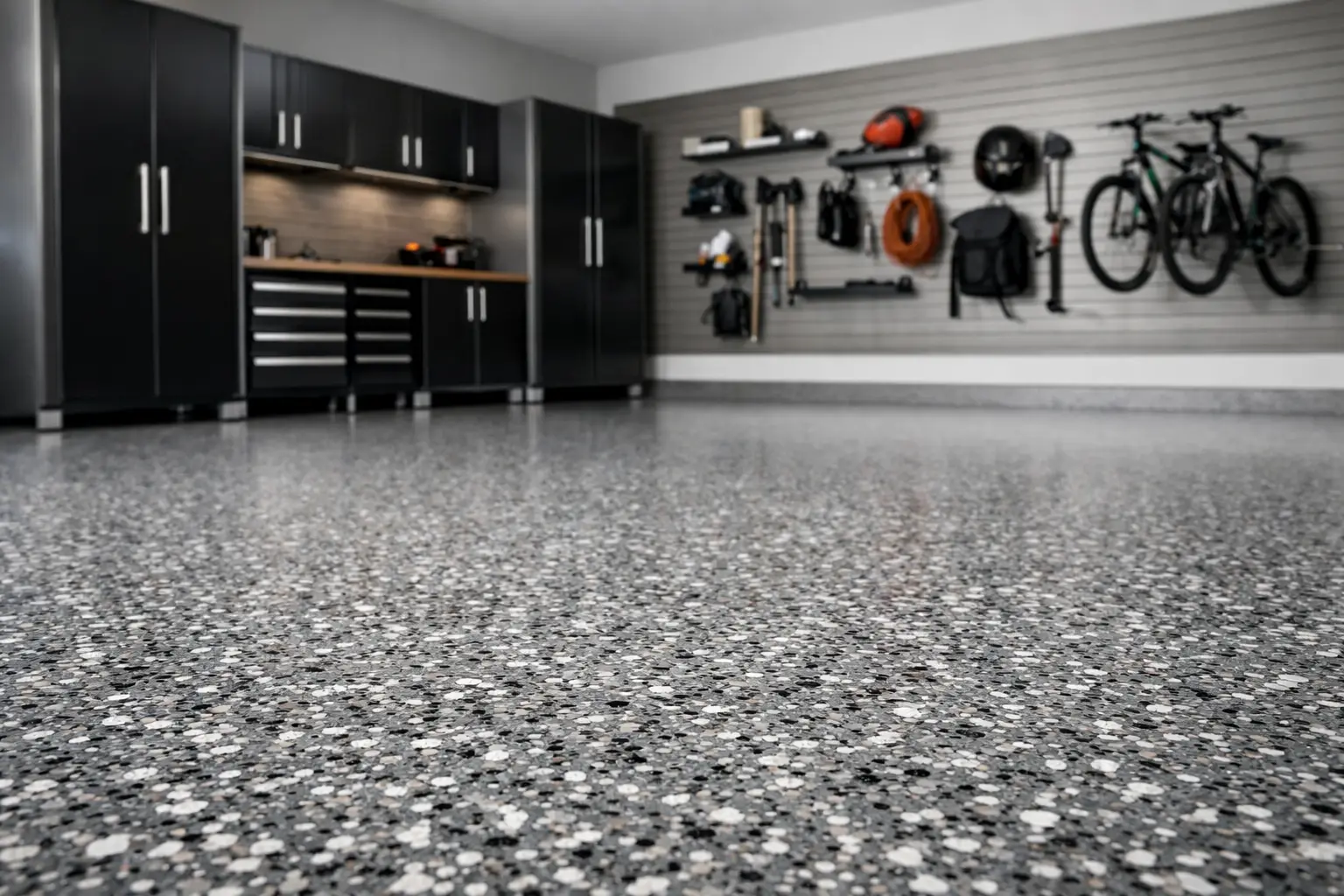
A garage floor usually tells the truth about a space faster than anything else. If the concrete is stained, dusty, cracked, or permanently marked by hot tires, the whole room feels unfinished no matter how organized the rest of it is. That is why a proper polyaspartic garage floor review matters – not as a trend piece, but as a practical look at whether this premium coating actually improves daily life.
For homeowners investing in a garage makeover, the short answer is yes, polyaspartic is often worth serious consideration. But it is not magic, and it is not the right fit for every budget, installer, or expectation. The details matter.
What a polyaspartic garage floor review should actually assess
A useful review should go beyond showroom shine. The real test is how the floor performs after the install crew leaves and normal life starts again. That means looking at surface durability, resistance to stains and UV exposure, cleaning effort, installation speed, texture underfoot, and how the coating holds up in a space that sees vehicles, storage systems, tools, sports gear, and regular household traffic.
Polyaspartic coatings tend to score well because they are built for performance, not just appearance. Compared with many traditional epoxy systems, they cure faster, resist yellowing better, and handle temperature shifts more effectively. They also create a cleaner, more finished look that supports the kind of elevated garage design many homeowners want now – less workshop-only, more extension of the home.
That said, the quality of the outcome depends heavily on prep and installation. A poorly prepared concrete slab can undermine even a premium coating system.
Where polyaspartic performs best
The strongest case for polyaspartic is in busy residential garages where the floor needs to work hard without looking industrial. It stands up well to vehicle traffic, dropped items, seasonal mess, and common garage chemicals. If your current floor creates concrete dust, absorbs spills, or always looks worn no matter how often you sweep, a coated system makes an immediate difference.
Another major advantage is UV stability. Some floor coatings can amber or yellow over time, especially in garages with direct sunlight. Polyaspartic is known for holding its colour better, which matters if you want the floor to keep a crisp, clean finish rather than slowly looking aged.
It is also a strong option for homeowners who do not want a long disruption. One-day installation is a genuine benefit when the system is installed properly. For many families, that reduced downtime is not just convenient – it makes the upgrade far easier to fit into real life.
The difference between polyaspartic and epoxy
Most homeowners compare polyaspartic with epoxy because epoxy has been the familiar garage floor name for years. Epoxy can still be a valid option in some settings, especially where upfront cost is the main concern. But when you look at long-term performance, polyaspartic often has the edge.
Epoxy tends to be more vulnerable to UV discolouration, can take longer to cure, and may be more prone to wear issues in demanding environments. Polyaspartic systems are generally more flexible and more resistant to impact, chemicals, and sunlight. That translates into a floor that keeps its finish longer and asks less of you over time.
The caveat is price. Polyaspartic usually costs more than basic epoxy systems, so the review cannot ignore budget. If someone wants the lowest possible entry cost, polyaspartic may feel like more than they need. If they want a premium result that aligns with a full garage transformation, the value proposition becomes much stronger.
Installation quality matters more than most reviews admit
This is where many online reviews fall short. They talk about coating chemistry but skip the most important factor: preparation. A garage floor coating is only as good as the surface beneath it and the process used to build the system.
Professional installation should start with diamond grinding to properly open the concrete and create strong adhesion. Cracks should be repaired rather than disguised. From there, a quality system often includes a polyurea primer or base coat, full vinyl flake coverage, and a final polyaspartic top coat for protection and finish.
That layered approach matters. It improves durability, helps disguise minor slab imperfections, adds visual depth, and creates a more slip-resistant surface than a plain painted floor. It also tends to look far more refined, which is important in a garage designed to feel intentional rather than purely utilitarian.
This is one reason bargain installs can disappoint. If a contractor rushes prep, skips repairs, or applies a thin system, the final look may still appear good for a while. The problems usually show up later as peeling, hot-tire pickup, uneven texture, or premature wear.
A practical polyaspartic garage floor review for everyday living
From a day-to-day standpoint, polyaspartic earns high marks because it solves several small annoyances at once. Sweeping becomes easier because the surface is smoother and no longer sheds concrete dust. Oil or household spills are easier to wipe up before they stain. The floor feels brighter, more intentional, and easier to maintain.
That change affects more than cleaning. A finished floor makes the entire garage feel more usable. Storage cabinets look sharper against it. Sports equipment, bikes, and tools feel like they belong in a planned environment rather than a catch-all room. For many homeowners, the coating is not a cosmetic extra – it is the foundation that helps the rest of the garage function better.
There are trade-offs, of course. Even a premium coating is not indestructible. Sharp metal edges, improper installation, or severe substrate issues can still create damage. Texture can also vary. A more slip-resistant finish is often a smart choice, but too much texture may make the floor slightly harder to mop clean. The right balance depends on how the garage is used.
Is it worth the price?
For a basic utilitarian garage, maybe not. If the space is rarely seen, lightly used, and purely functional, a lower-cost solution may be enough.
But for homeowners treating the garage as part of the home experience, polyaspartic usually justifies its premium. The value comes from a combination of durability, lower maintenance, faster installation, and a more polished appearance that lasts. When paired with custom cabinetry, wall storage, or overhead organization, the floor helps complete the transformation rather than feeling like an afterthought.
This is especially relevant in homes where the garage serves multiple purposes – parking, storage, hobbies, household overflow, or even a small fitness area. In those spaces, the floor takes constant visual and physical wear. Upgrading it once, properly, is often smarter than repairing or replacing a lesser finish later.
Who should be cautious
A balanced review should also mention where caution makes sense. If the concrete slab has major moisture issues, structural movement, or significant damage, those underlying problems need to be assessed before coating. If not, the new finish may not perform as expected.
Homeowners should also be cautious about comparing quotes without comparing systems. Not all “polyaspartic floors” are equal. Some are hybrid systems. Some use minimal flake. Some skip proper grinding. Some are marketed under premium language without delivering premium steps. The right questions are less about the buzzword and more about the process, product layers, warranty, and installer experience.
The design benefit people underestimate
One of the most overlooked aspects of polyaspartic flooring is how much it improves the design language of a garage. A full flake floor does not just hide imperfections – it visually anchors the whole room. It softens the look of plain concrete, complements cabinetry and storage systems, and helps the space feel finished in the same way good flooring does inside the home.
That matters if you want the garage to feel less like overflow space and more like a clean, integrated part of your property. A refined floor creates room for you to breathe. It makes organization easier to maintain because the environment itself feels worth keeping in order.
For homeowners considering a premium installation, Orga Spaces uses a professional process that includes diamond grinding, crack repair, a polyurea base, full flake broadcast, and a final polyaspartic top coat for a UV-stable, easy-to-clean, long-lasting finish.
If you are reading this polyaspartic garage floor review because your garage still feels harder to maintain than it should, the best next step is not guessing which coating name sounds best. It is looking at how you want the space to function, how long you want the result to last, and whether the installation method matches the standard you expect from the rest of your home.