When choosing between polyaspartic and epoxy for a concrete floor, homeowners often weigh longevity, appearance, installation time, and cost. Epoxy has been a go-to choice for decades, while polyaspartic coatings are a newer, versatile coating that offers several advantages compared to epoxy. Understanding the differences between polyaspartic vs epoxy can help in making the best decision for your flooring needs.
When comparing polyaspartic vs epoxy, many users find polyaspartic coatings to offer more benefits, making them a popular choice in recent years.
Key Differences
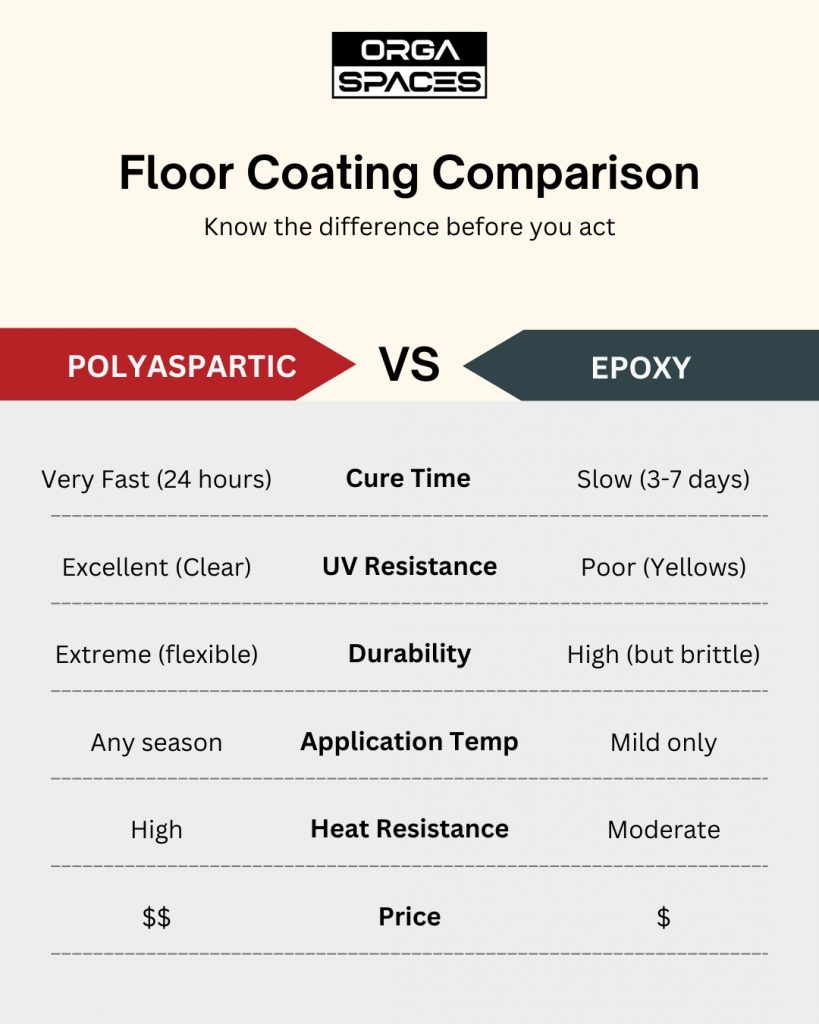
- Rapid curing time: Polyaspartic cures in minutes to an hour, dramatically reducing turnaround time and minimizing downtime for garage floor and other floor coating applications. Epoxy takes longer to set, often requiring several hours to days before full use.
- UV resistance and yellowing: Epoxy coatings tend to fade or yellow over time with uv exposure, especially lower-quality formulas. Polyaspartic coatings can be applied with superior UV protection and are less likely to yellow over time, keeping decorative flakes and colours visually appealing.
- Temperature and humidity tolerance: Polyaspartics perform better across a range of temperatures and higher humidity during installation. Epoxy coatings require more controlled conditions—surface temperature and humidity can affect set and adhesion.
- Durability and wear: Both systems resist wear and tear and can be formulated for high-traffic areas, but polyaspartic coatings are often tougher and more flexible, improving impact resistance and slip resistance when textured or flaked.
Pros and Cons
Cons of epoxy: epoxy coatings require longer curing, can yellow over time with UV exposure, and may be sensitive to humidity and low surface temperatures during installation.
For instance, when evaluating polyaspartic vs epoxy, the longevity of polyaspartic is often highlighted.
Pros of polyaspartic: rapid curing, UV protection, reduced yellowing, good adhesion to concrete garage floors, ability to be applied to vertical surfaces, and fast return-to-service.
Furthermore, understanding the pros and cons of polyaspartic vs epoxy will aid in making an informed choice.
Cons of polyaspartic: higher cost per square foot and shorter pot life during application, which can be challenging for inexperienced installers.
Pros of epoxy: affordable, available in a wide range of colours and decorative options, excellent adhesion to a properly prepared concrete surface, and common in DIY epoxy floor coatings.
Cons of epoxy: epoxy coatings require longer curing, can yellow over time with uv exposure, and may be sensitive to humidity and low surface temperatures during installation.
Applications and Aesthetics
Both epoxy and polyaspartic and epoxy garage floor coatings are used in residential and commercial settings. Decorative flakes and metallic finishes are popular for garage and workshop concrete floors because they create a visually appealing, slip-resistant surface. Polyaspartic and epoxy coatings can both incorporate chips, but polyaspartic’s rapid curing time lets you finish multi-coat systems in a single day on many concrete garage floors.
Many professionals recommend polyaspartic over epoxy, especially when considering the benefits of polyaspartic vs epoxy.
DIY vs Professional Installation
In summary, when weighing polyaspartic vs epoxy, the differences can greatly affect your final decision.
For a DIY epoxy floor, epoxy is often easier for beginners due to its longer open working time. However, DIY epoxy floor coatings still require careful surface preparation and awareness of levels of VOCs and volatile organic compounds. Polyaspartics set quickly and can be more difficult for DIYers to manage—mixing and spreading must be rapid to avoid defects—so many homeowners opt for professional installers for polyaspartic or complex epoxy and polyaspartic coatings.
Choosing Based on Needs
For those needing minimal downtime, polyaspartic coatings shine in the polyaspartic vs epoxy comparison.
One must consider the price point when discussing polyaspartic vs epoxy options.
- If you need minimal downtime: choose polyaspartic for rapid turnaround and minimizing downtime in a garage or commercial space.
- If budget is primary: epoxy garage floor coating may be the more economical choice.
- If uv exposure is significant: favor polyaspartic coatings for better UV resistance and reduced yellowing over time.
- If decorative finish matters: both types offer decorative options; epoxy and polyaspartic both accept chip and topcoats to create a visually appealing surface.
Practical Considerations
Surface preparation of the concrete floor is critical for both systems: proper cleaning, etching, or diamond grinding, and addressing moisture issues will extend longevity and performance. Consider the garage floor needs—slip resistance, high-traffic durability, and chemical resistance—when selecting a type of coating. Also evaluate turnaround time, levels of VOCs, and the installer’s experience with polyaspartics or epoxy and polyaspartic combinations.
Summary
The difference between the two boils down to curing speed, UV protection, cost, and installation complexity. Polyaspartic coatings can be applied quickly, tolerate a wider range of conditions, and perform better under UV exposure, while epoxy remains a cost-effective, decorative option familiar to DIYers. For a long-lasting, visually appealing garage or concrete floor, weigh the higher cost of polyaspartics against their rapid setting time and superior UV resistance to decide which floor coating best fits your project.
Choosing the right garage floor coating directly impacts performance, maintenance, and appearance.
What Is Epoxy?
In your search for the ideal floor coating, the polyaspartic vs epoxy debate will arise time and again.
Epoxy is a class of thermosetting polymers formed by the reaction of epoxy resins with hardeners that creates a rigid, durable, and chemically resistant plastic. It is commonly used as an adhesive, coating, composite binder, and floor coating because it bonds strongly to many substrates, resists wear and many chemicals, and has a glossy finish.
What Is Polyaspartic?
Polyaspartic is a type of fast-curing aliphatic coating derived from modified aliphatic amines; it forms a durable, UV-stable, high-gloss film used for floors, concrete overlays, and protective topcoats.
1. UV Stability That Prevents Yellowing
Epoxy floors are prone to fading and yellowing when exposed to sunlight.
Polyaspartic coatings are UV-stable, meaning they resist discoloration and maintain their gloss for years. If your garage receives natural light, this is a major advantage over epoxy.

2. Superior Chemical and Stain Resistance
Garages are exposed to oil, brake fluid, gasoline, moisture, and household chemicals.
Polyaspartic coatings provide stronger chemical resistance than epoxy, preventing stains and allowing spills to be cleaned easily. A full flake broadcast system also helps conceal dirt and minor surface imperfections.
3. Greater Durability Under Heavy Use
Garage floors must handle vehicle weight, impact from tools, and temperature fluctuations.
Epoxy is more rigid and prone to cracking or chipping over time. A polyurea base coat penetrates deeper into the concrete, creating a flexible and impact-resistant surface designed for long-term performance.
4. Stronger Concrete Adhesion and No Hot Tire Pickup
Hot tire pickup is a common epoxy failure where heated tires cause the coating to peel.
Polyurea bonds deep into concrete pores, creating superior bonding. When combined with a polyaspartic topcoat, the system resists peeling and delamination even under repeated vehicle traffic.
5. Installed in One Day
Epoxy often requires multiple days between coats and an extended set time before you can park on it. A polyurea and polyaspartic garage floor is installed in one day. In many cases, you can walk on it the same day and park on it shortly after. Less downtime, same garage.
6. Better Traction
Slippery garage floors can be a serious safety concern, especially in areas prone to spills or moisture. Polyaspartic coatings are designed with enhanced anti-slip properties, providing a textured surface that improves traction and reduces the risk of accidents. Unlike epoxy, which can become slick when wet, polyaspartic coatings maintain safety without compromising on durability or aesthetics.
7. Cleaner, More Modern Finish
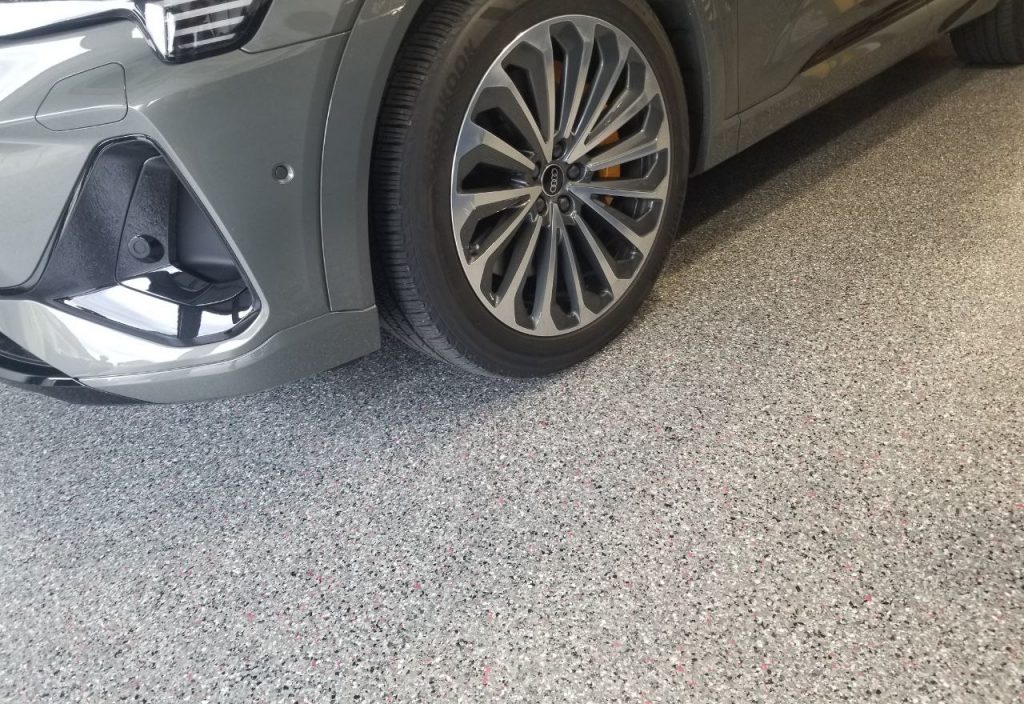
A professionally installed polyaspartic garage floor has a seamless, high-gloss appearance that feels more like an extension of your home than a basic utility space.
Because it resists fading, staining, and peeling, it keeps that clean look much longer than epoxy. A well-finished garage can also contribute to overall home value.
Why Do the Polyurea Base and Polyaspartic Topcoat Work Together?
The base layer is what anchors the system. Polyurea penetrates the concrete and creates strong bonding.
The polyaspartic topcoat seals everything in. It adds UV protection, chemical resistance, and long-term gloss retention.
Weighing the options of polyaspartic vs epoxy can help ensure you select the best product for your space. Together, they form a complete, concrete coating system designed for durability.
At Orga Spaces, our garage floor installation process focuses on proper surface preparation and long-term performance. We install polyaspartic systems as part of full garage transformations, not quick cover-ups.
Ready to Transform Your Garage Floor?
Ready to upgrade your garage? The Orga Spaces team specializes in installing polyaspartic coatings, delivering top-tier results tailored to your needs. Contact us to learn more about the distinctions between polyaspartic vs epoxy for your garage floor, and let us show you how we can transform your garage into a durable, stunning space you’ll love.