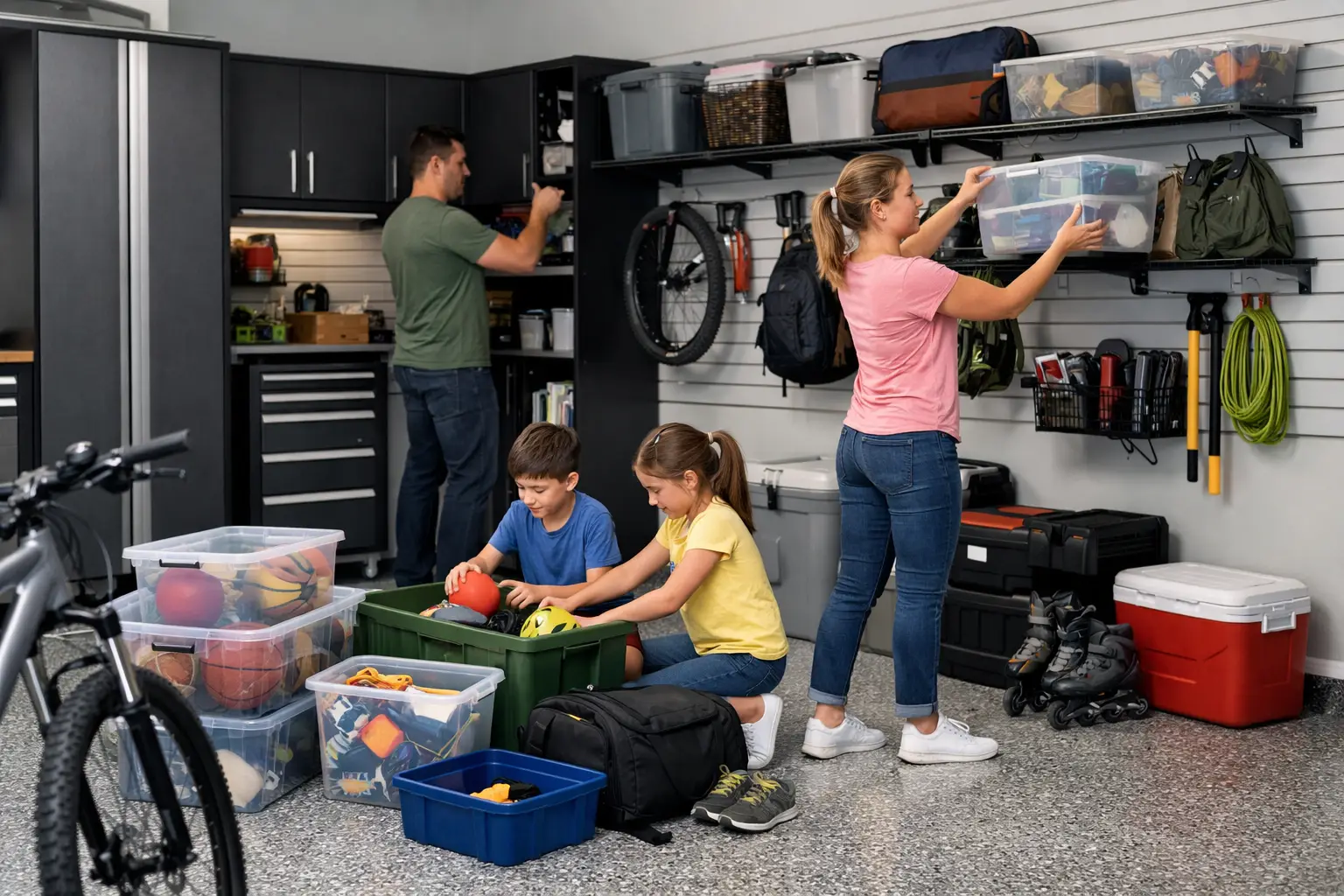
Saturday morning starts with good intentions. By noon, the garage floor is covered in sports gear, half-empty paint cans, stroller wheels, and a donation pile that never quite leaves the house. Garage decluttering for busy families is not really about finding more bins. It is about creating a space that can keep up with school drop-offs, packed calendars, growing kids, and the steady flow of everyday life. Effective garage decluttering is key to maintaining a functional home.
For most families, the garage becomes a holding zone because it is easy. It catches what does not have a clear place inside the house, and over time, that convenience turns into friction. You waste minutes looking for a soccer ball, re-buy tools you already own, and park outside because the garage no longer works for your car or your routine. The real cost is not only visual clutter. It is the constant low-grade stress of a space that asks more from you than it gives back.
Why garage decluttering for busy families often fails
The usual advice sounds simple – pull everything out, sort it all at once, and spend a full weekend organizing. For a busy household, that plan can fall apart fast. If nap schedules shift, a game runs late, or the weather changes, you are left with a driveway full of belongings and no realistic path to finishing.
There is also a design problem that gets missed. Many garages are expected to do too much with too little structure. They need to store seasonal decor, tools, recycling, sports equipment, overflow pantry items, cleaning supplies, and sometimes even a second fridge. When everything shares the same open floor, clutter is not a sign of laziness. It is often a sign that the space was never properly designed for the way the family actually lives.
That is why the best approach is not a dramatic purge. It is a practical reset built around access, frequency of use, and a layout that removes daily friction. Implementing effective garage decluttering strategies can make a significant difference.
Start with the routines, not the stuff
Before you decide what to keep, look at what happens in the garage during a normal week. Which items are grabbed in a rush? What gets dropped by the door? What needs to be easy for kids to reach, and what should stay safely out of reach? When you organize around routines first, storage decisions become much clearer.
A family with young children may need an entry zone for backpacks, scooters, and sidewalk chalk. A family with teens may need better storage for sports gear, folding chairs, and extra drinks for weekend tournaments. A household that uses the garage for home projects may need locked cabinetry and durable work surfaces rather than open shelving.
This is where many DIY systems become frustrating. Off-the-shelf products can help, but they rarely account for your exact wall dimensions, ceiling height, traffic flow, or how much enclosed storage you really need. A garage that looks tidy for a week is not the same as one that supports your day for years. Successful garage decluttering should prioritize long-term solutions.
The fastest way to make progress
If time is tight, begin with three decisions only: what belongs elsewhere, what deserves prime access, and what should leave the house entirely. That first pass is often enough to create visible momentum.
Items that belong elsewhere are usually the easiest. Holiday serving platters, paperwork, random decor, and clothes to donate should not stay in the garage just because there is space. Prime-access items are the things your family reaches for constantly – helmets, pet supplies, car-care basics, school project materials, and outdoor gear. Once those are identified, the remaining category is the real clutter: expired products, duplicates, broken equipment, and things you have been storing out of habit rather than intention. Garage decluttering requires identifying what is truly necessary.
The goal at this stage is not perfection. It is to reduce volume so the space can breathe again.
Create zones that match real family life
A well-functioning garage feels calm because it has logic. The most effective layouts usually include clear zones, with each one tied to a real need rather than a vague category.
Everyday grab-and-go zone
This should sit closest to the entry point your family uses most. Think shoes for the garden, umbrellas, reusable bags, sports bags, and items needed on the way out. If children are expected to put things away independently, the storage has to be easy to reach and simple to understand. This is crucial for successful garage decluttering.
Active gear zone
Bikes, balls, racquets, skates, camping supplies, and seasonal recreation gear need a dedicated home. This zone works best when vertical wall storage lifts bulky items off the floor. It keeps pathways open and makes it much easier to see what you own.
Household support zone
Paper towels, bulk cleaning products, recycling, extra beverages, and utility items belong together, but not mixed with tools or holiday decor. Grouping them creates efficiency and reduces the tendency to stash things in random corners.
Long-term storage zone
Not everything needs to be accessed weekly. Seasonal bins, keepsakes, and occasional-use items can move higher or farther back. Overhead storage can work well here, but only if it is planned carefully. If frequently used items end up overhead, people stop putting them back properly. Garage decluttering must consider access to stored items.
Hidden storage changes everything
Open shelves can make a garage look organised at first, but busy families usually benefit from more concealed storage than they expect. Life moves quickly. When everything is visible, even neatly stored items can read as visual noise.
Steel cabinets create a cleaner, more refined look while protecting contents from dust, temperature changes, and accidental spills. They also allow the garage to feel more like an intentional extension of the home rather than a catch-all utility space. That matters when you want the area to feel easier to maintain, not just technically sorted.
There is a trade-off, of course. Closed cabinetry costs more than basic shelving, and not every family needs a fully built-in system. But when the goal is lasting function with a polished finish, custom storage often saves frustration later. You are not trying to win a weekend project. You are investing in a space that supports daily life. Garage decluttering is about creating a harmonious environment.
Do not ignore the floor
Families often focus on shelves and cabinets while forgetting the surface everything sits on. If the garage floor is dusty, stained, or cracked, the whole room feels harder to manage. Dirt moves into the house more easily, cleanup takes longer, and even a well-organised layout can still feel unfinished. Garage decluttering should include floor maintenance.
A premium floor coating can make a noticeable difference in both maintenance and appearance. For households that want a garage to feel clean, durable, and genuinely upgraded, the floor should be part of the plan, not an afterthought. It is one of those details that quietly improves the everyday experience.
When to DIY and when to bring in help
There are situations where a simple family reset is enough. If the garage mainly needs editing, clearer bins, and a better donation routine, you may be able to make strong progress on your own. The key is keeping the scope realistic and not trying to redesign the entire space in one push.
But if the garage is heavily used, chronically overcrowded, or expected to serve several functions at once, a custom solution often makes more sense. Professional planning helps you solve the parts that are hardest to fix with trial and error: awkward wall spans, limited floor area, overhead capacity, and the balance between visible access and visual calm. Effective garage decluttering may require expert guidance.
For homeowners who care about both performance and finish, that process can be surprisingly relieving. Instead of piecing together a system and hoping it works, you start with a consultation, move into a design that reflects how your family actually uses the space, and end with installation that brings it all together. For many families, that is how a clutter problem finally stops returning.
A better standard for garage decluttering for busy families
The most successful garages are not empty. They are purposeful. They make room for school mornings, hobbies, weekend projects, and the inevitable shifts that come with family life. They also respect the fact that a hardworking space can still look considered and feel refined. Implementing garage reorganizing effectively can transform the space.
If your garage has become a source of frustration, it may not need more effort from you. It may need better structure. A thoughtfully designed system gives every item a place, reduces visual overload, and helps the entire household maintain order with less energy.
That is the real win – not a picture-perfect garage for one afternoon, but a space that gives your family back time, access, and room to breathe.
Ready to start enjoying your garage? Contact Orga Spaces today for a free consultation, and let our design experts help you unlock the full potential of your space.