If your garage floor turns into a holding zone for wet tires, lawn tools, workout gear, and weekend projects, a perforated garage tile review matters more than it might seem at first glance. Flooring sets the tone for the whole space. It affects how clean the garage feels, how easy it is to maintain, and whether the room looks like an afterthought or a finished part of the home.
Perforated garage tiles are often marketed as a quick visual upgrade with practical benefits. In many cases, that is true. They can create a cleaner, more intentional look without the mess and downtime of liquid-applied flooring. But they are not the right answer for every garage, every climate, or every homeowner. The real question is not whether they look good in photos. It is whether they perform well for the way you actually use your space.
What perforated garage tiles actually do
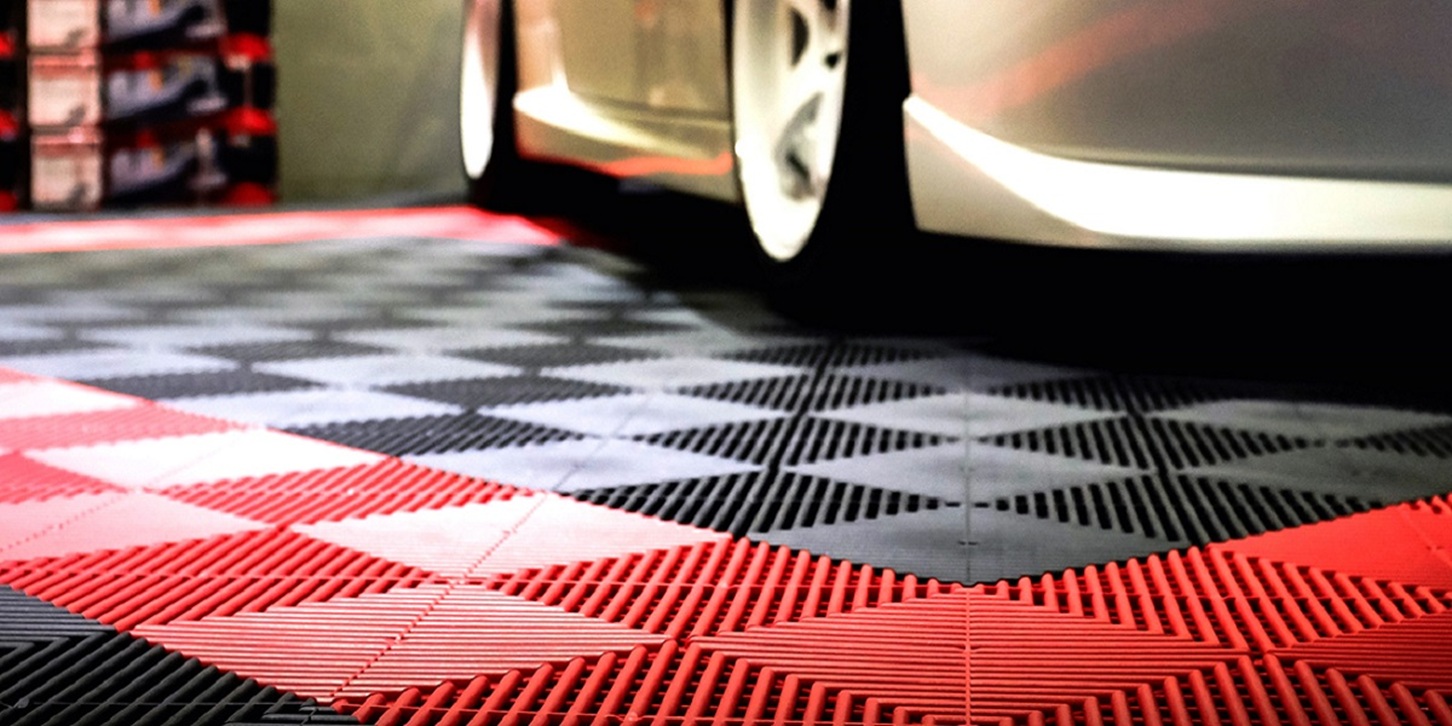
Perforated garage tiles are interlocking modular tiles made with small openings across the surface. Those openings allow water, dirt, and debris to pass through instead of sitting on top. The idea is simple: keep the visible surface drier and more usable, especially in garages that regularly deal with rainwater, car wash runoff, or mud.
That design gives them a distinct advantage over smooth tile systems. When water has somewhere to go, the floor is less likely to feel slick or messy right away. For homeowners who use their garage as more than parking, that can be a meaningful benefit.
They also have a visual effect that many people appreciate. The grid pattern reads as sporty and finished, which is why these tiles are popular in show garages, hobby spaces, and multipurpose rooms. If the goal is to make the garage feel more curated without a major renovation timeline, perforated tiles can get you there quickly.
Perforated garage tile review: where they shine
The strongest selling point is drainage. If you routinely pull in a wet vehicle, wash equipment inside the garage, or track in water from outdoors, perforated tiles help manage that moisture better than many hard-surface alternatives. Water disappears below the walking surface instead of pooling around your feet.
Installation is another reason homeowners consider them. Modular tile systems generally go down faster than floor coatings and do not require the same surface preparation. That can be attractive if you want a fast transformation or if you are trying to cover a concrete slab that looks tired but is still structurally sound.
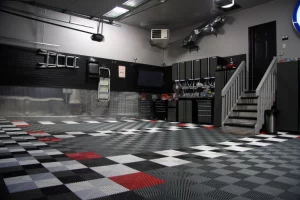
There is also flexibility in the design. Perforated tiles come in multiple colours and patterns, so the floor can feel custom rather than purely utilitarian. In a garage that includes cabinetry, slatwall, overhead storage, or a workbench zone, that finished look can tie the room together in a more polished way.
Comfort is worth mentioning too. Compared with bare concrete, modular tiles usually have a bit more give underfoot. If you spend time detailing your car, working on projects, or moving around the garage daily, that softer feel can make the space more pleasant to use.
The trade-offs most reviews skip
A good perforated garage tile review has to go beyond the brochure version. These floors solve some problems, but they create others.
The biggest one is what happens underneath. Yes, water and debris fall through the tile. That keeps the top surface looking better in the moment, but the mess does not disappear. It collects below. Over time, trapped dirt, leaves, sand, and moisture can build up under the floor, which means cleaning is not always as easy as it first appears.
That matters if you want a garage that feels truly refined, not just visually improved from a distance. A surface that hides debris is different from a system that eliminates it. If your standard is low-maintenance perfection, perforated tiles may feel less tidy than expected once you live with them.
Noise is another factor. Modular tiles can produce a slightly hollow or clicking sound under shoes and rolling equipment. Some homeowners do not mind it at all. Others notice it every time they walk into the garage. If you want the space to feel solid and integrated with the rest of the home, this detail can influence how premium the result feels.
Heavy point loads can also be an issue depending on tile quality. Most perforated tiles handle parked vehicles well, but not all products respond equally to jacks, loaded cabinets, sharp tools, or repeated movement from rolling equipment. It depends on the tile thickness, material quality, and subfloor condition.
Maintenance is simple, but not always effortless
On the surface, these tiles are easy to live with. Sweeping is straightforward, and the open design helps the visible floor stay drier. For many households, that is enough to make daily upkeep feel easier than raw concrete.
But deeper cleaning is where expectations should be realistic. Because dirt falls below the tile, there may come a point when sections need to be lifted for a more complete cleanout. How often depends on how the garage is used. A low-traffic garage may go quite a while without issue. A busy family garage with yard work, sports gear, and frequent vehicle use may collect more grime than expected.
Stains can also be deceptive with perforated systems. Oil, soap, and residue may pass through or spread beneath the tile grid. That can make maintenance feel less visible day to day, but not necessarily cleaner in a long-term sense.
How they compare with floor coatings
For some homeowners, perforated tiles are a smart fit. For others, a professionally installed floor coating creates a more refined result.
The key difference is how each system handles the concrete beneath it. Tiles cover the slab. Coatings transform it. A high-quality coating system becomes part of the floor itself, creating a continuous finish that is easier to clean, more solid underfoot, and often more architecturally polished.
That distinction matters in a premium garage makeover. If you are investing in custom cabinets, intentional storage, and a garage that feels like a designed extension of the home, the floor should support that same standard. A coated floor tends to feel more integrated and permanent, while modular tiles can feel more applied on top.
This is especially relevant if moisture management is not your primary concern. If your garage is mostly dry and your goals are durability, cleanability, and a more elevated finish, a professional coating may deliver a better long-term experience.
Who should consider perforated tiles
Perforated tiles make sense when drainage is the priority, when you want a fast flooring upgrade, or when the garage functions as a casual utility space with flexible use. They can also work well for hobbyists who like the race-inspired look and do not mind occasional tile removal for cleaning.
They are less ideal if you want the garage to feel quiet, monolithic, and easy to deep-clean with minimal fuss. They are also not the strongest choice if you are creating a high-end, whole-space transformation where every finish needs to feel cohesive and lasting.
In other words, this is not a bad flooring category. It is a specific one. The right fit depends on whether you are solving for moisture and speed, or for permanence and polish.
A design-first perspective on this flooring choice
Garage flooring is often treated as a product decision, but it is really a lifestyle decision. The floor influences how often you clean, how comfortable the room feels, and whether the space invites use or just stores clutter. That is why the best flooring choice is not always the fastest one or the least disruptive one.
For homeowners investing in a thoughtful garage transformation, the question should be broader: what kind of space are you building? If the answer is a garage that supports daily ease, looks as refined as the rest of the home, and feels intentionally finished, every material needs to earn its place.
That is where expert guidance becomes valuable. A floor should not be chosen in isolation. It should be selected in the context of cabinetry, storage, traffic patterns, and how the room needs to perform over time.
At Orga Spaces, that full-picture approach is what turns a garage from a catch-all into a well-designed extension of the home. If you are weighing tile against a more permanent flooring system, start with the experience you want from the space, not just the product label.
A garage should make life easier the moment you open the door. Choose the floor that helps you reclaim that feeling every day. Learn more at https://orgaspaces.com/garage/interlocking-garage-floor-tiles/