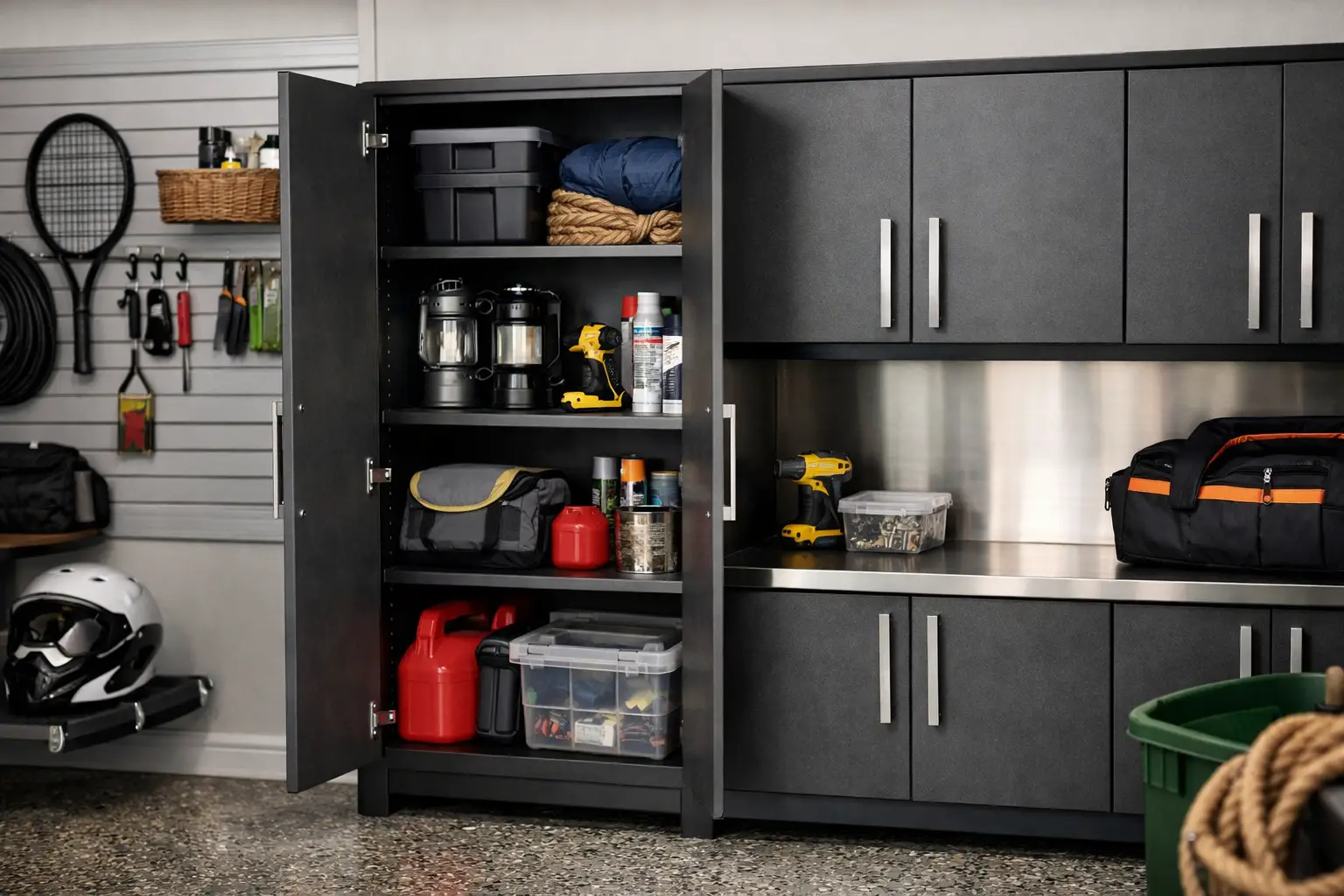
A polished garage stops feeling useful the moment clutter starts migrating across the floor. If you are deciding what to store in garage cabinets, the real goal is not simply to hide things away. It is to create a garage that works harder, looks cleaner, and supports the pace of everyday life without becoming a dumping ground.
That distinction matters. Good cabinet storage protects the right items from dust, moisture, and visual chaos, but it should also make your daily routines easier. The best setup keeps frequently used items accessible, stores hazardous products more safely, and leaves open space for vehicles, hobbies, and movement.
What to store in garage cabinets first
A simple rule helps: garage cabinets are best for items you need to keep, use regularly enough to justify the space, and do not want exposed on shelves or the floor. Closed storage earns its place when it reduces mess, protects supplies, or creates a more refined look.
Household tools are often the first category that belongs inside cabinets. Hand tools, power tools, measuring tapes, batteries, chargers, and small hardware all benefit from a defined home. Cabinets keep these items together and easier to find, especially when paired with drawers or bins inside. If your current tool collection lives in three mismatched boxes and a half-open tote, cabinets instantly remove that friction.
Cleaning supplies also make sense in garage cabinets, especially overflow items that do not fit comfortably inside the house. Extra paper towels, surface cleaners, sponges, garbage bags, and bulk household supplies stay protected and out of sight. Closed storage is especially useful here because these products can make a garage feel visually busy very quickly.
Automotive care products are another strong fit. Car wash soap, microfiber cloths, wax, tire cleaner, detailing brushes, windshield fluid, and shop towels are all easier to manage when grouped together in one designated cabinet zone. If you wash or detail your vehicle at home, keeping these items in one place can reclaim your time every weekend.
Seasonal items often belong in garage cabinets too, depending on size. Smaller holiday decor, outdoor entertaining supplies, reusable picnic gear, and pool accessories are easier to manage when they are contained and labelled. Not every seasonal item needs premium cabinet space, but the ones you reach for a few times a year should not be buried behind sports gear and half-empty paint cans.
What to store in garage cabinets for a cleaner look
Some items technically could sit on open shelving, but they simply look better behind doors. This is where design and function meet.
Paint supplies, gardening accessories, extension cords, hoses with attachments, and DIY project materials all tend to create visual noise. Even when neatly arranged, they can make a garage feel more like a utility room than an intentional extension of the home. Cabinets allow you to keep those practical items close by without sacrificing the calm, finished look many homeowners want from a garage makeover.
This matters even more in garages that serve multiple purposes. If your garage is not just for parking but also for workouts, weekend projects, kids’ gear, or home maintenance, visual order changes the way the space feels. A cabinet system helps the garage read as organized and finished rather than crowded and temporary.
What should not go in garage cabinets
Knowing what to store in garage cabinets is only half the decision. Some items are better kept elsewhere, and a few should not be stored in the garage at all.
Temperature-sensitive items are the first concern. In many homes, garages experience bigger swings in heat and cold than interior rooms. That means certain products can degrade faster or become unsafe. Electronics, important documents, family photos, and delicate fabrics are usually better stored indoors unless the garage is climate-controlled.
Food is another category that deserves caution. Shelf-stable drinks or unopened bulk pantry items may seem convenient in the garage, but heat, pests, and fluctuating conditions can make that less than ideal. Pet food and bird seed are especially likely to attract unwanted visitors if not stored properly.
Flammable or hazardous materials require judgment. Some homeowners keep paint thinner, gasoline containers, propane accessories, pesticides, or strong chemicals in the garage, but these should be handled with care and stored according to manufacturer guidance. Cabinets can improve containment and appearance, but they are not a substitute for safe storage practices. It depends on the product, the cabinet material, ventilation, and whether children have access to the space.
Very heavy or bulky items can also be a poor fit for cabinets. Large coolers, oversized bins, camping equipment, and tall sports gear often work better on specialized wall storage or overhead systems. Cabinets should not become a place where awkward items are forced to fit just because there is a door available to close.
The smartest categories for garage cabinet storage
The most effective cabinet plans usually organize by function, not by random empty space. That means grouping together the items that support a routine or task.
A home maintenance cabinet might hold touch-up paint, painter’s tape, patching supplies, caulking, screws, nails, anchors, light bulbs, and spare hardware. A car care cabinet might include cleaning products, battery accessories, gloves, towels, and chargers. A family activity cabinet could hold sunscreen, bug spray, reusable water bottles, folding chairs, and sports accessories.
This kind of grouping saves time because you are not searching in five places before starting one job. It also makes it easier to see when you are overbuying. Many garages become cluttered not because there is no storage, but because there is no logic behind it.
How to decide what deserves cabinet space
Not everything in the garage is equally valuable. Cabinet space should go to the items that benefit most from protection, easy access, or cleaner presentation.
A useful test is to ask three questions. Do you use it often enough to keep it convenient? Does it create visual clutter when left exposed? Does it need protection from dust, moisture, or damage? If the answer is yes to at least two, cabinet storage is probably the right call.
This is also where custom planning makes a difference. One homeowner may need a dedicated zone for golf gear and detailing supplies, while another needs cabinets that support gardening, tools, and overflow household storage. The right answer is rarely a generic checklist. It depends on how your household actually lives.
What to store in garage cabinets if you want a long-term system
The best garage cabinets support both the items you own now and the habits you are trying to build. That means resisting the urge to fill every inch immediately.
Leave some room for growth. Families change, hobbies shift, and storage needs evolve. Cabinets packed to capacity on day one tend to become frustrating fast. A better approach is to assign purposeful zones, use interior dividers or bins where helpful, and keep some flexibility for seasonal rotation or new purchases.
It also helps to separate daily-use storage from deep storage. Items you reach for weekly should sit at easy-to-access heights. Backup supplies, occasional-use products, and seasonal materials can go higher or farther to the side. That one adjustment can make the garage feel dramatically more effortless to use.
For homeowners investing in a full garage transformation, cabinet storage works best when it is planned as part of the larger space. Flooring, wall storage, overhead storage, and cabinetry should support one another rather than compete. A refined garage is not just packed with storage – it is designed so every element has a job.
That is why a tailored approach often outperforms off-the-shelf solutions. The garage may be one of the hardest-working spaces in the home, and when it is designed around your routines, it stops collecting stress and starts creating room for you to breathe.
If you are weighing what belongs behind closed doors and what kind of cabinet layout would serve your household best, a professionally planned garage makeover can bring real clarity. To explore a custom solution, request an estimate at https://orgaspaces.com/garage/quote/.
The right things in the right cabinets do more than tidy a room. They turn the garage into a space that feels intentional every time you open the door.