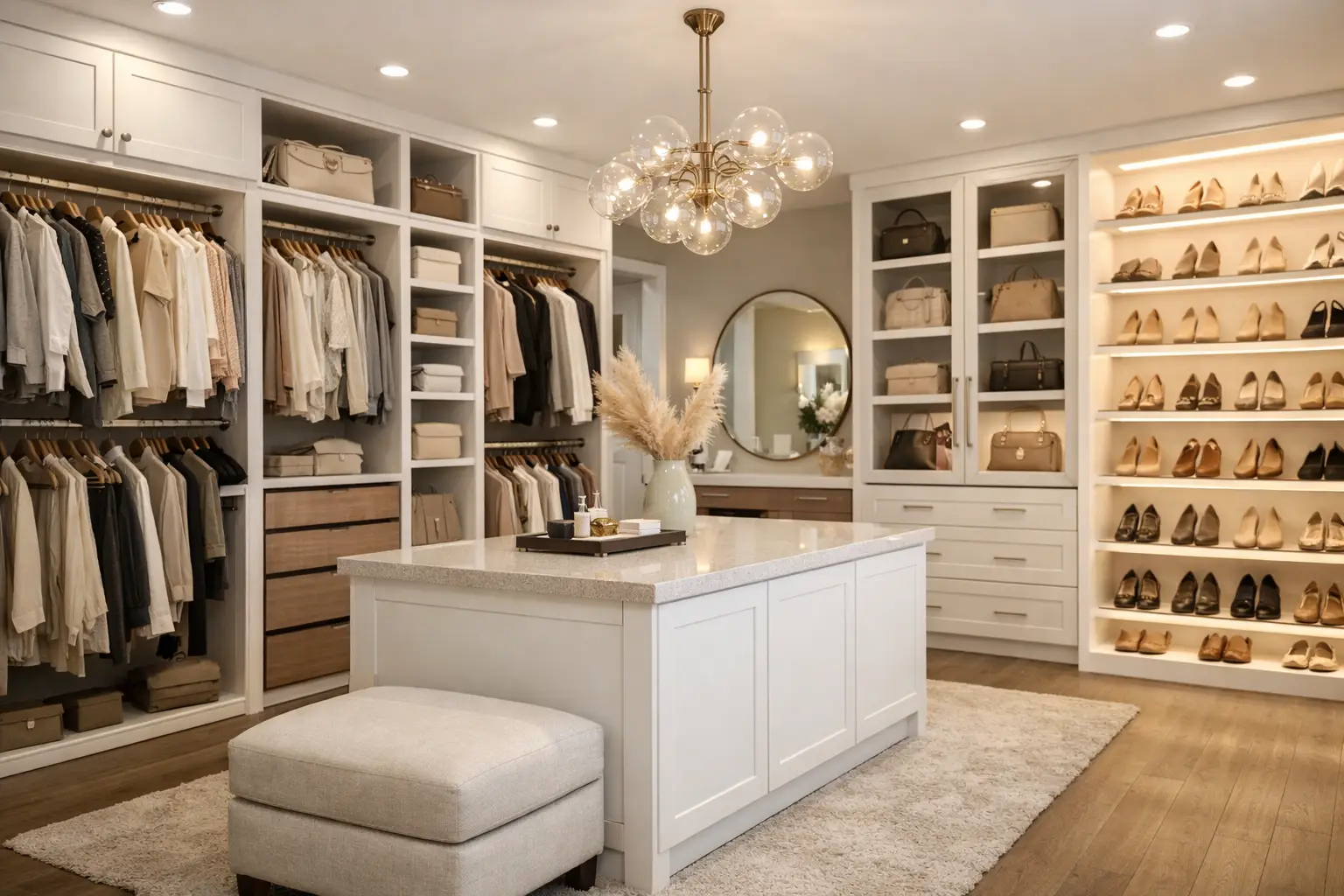
A walk-in closet usually looks generous on paper, then somehow ends up crowded, dim, and oddly hard to use. That gap between square footage and real function is where good design matters. The best walk in closet design ideas are not about fitting in more shelves for the sake of it. They are about creating a space that supports your routine, protects what you own, and makes the room feel calm the moment you step inside.
For most homeowners, the real goal is not simply storage. It is getting dressed faster, seeing everything clearly, keeping seasonal items under control, and making the space feel as considered as the bedroom beside it. When the layout, materials, and storage details are planned together, a closet starts working like part of the home rather than an afterthought.
Walk in closet design ideas that start with layout
If there is one decision that shapes everything else, it is layout. A beautiful finish will not fix a closet that forces you to sidestep drawers or hang long garments where they block the light. Before choosing colours or accessories, it helps to decide how the room should function at a daily level.
A single-wall arrangement can work well in a narrower room, especially when paired with a clear central walkway and full-height storage. A galley layout, with storage on both sides, offers strong capacity but needs careful spacing so the room does not feel compressed. A U-shaped layout often gives the most balanced result because it wraps storage around the room and creates useful zones for hanging, shelving, and drawers.
The right answer depends on the room and on your wardrobe. Someone with more folded clothing and accessories will need a different plan than someone with long dresses, suits, or outerwear. The point is to let the contents guide the structure.
Design around zones, not just storage types
One of the most effective walk in closet design ideas is to divide the space into zones. Everyday items should sit in the easiest-to-reach areas. Occasion wear can go higher or farther back. Shoes, handbags, jewellery, and laundry all need dedicated homes if you want the room to stay orderly without constant effort.
That zoning approach also makes shared closets more comfortable. When each person has a defined section, the space feels intentional instead of negotiated. It is a subtle shift, but it changes how the room works every morning.
Use double hanging and long hanging strategically
Not every garment needs the same vertical clearance, and this is where many closets lose usable space. Double hanging sections are ideal for shirts, folded trousers, skirts, and shorter items. They can nearly double hanging capacity in the right area. Long hanging sections are still essential, but they should be reserved for dresses, coats, or pieces that truly require the height.
A balanced combination often works better than rows of identical compartments. Uniformity can look tidy in a showroom, but in real life it may waste space. Custom planning allows the closet to match what you actually wear.
Add drawers where clutter tends to collect
Open shelving has its place, but drawers are often what make a closet feel finished. They hide visual noise and give smaller items a proper home. That includes undergarments, sleepwear, workout gear, watches, belts, and anything else that tends to migrate across shelves.
Soft-close drawers also improve the feel of the room in a way that is hard to appreciate until you use them every day. In a premium closet, function should feel effortless. That means less digging, less stacking, and fewer things slipping out of place.
Include a mix of shallow and deep storage
Shallow drawers are useful for accessories, jewellery, and smaller clothing items because they keep everything visible. Deeper drawers work well for sweaters, denim, and bulkier seasonal pieces. A closet with only one drawer depth tends to be less adaptable over time.
This is one of those details that seems minor during planning but has a major effect on day-to-day ease.
Make lighting part of the design
Poor lighting can make even a well-built closet feel cramped. It changes how colours read, makes it harder to distinguish navy from black, and adds friction to a room that should simplify your routine.
Integrated LED lighting inside shelving, above hanging sections, or around mirrors creates both function and atmosphere. Overhead lighting should be bright enough for visibility without feeling harsh. If the closet has little natural light, layered lighting becomes even more important.
There is also a practical side to this. Better lighting helps you use the full depth of the room and see what you already own, which often prevents duplicate purchases and forgotten items.
Choose finishes that feel refined, not busy
A walk-in closet does not need to shout to feel luxurious. Some of the strongest walk in closet design ideas come from restraint. Clean cabinetry lines, warm neutrals, woodgrain textures, matte hardware, and consistent detailing tend to age better than trend-heavy choices.
Lighter finishes can help a smaller closet feel more open, while darker tones can look striking in a larger room with strong lighting. Neither is inherently better. It depends on the architecture of the home and the mood you want to create. The key is choosing materials that feel cohesive with the rest of the interior, so the closet reads as an extension of the home rather than a disconnected utility room.
Give shoes and handbags proper display space
Shoes and handbags often end up becoming the visual centre of a closet, whether planned for or not. If they matter to your wardrobe, give them space that reflects that. Adjustable shelving is especially useful here because collections change. Heels, boots, flats, and structured bags all need different clearances.
Display shelving can add elegance, but too much open storage may create a cluttered look. That is the trade-off. A mix of visible and concealed storage usually gives the best result, allowing favourite items to be showcased while less attractive or less-used pieces stay tucked away.
Consider an island if the room truly has space
A central island can elevate a walk-in closet dramatically, but only when the room is large enough to handle it. An island should improve the experience, not interrupt movement. If clearance becomes tight, the feature starts working against the room.
When sized properly, an island adds useful drawer storage, folding space, and a natural surface for placing jewellery, handbags, or tomorrow’s outfit. It can also anchor the room visually and make the closet feel more like a dressing space than a storage zone.
For smaller rooms, a built-in tower or perimeter drawer system may deliver the same function more efficiently.
Add a mirror with purpose
A full-length mirror is not just a finishing touch. It affects how the room feels and how easily you can get ready. In tighter spaces, mirrors can also help bounce light and make the closet feel more open.
Placement matters. A mirror near the exit point tends to be the most useful, while mirrored panels integrated into cabinetry can save space. If the closet doubles as a dressing room, consider whether there is enough clearance to actually step back and use the mirror comfortably.
Plan for laundry, hampers, and the not-pretty essentials
A closet stays elegant when the practical pieces are built in. Pull-out hampers, valet rods, tilt-out bins, and designated places for dry cleaning or laundry baskets prevent the room from collecting clutter in corners.
These features are easy to skip in favour of more display shelving, but they often have a bigger effect on keeping the space usable. Good design is not only about what looks polished on install day. It is about what still works six months later.
Build flexibility into the system
Life changes. Wardrobes change too. Children grow, work routines shift, styles evolve, and storage needs rarely stay fixed. That is why adjustable shelves, modular sections, and thoughtful drawer planning matter. A closet should feel tailored, but not rigid.
This is one area where custom design has a clear advantage over off-the-shelf systems. A tailored plan can respond to the dimensions of the room, your wardrobe habits, and the finish level you want, while still leaving room for change. With a professional design-and-installation process, homeowners can also see the space in advance through 3D planning, which makes it easier to make confident decisions before installation begins.
Let the closet support the way you live
The most successful closet projects do not start with Pinterest trends. They start with questions. What slows you down in the morning? What disappears into piles? Which items deserve protection, visibility, or easier access? Once those answers are clear, the design becomes much more personal and much more effective.
A well-designed walk-in closet can reclaim your time, create room for you to breathe, and make daily routines feel lighter. If you are planning a custom solution that balances function with a refined finish, Orga Spaces offers tailored walk-in closet design and installation for homeowners who want the space to look beautiful and work hard at the same time.
The best closet is not the one with the most shelves. It is the one that makes your home feel more intentional every single day.