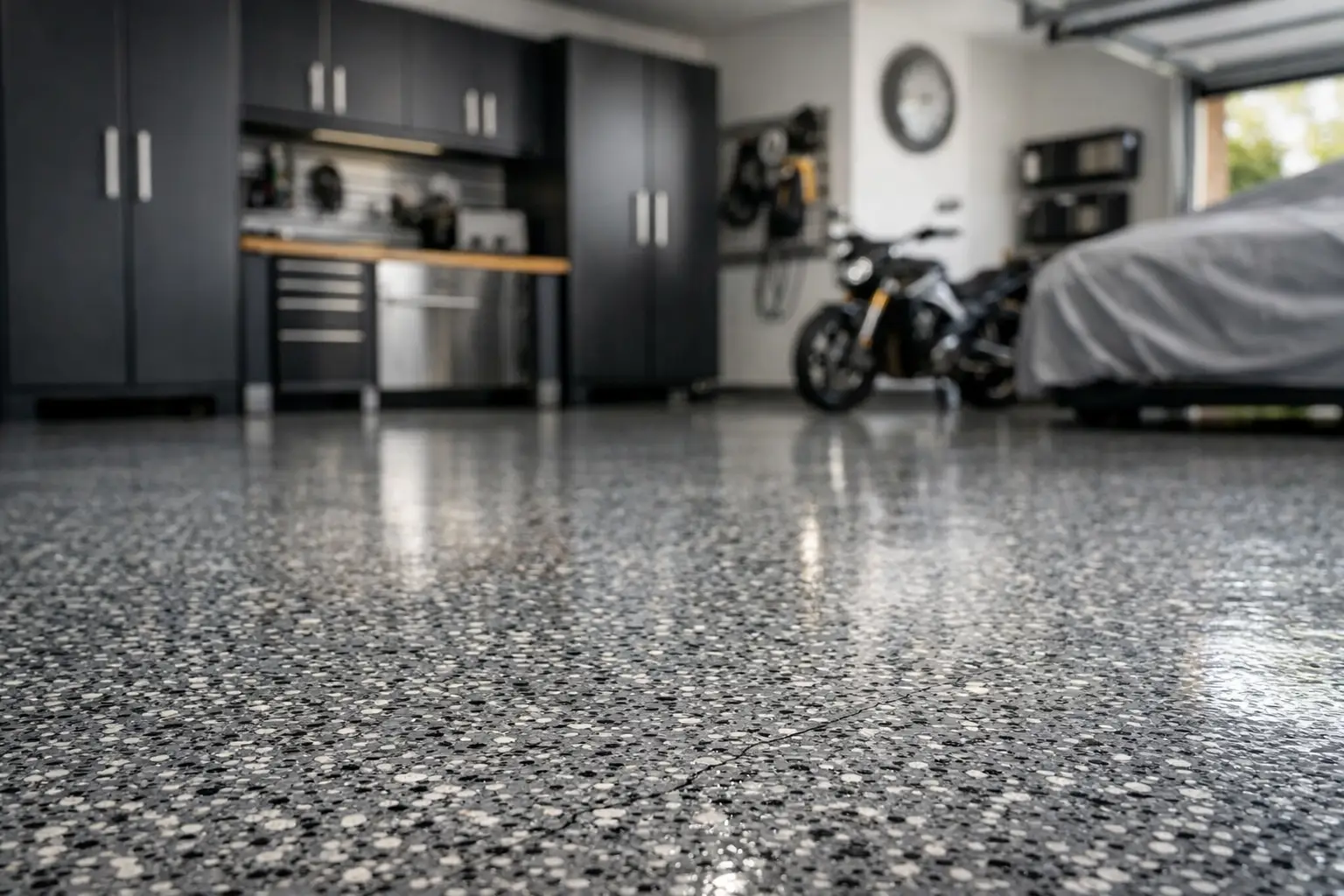
A garage floor usually tells the truth faster than the rest of the space. If the coating starts peeling at hot-tire spots, turns yellow near the door, or looks tired after a couple of seasons, the upgrade did not deliver. So, how long do polyaspartic floors last? In most residential garages, a professionally installed polyaspartic floor can last 15 to 20 years, and sometimes longer, depending on preparation, traffic, sunlight exposure, and ongoing care.
That range matters because not every “garage coating” is built the same. Material quality plays a role, but the bigger story is how the floor is installed and how the space is used. A beautiful finish is only part of the value. The real payoff is a floor that keeps your garage looking clean, refined, and easy to maintain for years.
How long do polyaspartic floors last in a real garage?
For most homeowners, the practical answer is 15 to 20 years with professional installation. In lighter-use garages, that lifespan can stretch beyond 20 years. In heavier-use spaces, especially where vehicles come and go daily, tools get dragged across the floor, and the slab already has condition issues, the floor may show wear sooner, but it should still outperform many traditional coating systems.
The reason polyaspartic performs so well is that it is designed for durability. It resists UV damage better than many epoxy systems, which means less yellowing and better colour stability over time. It also stands up well to chemicals, abrasion, and temperature swings, all of which matter in a working garage.
That said, lifespan is not just about the top coat. A long-lasting floor is a system, not a single product. If the concrete underneath is not properly prepared, even premium materials can fail early.
What affects the lifespan of a polyaspartic floor?
The biggest factor is surface preparation. A coating needs a clean, correctly profiled concrete surface in order to bond properly. If an installer skips diamond grinding, coats over contamination, or rushes through crack repair, the floor may look excellent on day one and disappoint far sooner than it should.
Professional prep typically includes diamond grinding the slab, repairing cracks, applying a strong base coat, broadcasting vinyl flake for texture and coverage, and sealing everything with a polyaspartic top coat. Each step contributes to longevity. When one step is cut short, the floor becomes more vulnerable to peeling, chipping, or uneven wear.
Usage also matters. A garage that functions as a home gym, workshop, bike storage zone, and vehicle bay will naturally put more stress on the surface than one used mainly for parking. Heavy point loads, dropped tools, jack stands, and constant abrasion from grit can shorten the cosmetic life of any floor, even when the coating remains structurally sound.
Sunlight is another consideration. One of the strongest advantages of polyaspartic is UV stability. In garages with the door open often, or in spaces with direct sun exposure, that matters. A coating that resists yellowing keeps the space looking sharper for longer, which is especially important when the garage is designed as an extension of the home rather than an afterthought.
Why installation quality matters more than most people expect
If you are comparing flooring options, the question is not only how long do polyaspartic floors last, but also why some last far longer than others. The answer usually comes back to the installation process.
A premium floor coating should not be applied like paint. Concrete has to be evaluated for moisture issues, prior coating failure, cracks, and surface contamination. The installer needs to create the right profile so the coating bonds into the slab instead of just sitting on top of it.
This is where professional systems separate themselves. A process that includes diamond grinding, crack repair, a polyurea primer or base coat, full flake broadcast, and a final polyaspartic top coat creates a much more durable result than a quick weekend application. Full flake coverage also helps conceal minor wear over time, giving the floor a more consistent appearance as the years pass.
For homeowners who want a garage that feels polished, functional, and easy to live with, this matters. Longevity is not only about avoiding replacement costs. It is about preserving the finished look of the whole space.
How polyaspartic compares to epoxy over time
Epoxy still has name recognition, but longevity in a garage is not just about familiarity. Polyaspartic systems are often considered a stronger choice for residential garage environments because they cure faster, resist UV damage better, and hold up well under temperature changes and chemical exposure.
Epoxy floors can perform well when installed correctly, but they are more prone to yellowing and can be less forgiving in spaces with direct sunlight. In a garage where the door opens regularly and the floor is visible from the driveway, that aesthetic shift becomes noticeable.
Polyaspartic coatings also tend to offer a cleaner long-term appearance. They are easier to maintain, and when paired with full flake coverage, they create a finished surface that feels intentional rather than utilitarian. For homeowners investing in a custom garage makeover, that design advantage is part of the value.
Signs a polyaspartic floor is aging well
A long-lasting floor does not need to look brand new forever, but it should continue performing without major issues. Good signs include stable colour, consistent gloss or sheen, no peeling around tires, and only minor surface wear in high-traffic areas.
You may notice small scuffs over time, especially in active garages. That is normal. Cosmetic wear is different from coating failure. A floor can still be doing its job exceptionally well even if it shows a bit of life from daily use.
What you do not want to see is widespread delamination, hot-tire lifting, significant chipping, or yellowing that changes the appearance of the space. Those problems often point back to either inferior material selection or poor preparation.
How to make polyaspartic floors last longer
Maintenance is straightforward, which is one of the reasons homeowners like this system. Regular sweeping removes abrasive dirt and grit. Occasional mopping with a gentle cleaner keeps the finish looking crisp. Chemical spills should be wiped up promptly, even though the surface is resistant, because faster cleanup always supports better long-term results.
It also helps to use protective pads under equipment or storage legs that sit in one place for long periods. If you are moving heavy items across the floor, lifting them rather than dragging them will reduce scratching. None of this is difficult, but small habits make a difference over 15 years or more.
The larger point is that a premium garage floor should make life easier, not add another maintenance burden. When the system is installed properly, upkeep stays simple.
Is a polyaspartic floor worth it for long-term value?
For many homeowners, yes. A longer-lasting floor means fewer repairs, less frustration, and a garage that continues to support the rest of the home instead of working against it. It is easier to keep clean, more attractive to use every day, and more resilient under real household demands.
That value becomes even clearer in a fully planned garage transformation. When cabinetry, wall storage, overhead storage, and flooring are designed together, the floor is not a standalone upgrade. It becomes the foundation for a more functional, more refined space. A durable coating helps the entire garage feel finished.
At Orga Spaces, our floor coating system is built for that kind of performance, with diamond-ground preparation, crack repair, a polyurea base coat, full flake coverage, and a polyaspartic top coat designed for long-term durability, UV stability, slip resistance, and easy cleaning.
If you are weighing whether the investment makes sense, think beyond the first year. The better question is whether you want a floor that simply looks good for now, or one that helps your garage stay elevated, practical, and easy to maintain for the next decade and beyond.
A well-finished garage changes how the space feels every time you pull in. When the floor holds up beautifully, the whole room keeps working harder for you.