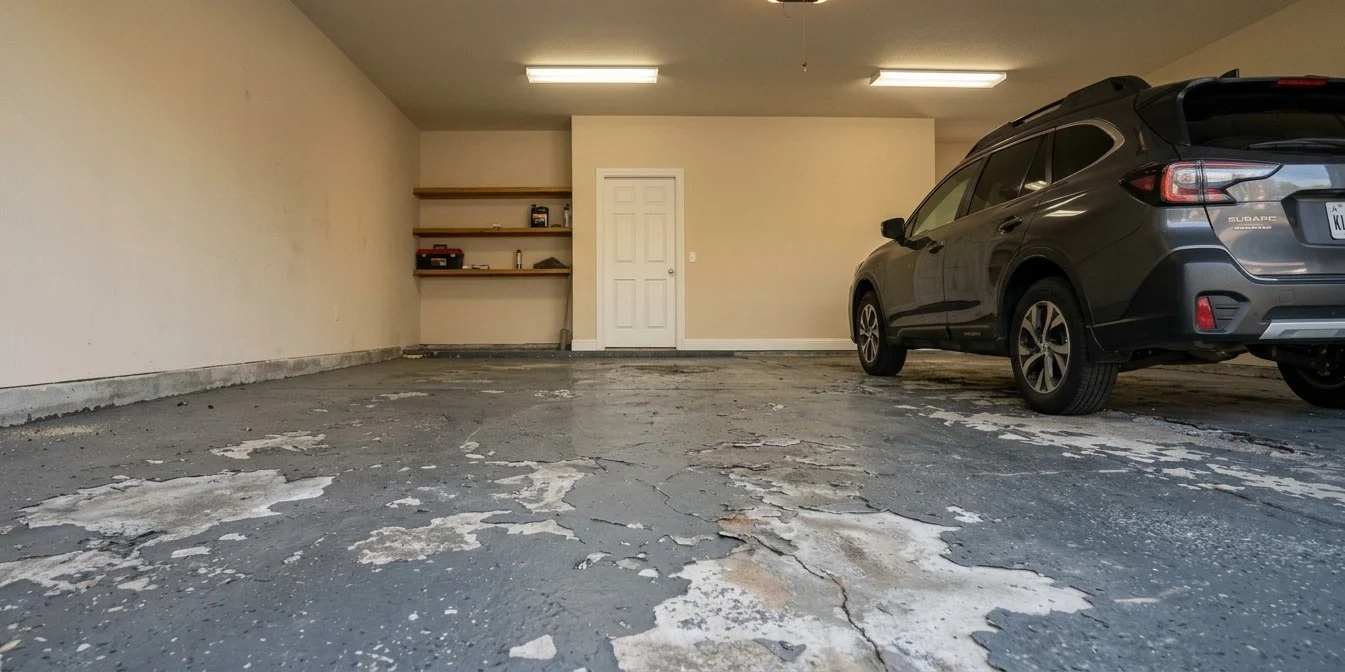
An epoxy garage floor can completely transform the look and functionality of your garage. Epoxy coatings are known for creating a smooth, durable surface that is easier to clean than bare concrete. However, one of the most frustrating problems homeowners can encounter is peeling or flaking coating.
What Causes an Epoxy Garage Floor to Peel?
1. Poor Concrete Preparation
One of the most common reasons a epoxy garage floor peels is poor preparation of the concrete.
Concrete needs to be properly cleaned and mechanically prepared before a coating is applied. Dirt, oil, grease, paint, and other contaminants can prevent the coating from bonding properly to your floor.
Simply sweeping or pressure washing the garage floor will not be enough.
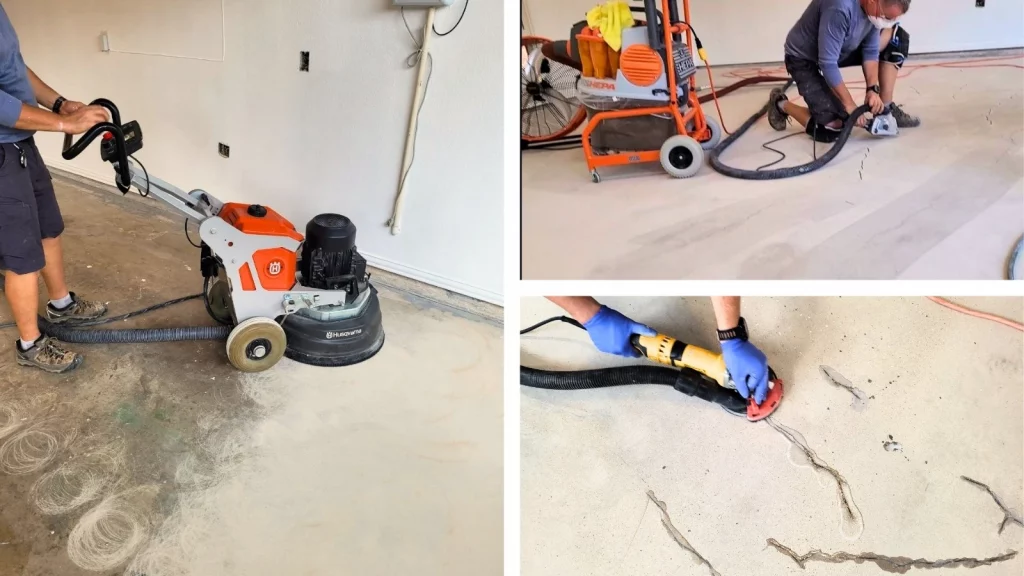
Professional installers commonly use diamond grinding to open the surface of the concrete and create the proper profile for the coating to bond to.
Without proper preparation, the epoxy may initially look great but eventually begin separating from the concrete.
2. Moisture Coming Through the Concrete
Concrete is porous, which means moisture can move through it. If moisture vapor is present beneath the slab, it can create pressure underneath a floor coating.
That pressure can contribute to blistering, bubbling, peeling, or delamination.
This is especially important for epoxy garage floors because they are typically installed directly over concrete slabs that may be exposed to ground moisture.
Before installing a coating, moisture conditions should be evaluated and addressed when necessary.
3. Applying Epoxy Over Contaminated Concrete
Oil and automotive fluids are common in garages. A vehicle can leave behind oil, grease, transmission fluid, or other contaminants that penetrate into concrete.
If these contaminants remain in the concrete, they can interfere with adhesion.
This is one reason why preparation is more than simply making the floor look clean. The concrete needs to be prepared so the coating can properly bond.
4. Incorrect Application Conditions
Temperature and humidity can also affect how a coating cures.
Applying epoxy outside the manufacturer’s recommended conditions can result in improper curing or reduced adhesion. Extremely cold or hot conditions, high humidity, or moisture in the concrete can all create problems.
Following the manufacturer’s specifications for temperature, humidity, mixing ratios, and recoat times is essential.
5. Incorrect Mixing
Two-component epoxy products rely on specific chemical ratios. If the components are not mixed correctly, the coating may not cure as intended.
Improper mixing can result in a coating that remains soft, fails to bond correctly, or becomes more susceptible to premature failure.
This is particularly important with DIY projects where measuring and mixing are done without professional equipment or experience.
Can Peeling Epoxy Be Repaired?
Sometimes, but simply applying another layer of epoxy over the peeling areas usually isn’t a permanent solution.
Loose coating needs to be removed, and the underlying concrete needs to be properly prepared before a new coating system is installed.
Depending on the condition of the floor, the repair process may involve:
- Removing loose or failed coating
- Grinding the concrete
- Cleaning and preparing cracks
- Addressing moisture issues
- Repairing damaged concrete
- Reapplying the appropriate coating system
If a large portion of the floor is failing, installing a new coating system over the entire surface may provide a more consistent result than patching individual areas.
How Can You Prevent an Epoxy Garage Floor From Peeling?
The best way to prevent peeling is to focus on the installation process rather than simply choosing a thicker or more expensive product.
A properly installed garage floor coating should begin with thorough concrete preparation. The surface should be mechanically prepared, contaminants should be removed, cracks and damaged areas should be repaired, and moisture conditions should be checked before coating. The coating should then be applied according to the manufacturer’s specifications.
Epoxy vs. Modern Garage Floor Coating Systems
Although epoxy is widely used for garage floors, it is not the only coating option available.
Many professional garage flooring companies now use polyurea and polyaspartic coating systems.
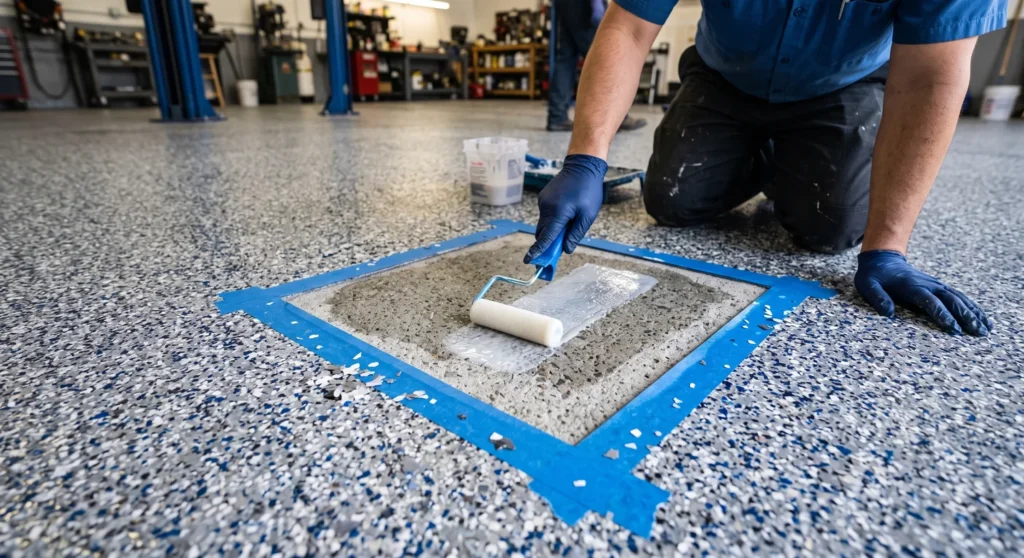
A typical professional system will use polyurea primer or base coat, decorative flakes, and a polyaspartic topcoat. These systems are designed specifically for demanding garage environments and can provide a durable, seamless surface.
A key difference between these materials is their flexibility after curing. When epoxy dries, it hardens much like glass, very rigid. Because it doesn’t bend, it is highly susceptible to cracking and delamination when the concrete underneath naturally shifts or expands with temperature changes. In contrast, polyurea and polyaspartic coatings retain a slight elasticity. This allows them to flex and move with the concrete beneath them, significantly reducing the risk of structural failure.
Polyaspartic coatings also offer strong UV resistance, which can be beneficial in garages exposed to sunlight compared an epoxy garage floor.
The performance of any flooring system still depends heavily on proper preparation and installation. The product alone cannot compensate for poor surface preparation.
Thinking About DIY Epoxy?
A DIY epoxy kit can seem like an easy way to save money. Many off the shelf kits from hardware stores come with everything needed to apply a coating, making them appealing to homeowners who want to tackle the project themselves.
However, the most important part of a garage floor installation happens before the coating is applied. Surface preparation requires much more than simply washing or acid-etching the concrete. Removing contaminants, mechanically profiling the concrete, repairing cracks, and evaluating moisture levels will all dictate the success of the final result.
The chemical composition of DIY kits also presents a major limitation. Most widely available hardware store kits are water based epoxies. Because they contain a high percentage of water that evaporates as they cure, the resulting finish is very thin and often just a fraction of the thickness of industrial coating systems. This micro thin water based layer is highly susceptible to “hot tire pickup,” where the heat from your car’s tires bonds to the thin epoxy and peels it straight off the concrete.
If preparation is rushed or a cheap water based coating is applied, you could quickly end up with peeling, bubbling, uneven coverage, and premature wear. Fixing a failed DIY coating is labor-intensive, requiring heavy mechanical grinding to remove the compromised material before starting over.
Get a Garage Floor That Is Built to Last
An epoxy garage floor can be a major improvement to your garage, but the installation process matters just as much as the coating itself.
If you’re considering a new garage floor, look beyond the product name and ask about the complete flooring system, concrete preparation, warranty, and installation process.
At Orga Spaces, we prepare garage floors using professional mechanical grinding and install multi-layer coating systems designed for residential garages. Our typical system includes a polyurea base, decorative vinyl flakes, and a polyaspartic topcoat for a durable, easy-to-maintain finish with long lasting results.
A garage floor should not just look good when it is first installed. The goal is a coating system that continues to perform for years.