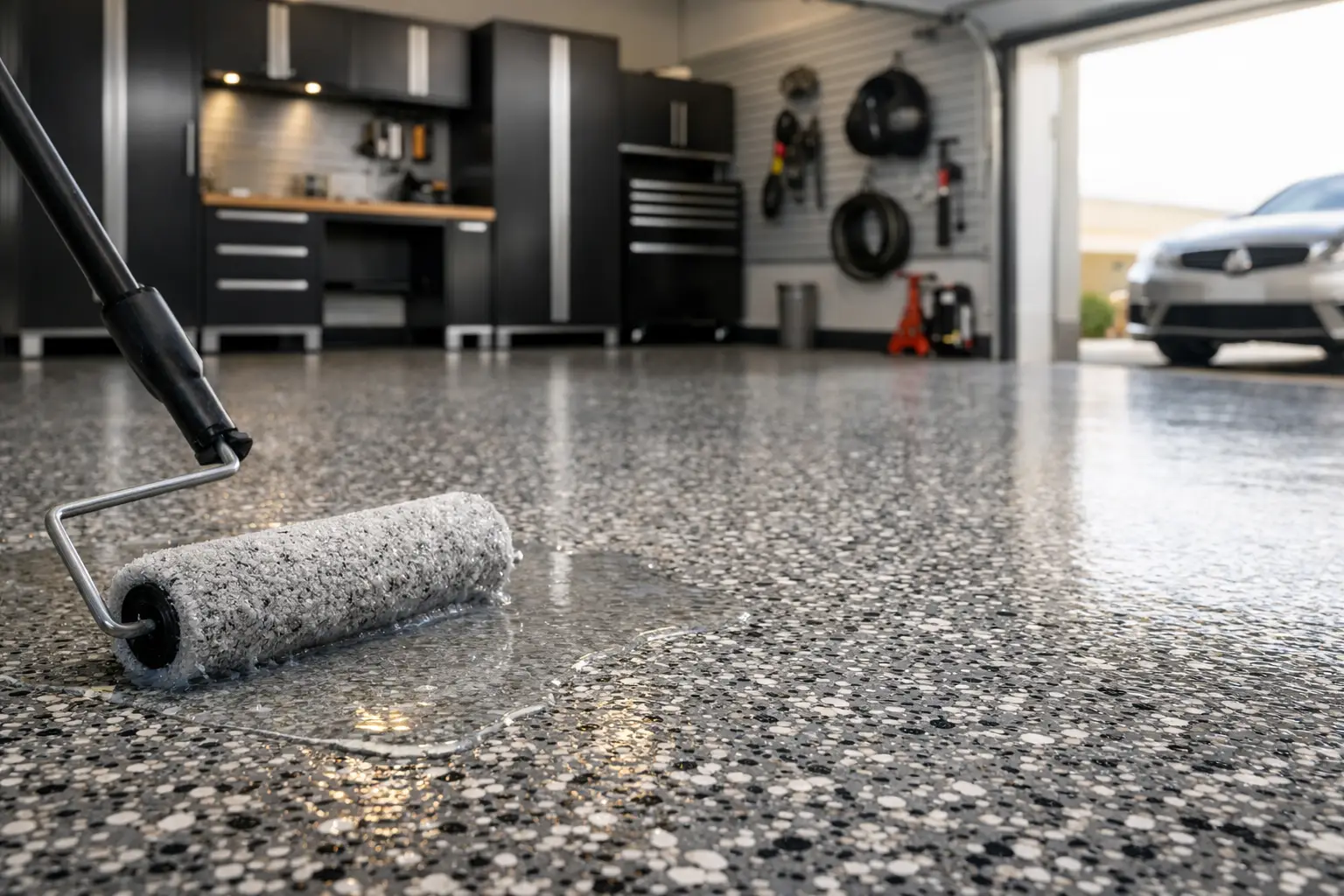
A garage floor has to handle more than parked vehicles. It sees hot tires, muddy shoes, dropped tools, bike traffic, pet paws, oil drips, and the daily movement that comes with a busy home. That is why homeowners often ask, what is polyaspartic floor coating, and whether it is worth choosing over a traditional epoxy floor.
Polyaspartic coating is a high-performance protective finish applied over prepared concrete. It creates a durable, attractive surface that is designed to resist stains, chemicals, abrasion, moisture, and UV exposure. For a garage that is becoming part workshop, part storage zone, and part polished extension of the home, it offers a finish that works hard without looking industrial.
What Is Polyaspartic Floor Coating Made Of?
Polyaspartic is a type of polyurea coating. It is formulated to cure quickly while providing greater control during installation than many standard polyurea products. Once the coating hardens, it forms a dense protective layer over the concrete, helping shield the slab from the wear that slowly makes an unfinished garage floor look dusty, stained, and neglected.
In a residential garage, polyaspartic coating is usually part of a multi-layer flooring system rather than a single coat of paint. The concrete is prepared, repaired where needed, primed, coated, and finished with a protective top coat. Decorative vinyl flakes can be broadcast into the wet base coat to create texture, visual depth, and a more forgiving appearance than bare grey concrete.
The finished floor has a clean, tailored look, but its value is not only visual. A professionally installed system makes the garage easier to maintain and better suited to the way your household actually uses the space.
Why Polyaspartic Works Well in a Garage
Concrete is durable, but it is also porous. Without protection, it can absorb fluids, show tire marks, release dust, and develop a patchy appearance over time. A polyaspartic system seals the surface and creates a barrier between everyday garage life and the concrete beneath.
One of its most useful qualities is UV stability. Some floor finishes can amber or yellow when exposed to sunlight, especially near open garage doors or windows. A quality polyaspartic top coat is designed to maintain its colour and clarity, making it a strong choice for bright garages and Dallas-Fort Worth homes where sunlight is part of daily life.
It also cures quickly. While the exact timeline depends on the condition of the concrete, temperature, humidity, and scope of the project, a polyaspartic garage floor can often be professionally installed in one day. That means less disruption to your routine and a faster path from cluttered utility space to a garage you are proud to open.
Chemical resistance is another meaningful benefit. Oil, gasoline, household cleaners, road salt residue, and other common garage spills are less likely to penetrate a properly installed coating system. Spills should still be cleaned promptly, but maintenance becomes far simpler than trying to scrub stains from raw concrete.
Polyaspartic vs. Epoxy: What Is the Difference?
Epoxy has been a familiar name in garage flooring for years, and it can be a reasonable option for certain projects. The difference comes down to performance priorities, installation conditions, and the long-term look you want from the floor.
Traditional epoxy generally takes longer to cure and can be more sensitive to installation conditions. It may also yellow with UV exposure, particularly when sunlight reaches the garage floor regularly. Polyaspartic systems cure faster, offer strong UV resistance, and provide excellent protection against wear and common chemicals.
That does not mean every epoxy floor will fail or every polyaspartic floor is automatically superior. Product quality, concrete preparation, installer experience, and the complete coating system matter greatly. A premium coating applied over poorly prepared concrete will not deliver the result a homeowner expects.
For homeowners investing in a complete garage transformation, polyaspartic full-flake flooring is often the more compelling choice. It supports a refined design direction, handles real household use, and avoids the yellowing that can make a finished garage feel dated before its time.
Why full-flake coverage matters
A full-flake floor receives a generous broadcast of vinyl flakes until the wet base coat is fully covered. After curing, excess flakes are removed and the floor is sealed beneath a clear polyaspartic top coat.
This method creates a more consistent, substantial finish than a light sprinkle of decorative flakes. It also helps disguise minor dirt and everyday marks between cleanings, adds texture underfoot, and gives the floor a finished appearance that pairs naturally with custom cabinetry, wall storage, and organized work zones.
Flake colours range from soft neutral blends to deeper charcoal-based combinations. The right selection depends on your garage cabinetry, wall colour, lighting, and the overall feel you want to create. A floor should ground the design, not compete with it.
The Installation Process Is Where Performance Begins
Floor coating is not a cosmetic shortcut. The preparation process determines whether the finished surface bonds properly and performs as intended. Simply rolling coating over an existing slab can trap dust, cover problems temporarily, and lead to peeling or premature failure.
A professional polyaspartic installation begins with diamond grinding. This mechanically opens the concrete surface and removes contaminants so the coating can bond directly to sound concrete. It is a critical step, especially in garages that have seen years of vehicle traffic, old sealers, paint, or oil residue.
Cracks and surface imperfections are then repaired. Not every hairline crack can be made invisible forever, because concrete naturally moves, but proper repair improves both the appearance and the integrity of the finished floor. The goal is an honest, durable surface, not a quick cover-up.
Next comes a polyurea primer or base coat, followed by the full vinyl flake broadcast. Once the material has cured, the surface is scraped and vacuumed to remove loose flakes. A final polyaspartic top coat seals the system and provides the smooth, easy-to-clean protective layer.
At Orga Spaces, this process is planned as part of a larger garage transformation, so the flooring works with the layout, storage strategy, and visual finish of the room rather than feeling like an isolated upgrade.
Is a Polyaspartic Floor Slippery?
A coated floor can look smooth, which leads many homeowners to assume it will be slippery. In practice, a full-flake polyaspartic floor offers more traction than a plain glossy coating because the flakes create surface texture. The final finish can also be selected with slip resistance in mind.
Still, no garage floor is completely slip-proof. Water, oil, soap, or snow and ice tracked in on footwear can create a slipping risk on any surface. The practical advantage of a coated floor is that spills remain on top of the finish rather than soaking into the concrete, making them easier to see and clean.
If your garage is frequently used as a home gym, hobby area, or entry point for children and pets, discuss the intended use before selecting the finish. The best surface balances cleanability, traction, and the visual character you want for the space.
How Long Does a Polyaspartic Garage Floor Last?
A well-installed polyaspartic floor can provide long-lasting performance, but its lifespan depends on the condition of the slab, the quality of materials, traffic levels, and how the space is used. It is built for daily residential demands, not as an invitation to ignore spills, impacts, or concrete issues indefinitely.
The easiest way to protect the finish is also the simplest: sweep grit regularly, wipe up spills, and use gentle cleaning products as recommended by your installer. Avoid harsh abrasives and do not drag sharp metal objects across the surface. If you use jack stands, motorcycle kickstands, or heavy equipment, ask about practical protection for concentrated pressure points.
A polyaspartic floor is especially valuable when it is paired with thoughtful organization. Cabinets keep chemicals off the ground, wall storage clears up tripping hazards, and designated zones reduce the visual noise that can make even a new garage feel crowded. The floor becomes the foundation for a space that supports your routine instead of adding to it.
Is Polyaspartic Coating Right for Your Garage?
Polyaspartic flooring is a strong fit for homeowners who want a garage that feels finished, clean, and ready for more than vehicle storage. It is particularly well suited to households that value fast installation, UV stability, easy maintenance, and a design-forward finish that will not look out of place beside premium storage systems.
It may not be the right answer for concrete with serious structural damage, active moisture concerns, or a surface that needs broader repair before coating. Those issues should be assessed honestly before work begins. The right floor system starts with understanding the slab, then designing for how you want to live in the space.
When your garage floor is durable enough for daily life and polished enough to elevate the room, it becomes easier to keep the whole space in order – and easier to create room for you to breathe.