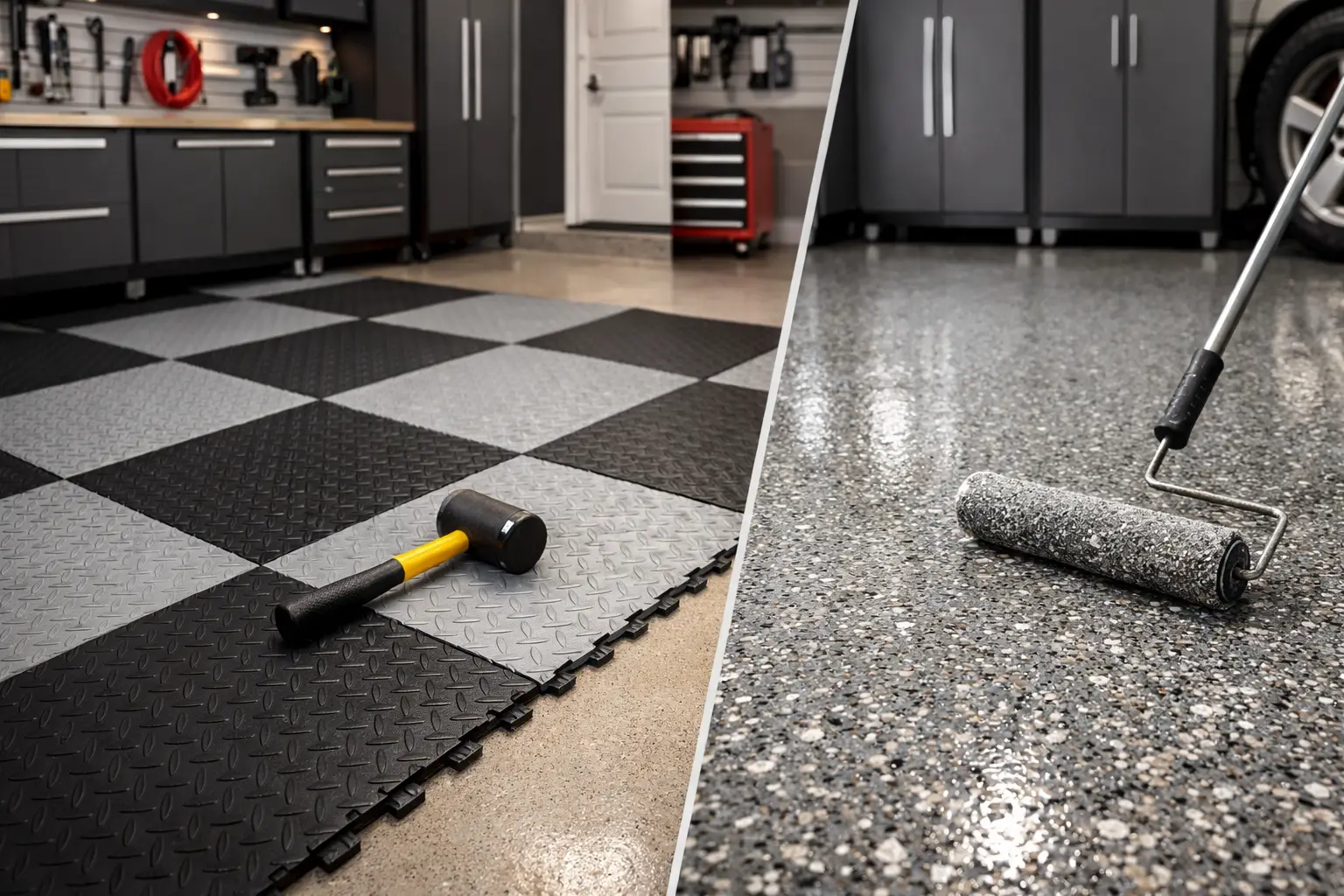
A garage floor sets the tone for the entire space. Before cabinets are installed, tools are organized, or seasonal gear is put away, the floor determines whether the room feels like an unfinished utility area or a considered extension of your home. In the garage floor tiles vs coating decision, both options can create a cleaner, more functional result. The better choice depends on how you use the garage, the condition of the concrete, and the level of finish you want to live with every day.
For homeowners planning a complete garage transformation, flooring is rarely an isolated decision. It needs to work with storage cabinetry, wall systems, vehicles, pets, hobbies, and the everyday rhythm of a busy household. A floor that looks great on installation day should also make parking, cleaning, and finding what you need feel easier months and years later.
Garage Floor Tiles vs Coating: The Real Difference
Garage floor tiles are individual pieces, usually made from rigid polypropylene or flexible PVC, that lock together over an existing concrete slab. They sit on top of the floor rather than becoming part of it. Their appeal is immediate: they introduce colour, pattern, and a finished appearance without the more intensive surface preparation required for a coating.
A garage floor coating is applied directly to prepared concrete. Quality systems use multiple layers to protect the slab and create a continuous finished surface. The end result is less like a covering laid over the floor and more like a durable new skin for it.
That distinction affects nearly every practical consideration. Tiles can be replaced one at a time when damaged, while coatings offer a smooth, uninterrupted surface with no seams to collect dust. Tiles may be the right fit for a temporary setup or a homeowner who wants to install flooring without altering the slab. A professionally installed coating is often the stronger choice for a long-term garage renovation where durability, easy maintenance, and a refined appearance matter most.
How Each Option Performs in Daily Garage Life
Durability under vehicles, tools, and traffic
Both flooring types are designed for garages, but their performance is not identical. Interlocking tiles can handle ordinary vehicle traffic and are naturally forgiving underfoot. They can also conceal minor concrete imperfections, making them useful when the slab is uneven or cosmetically worn.
However, tile joints remain joints. Dirt, water, and automotive fluids can work their way between them. Heavy rolling loads, sharp jack stands, hot tires, or dropped tools may mark or shift certain tile styles over time. The performance varies substantially by material and installation quality, so choosing tiles based on appearance alone can lead to disappointment.
A high-quality polyaspartic coating creates a continuous, hard-wearing surface designed to stand up to vehicle traffic, tools, spills, and active family use. At Orga Spaces, the coating process begins with diamond grinding to properly prepare the concrete, followed by crack repair, a polyurea primer and base coat, full vinyl flake broadcast, and a protective polyaspartic top coat. This layered approach helps the finished floor resist peeling, cracking, and staining far better than a surface that has simply been painted.
Cleaning and maintenance
This is where a continuous coating has a meaningful advantage. A coated floor can be swept, vacuumed, or mopped without working around grooves or seams. Dust, lawn clippings, and pet hair stay visible rather than disappearing into joints, which makes it easier to keep the garage looking intentional.
Tiles are not difficult to maintain, but they require more attention when spills occur. Water or oil that reaches the spaces beneath the tiles may need deeper cleaning to prevent odours or residue. In a garage used for weekend projects, gardening, sports equipment, or frequent vehicle washing, that extra maintenance can become noticeable.
Polyaspartic full-flake flooring is also chemical-resistant and easy to clean. For homeowners who want a garage that supports a smoother morning routine rather than another cleaning task, this practical benefit often matters as much as the visual finish.
Comfort and traction
Flexible PVC tiles can feel softer and warmer underfoot than bare concrete or a hard coating. If the garage doubles as a workshop, home gym, or hobby space where you stand for long periods, that cushioning can be appealing. Some homeowners also appreciate the ability to replace a worn section without refinishing the entire floor.
A coating will feel firmer, but it does not need to feel slick. Full vinyl flake coverage creates texture, and a properly specified top coat provides a slip-resistant finish. This is particularly valuable near entry doors, in areas where children and pets move through the garage, and in homes where wet shoes or rainwater are part of the routine.
The right answer depends on the space. A dedicated workshop may benefit from the comfort of flexible tiles or anti-fatigue mats placed where you stand most. A garage designed for vehicles, storage, and a clean all-purpose finish often benefits more from the traction and cleanability of a textured coating.
Design Considerations Beyond Colour
Tiles offer clear design flexibility. You can use solid colours, checkerboard layouts, borders, and custom patterns to create a more graphic look. This can suit a garage with a bold automotive theme or a space where the floor is intended to be a major visual feature.
Coatings create a more integrated, architectural result. Full-flake systems use blended vinyl flakes to add depth, texture, and visual movement across the floor. The finish can complement steel cabinetry, slatwall storage, and neutral home interiors without competing with them. Because there are no visible tile seams, the room often feels larger, calmer, and more cohesive.
For a premium garage makeover, flooring should support the overall design rather than ask for all the attention. A well-chosen flake colour can soften the visual impact of concrete while providing a practical backdrop for bicycles, bins, cabinetry, and vehicles. It gives the room a finished foundation that still feels useful, not precious.
Installation Time and Concrete Condition
Tiles are often selected because they can be installed quickly over existing concrete. They can be a practical option when the slab has cosmetic flaws that a homeowner does not want to repair immediately. Because they are not bonded to the concrete, they can also be removed later.
That convenience comes with a trade-off. Covering the floor does not solve moisture concerns, significant cracking, or drainage issues below it. If water is entering through the slab or pooling in the garage, it is worth addressing the source before investing in any finished flooring. Otherwise, moisture and debris can become trapped out of sight.
Coatings demand more preparation, but preparation is what allows them to perform. Diamond grinding opens the concrete surface so the coating system can bond properly. Cracks are repaired before the finish is applied, creating a more polished and durable result. A professional polyaspartic system can typically be installed in one day, making it a practical choice for homeowners who want a substantial upgrade without an extended renovation timeline.
In the Dallas-Fort Worth area, UV stability is also worth considering. Sunlight can reach garage floors through open doors and windows, and intense heat can be hard on lower-quality materials. Polyaspartic coatings are UV-stable, helping them maintain their colour without the yellowing often associated with traditional epoxy finishes.
When Tiles Make Sense
Garage tiles can be the right choice when flexibility is the priority. They work well for renters with permission to improve a space, homeowners seeking a removable option, or garages used as casual multipurpose rooms where underfoot comfort matters more than a permanent, seamless finish.
They can also be useful when the goal is a highly patterned aesthetic or when a homeowner wants to refresh the floor independently in stages. The key is to choose a tile system rated for the actual loads and conditions in the garage, not just its appearance in a showroom.
When a Polyaspartic Coating Is the Better Investment
A full-flake polyaspartic coating is usually the stronger fit for homeowners who want their garage to feel like a lasting part of the home. It is especially well suited to garages that house vehicles, need frequent cleaning, support custom storage systems, or serve as the main entry point for the family.
It is also the more compelling option when you want to improve the concrete itself rather than cover it. With proper preparation and professional installation, a coating delivers a durable, UV-stable, slip-resistant surface that is designed to handle real life while maintaining a polished appearance.
The best floor is the one that makes the rest of your garage easier to enjoy. Start with how you want the space to function – from parking and projects to storage and daily arrivals – then choose the finish that gives that vision a foundation built to last.