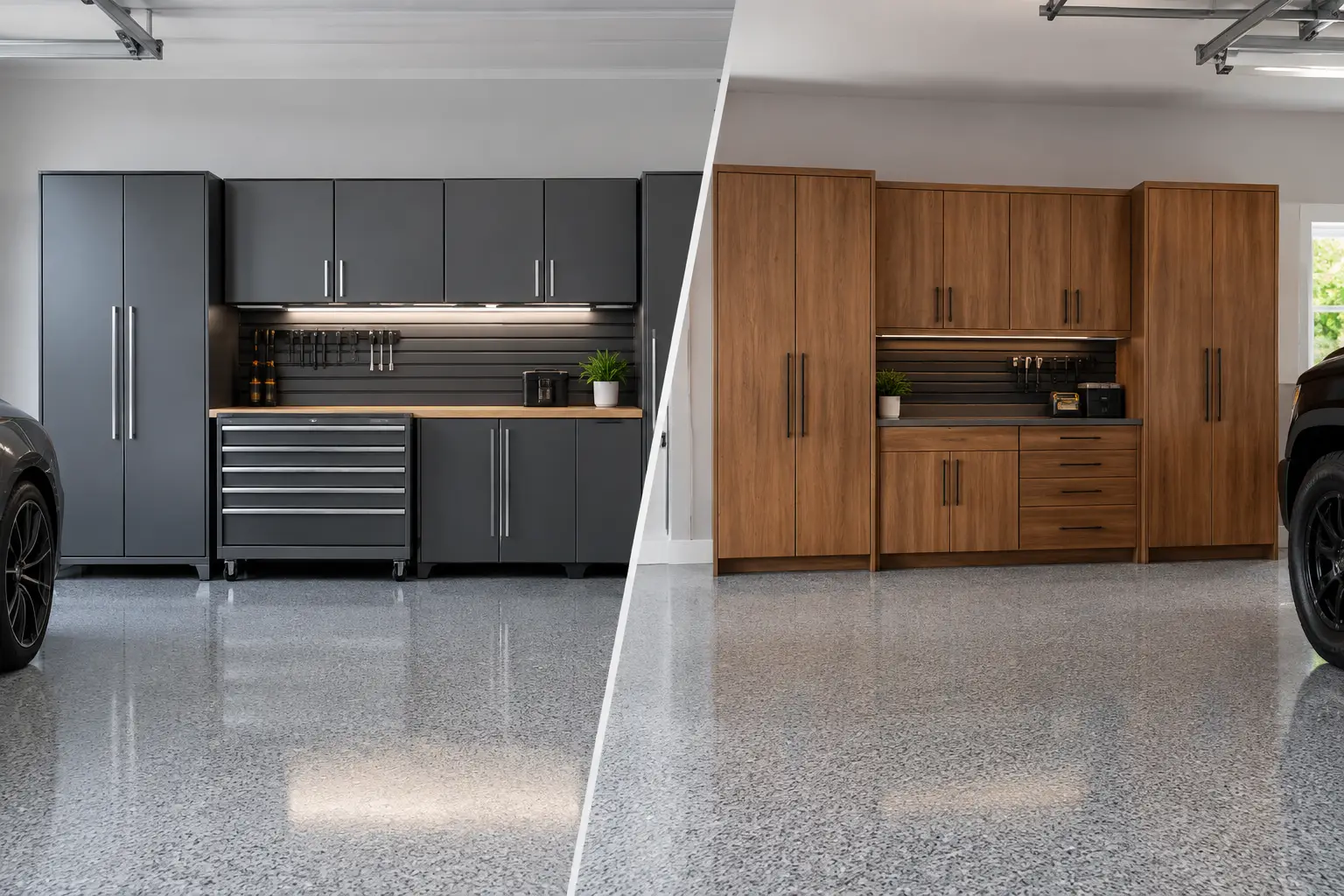
A garage can look organized for a weekend and still fail the real test: handling bikes, tools, sports gear, paint, seasonal bins, and the daily rush out the door. When homeowners compare steel cabinets versus wood, they are usually deciding more than a finish. They are choosing how their garage will perform, how it will feel to use, and how well it will support the home around it.
Both materials can be beautiful when thoughtfully designed. The better choice depends on what you store, how your garage behaves through heat and humidity, and whether you want a furniture-like appearance or a hard-working system built around demanding storage.
Steel Cabinets Versus Wood: The Practical Difference
Steel and wood cabinets approach garage storage from very different starting points. Steel is engineered for resilience. It is non-porous, stable, and well suited to spaces where dirt, moisture, chemicals, and heavy equipment are part of ordinary life. Quality steel cabinetry also delivers a crisp, architectural finish that makes a garage feel intentional rather than improvised.
Wood cabinetry brings warmth and visual flexibility. In a climate-controlled interior room, it can create the tailored look of built-in furniture. In a garage, though, wood must contend with changing conditions that are far less forgiving. Temperature swings, humidity, damp concrete, and accidental spills can all affect its appearance and longevity.
That does not mean wood has no place in a garage. It means material selection should begin with the environment, not just the colour sample.
Why Steel Often Suits the Garage Better
A premium garage is a working space. Even if it also serves as a home gym, workshop, hobby zone, or polished entry point into the house, it needs storage that does not become precious. Steel cabinets are especially compelling for homeowners who want to put equipment away without worrying about every scuff, drip, or muddy tire.
Durability for real-life storage
Steel cabinetry is designed to carry substantial loads when properly configured and professionally installed. That makes it a natural fit for dense, awkward items: power tools, automotive supplies, bulk household goods, coolers, sports equipment, and seasonal décor. Adjustable shelves allow the interior to evolve as a family’s needs change, while doors keep visual clutter out of sight.
The cabinet construction matters as much as the material itself. Look beyond a label that simply says “metal.” Cabinet gauge, reinforced shelving, quality hinges, full-height backs, level installation, and secure wall attachment all influence long-term performance. A well-designed steel system feels solid when doors open and close, shelves remain straight, and the cabinetry stays aligned over years of daily use.
Easier care after spills and messes
Garages collect the things the rest of the home is not designed to hold. Fertilizer, cleaning supplies, oil, wet boots, gardening tools, and pool accessories all create the possibility of moisture or residue. Powder-coated steel is easy to wipe down and does not absorb spills in the way unfinished or damaged wood can.
That low-maintenance quality has a quiet but meaningful benefit: homeowners are more likely to keep the space functioning well. When cleanup is simple, the garage remains a place that supports the day rather than another project waiting to happen.
A refined, contemporary look
Steel is not limited to an industrial aesthetic. Modern powder-coated finishes can feel sleek, understated, and highly tailored, particularly when cabinets are designed as part of a complete wall system. Paired with integrated work surfaces, slatwall storage, overhead racks, and consistent hardware, steel cabinetry gives the room visual rhythm and a sense of permanence.
For homeowners who want the garage to feel like an extension of a well-designed home, that clean-lined appearance can be a major advantage. The goal is not to make a garage look sterile. It is to create a calm backdrop for the things that need to live there.
Where Wood Cabinets Make Sense
Wood can be the right choice in select situations, especially when the garage functions more like a finished interior space than a traditional utility area. A conditioned garage used primarily as a studio, hobby room, or light storage area may benefit from the warmth and customization wood provides.
Custom wood cabinetry also offers broad options for profiles, stains, painted finishes, and decorative details. If the design calls for a softer, more residential look, wood can help establish it. It may also coordinate beautifully with nearby interior millwork in a garage that is visible from a mudroom or living area.
The trade-off is maintenance and exposure. Wood products vary widely, from solid wood to plywood, particleboard, MDF, and melamine-faced panels. Some handle moisture better than others, but none are entirely unaffected by persistent humidity, water intrusion, or prolonged contact with a damp floor. Edges can swell, veneers can lift, and finishes can chip or stain over time.
Wood cabinets work best when they are elevated from the floor, finished appropriately, installed in a controlled environment, and used for lighter, cleaner storage. They are less convincing as a default choice for a garage that sees frequent vehicle use, messy projects, or major temperature changes.
Climate, Moisture, and the Garage Floor
The garage environment is often the deciding factor. Even a beautiful cabinet system can be undermined by moisture moving through concrete, rain tracked in by vehicles, or humidity that lingers after a storm. Steel is generally more forgiving in these conditions, particularly when the finish is designed to resist corrosion and the cabinets are installed with proper clearances.
Wood needs more protection from the ground up. Cabinets should not sit directly on a potentially damp slab, and homeowners should think carefully about where wash-down areas, lawn equipment, and wet gear will be stored. If water is part of normal garage life, choosing storage that tolerates it is a practical form of future-proofing.
The floor itself also shapes the finished result. A clean, durable surface makes the room easier to maintain and elevates the cabinetry above it. It is worth planning cabinets, wall storage, lighting, and flooring as one coordinated project rather than treating each as an isolated purchase.
Design Flexibility Is About More Than Finish
Wood is often assumed to be the more customizable material, but a custom steel garage system can be highly personalized. The real question is whether the design is built around your belongings and routines.
A thoughtful layout considers where you park, which door you use most, how children access sports gear, whether you need a workbench, and what should stay visible versus concealed. Tall cabinets can handle brooms and ladders. Base cabinets can support a work surface. Wall-mounted accessories can keep frequently used items within reach. Overhead storage can reserve valuable floor space for the things you use every day.
This is where a professional design process adds value. Instead of selecting cabinets by width alone, homeowners can see how the entire space will work together before installation begins. A 3D design makes it easier to assess proportions, storage capacity, circulation, and finish selections while changes are still simple.
Cost: Consider the Whole Life of the System
Upfront pricing matters, but the least expensive cabinet is not always the most economical choice. Lower-cost wood composites may be attractive at first, yet repairs or replacement can become likely if the material is exposed to moisture or hard use. Steel cabinetry may require a greater initial investment, particularly in a custom configuration, but it is often better positioned for the demands of a garage.
It also helps to separate cabinet cost from project value. A complete system can reclaim floor area, reduce visual clutter, protect expensive equipment, and make parking easier. For busy households, that can translate into smoother mornings, faster cleanups, and less time searching for what should already have a home.
Choosing the Right Cabinet Material for Your Home
Choose steel if your garage is an active, multi-purpose space and you want durable, low-maintenance storage with a polished modern appearance. It is particularly well suited to heavy items, moisture-prone conditions, workshop use, and families who want the system to keep pace with real life.
Choose wood when the space is climate controlled, storage demands are lighter, and a furniture-like finish is central to the design. It can be a beautiful solution when its environment and intended use support it.
For many homeowners, the strongest answer is not simply steel or wood. It is a complete plan that gives every category of belonging a deliberate place. With custom design and professional installation, Orga Spaces helps turn a crowded garage into a composed, high-functioning extension of your home – creating room for you to breathe every time the door opens.