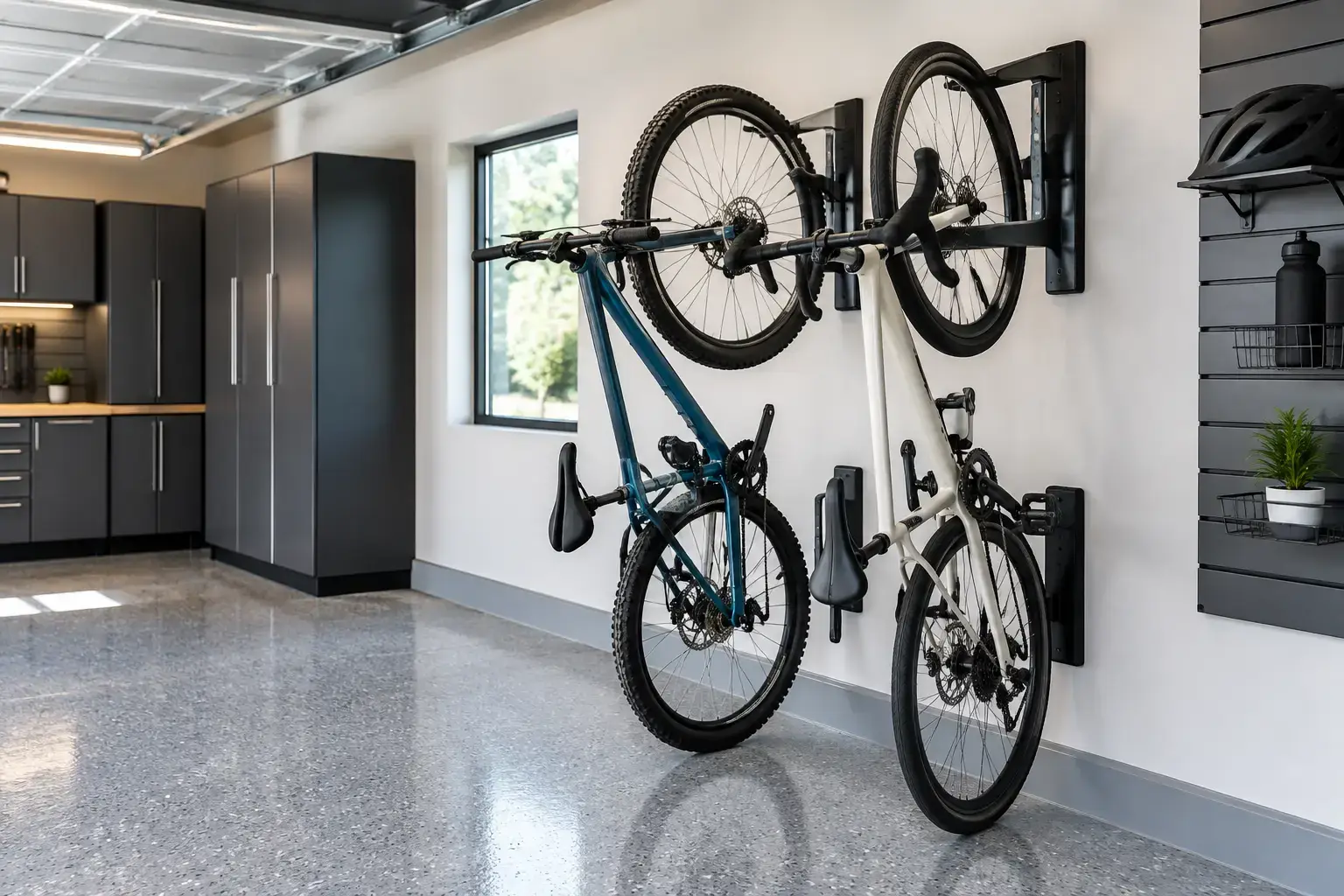
A bicycle leaning against the garage wall is rarely just one bicycle. It becomes the place where helmets land, pumps disappear, and car doors have to squeeze past handlebars. The best garage bike racks do more than get bikes off the floor. They create a dependable home for every ride, protect valuable equipment, and make leaving for a morning ride or family outing feel effortless.
For homeowners who want a garage that works as beautifully as the rest of the home, the right rack is not simply a hardware decision. It is part of a larger storage plan. Bike size, household routines, wall space, vehicle clearance, and access all influence which solution will genuinely improve daily life.
What Makes the Best Garage Bike Racks Work
The right choice begins with an honest look at how your household uses its bikes. A road bike ridden every weekend deserves a different storage position than a child’s bike used occasionally or a seasonal mountain bike. The most effective rack is one that keeps frequently used bikes accessible without allowing less-used equipment to claim valuable floor space.
Capacity matters, but spacing matters just as much. Two bikes may technically fit on a wall, yet handlebars, pedals, and wide tires can make the setup frustrating if they overlap. Allow enough room to lift, turn, and remove each bike without moving another. This is especially relevant for families, where independent access helps keep the system orderly after the first week.
A well-designed bike storage area should also consider what belongs with the bike. Helmets, locks, lights, shoes, pumps, and repair tools need a nearby home. When accessories are integrated into the surrounding cabinet, slatwall, or shelving plan, they stop migrating onto the workbench and floor.
The Main Types of Garage Bike Racks
No single rack suits every garage. The best approach depends on whether your priority is quick access, maximum capacity, a clear floor, or a polished visual result.
Vertical wall hooks
Vertical wall hooks hold a bike by one wheel, allowing it to hang upright with the tires close to the wall. They are a smart option for narrow garage walls and households with several bikes, because they use vertical space efficiently. Alternating the height of each hook can reduce handlebar interference and create a more compact arrangement.
The trade-off is the lift. Hanging a heavy e-bike, a bulky mountain bike, or a child’s bike can be awkward for some users. Vertical hooks are best for riders comfortable lifting their bikes and for walls with proper structural backing. They should never be installed into drywall alone.
Horizontal wall mounts
Horizontal mounts support the bicycle frame so it hangs parallel to the wall. This option can feel more refined, particularly for a single premium bike that deserves a dedicated display-like location. It also avoids placing weight on the wheel, which some owners prefer for long-term storage.
Horizontal storage takes more wall width than a vertical hook, so it is less efficient for a large family fleet. It works beautifully along a long, uninterrupted wall or in a designated gear zone where one or two bikes can be presented neatly rather than packed tightly.
Floor racks
Floor racks keep bicycles upright with the wheels resting on the ground. They are among the easiest options for young children, guests, and anyone who does not want to lift a bike. In a garage with ample square footage, a floor rack can provide simple, intuitive parking.
Their limitation is obvious: they consume floor space. A basic floor rack can also leave bikes vulnerable to being bumped by vehicles, bins, or lawn equipment. For a garage makeover focused on open space and easy cleaning, floor racks are usually best reserved for a small number of frequently used bicycles.
Ceiling hooks and pulley systems
Overhead bike storage frees up walls and flooring, making it useful in garages where cabinetry, work surfaces, or vehicles already claim the perimeter. Simple ceiling hooks can work for lightweight, occasional-use bikes. Pulley systems make it safer and easier to raise larger bikes into place.
This solution requires careful planning. Ceiling height, joist placement, garage door travel, lighting, and vehicle clearance all need to be assessed before installation. Overhead storage is ideal for seasonal or less-frequently used bikes, but it is not the most convenient place for the bicycle you reach for several times a week.
Freestanding and gravity racks
Freestanding racks lean against a wall or stand independently without permanent mounting. They can be useful for renters or for homeowners who want flexible storage while evaluating a future garage layout. Some offer an attractive, minimal profile for two bikes.
Because they are not anchored, these racks may be less stable in busy garages and can occupy more floor area than expected. They are a practical interim option, but a permanent, custom space often benefits from mounted storage that is designed around the room’s dimensions.
How to Choose a Rack for Your Garage Layout
Start by mapping the garage before choosing any rack. Measure wall sections, ceiling height, door swing, vehicle parking depth, and the clearance around walkways. Pay close attention to the area beside the garage door tracks and the path from the interior door to the house. Storage should make that path easier, not turn it into an obstacle course.
Next, separate bikes by frequency of use. The everyday commuter, school bike, or weekend road bike should sit at a comfortable height near the garage exit. Bikes used only for vacations, trails, or occasional visitors can move higher or farther back. This small decision makes a major difference in whether the storage system stays organized.
Weight is another deciding factor. Standard wall hooks may be appropriate for lightweight bicycles, while e-bikes often require higher-rated hardware, reinforced backing, and a lower, easier-to-manage storage position. Never assume a rack is compatible with a heavy bike based on appearance alone. Review the rated load and account for the real weight of accessories, baskets, or batteries.
Finally, consider the finish of the space. A collection of mismatched hooks can solve a short-term problem, but it may undermine the look of a thoughtfully renovated garage. Coordinated racks, slatwall accessories, cabinetry, and overhead storage create a purposeful environment where everything has a place.
Designing Bike Storage Into a Complete Garage System
Bike storage becomes more effective when it is part of an integrated plan rather than an isolated purchase. A vertical bike rack can sit beside a slatwall zone for helmets and charging cables. A lower cabinet can hold cleaning supplies, while tall steel cabinetry keeps sporting equipment, tools, and seasonal items out of sight. The result is less visual noise and more usable square footage.
For families, assigning each rider a clearly defined zone can prevent the familiar pileup at the garage entrance. One bike hook, one helmet hook, and one shelf or basket for essentials gives every family member an easy reset point. It also makes it easier to see when something is missing before heading out.
A custom design is particularly valuable in garages with irregular walls, limited parking clearance, or several competing storage needs. At Orga Spaces, a consultation and 3D design presentation can help homeowners see how bike storage works alongside cabinets, wall systems, and overhead solutions before installation begins. That planning removes guesswork and helps ensure the final layout supports the way the household actually lives.
Installation Details That Protect Your Bikes and Your Garage
Even an excellent rack can fail if it is installed poorly. Wall-mounted systems should be secured into studs or appropriate structural backing, with hardware matched to both the wall construction and the rack’s load rating. Ceiling systems must be anchored to framing, not just surface material.
Place protective bumpers where tires or pedals may contact the wall. If bikes hang vertically, offset adjacent hooks to avoid handlebar collisions. Keep a little breathing room around each bike, especially if children will be returning their own equipment. A storage solution only delivers its full value when everyone can use it confidently.
It is also worth protecting the area below and around the bikes. Easy-to-clean flooring and clear zones make wet tires, muddy trail days, and routine maintenance less stressful. A garage should be ready for real life, not so precious that it cannot handle it.
The best bike rack is the one that makes riding feel easier to say yes to. When bikes are protected, accessible, and surrounded by an organized space, the garage stops being a holding area for clutter. It becomes a calm, functional starting point for the day ahead.