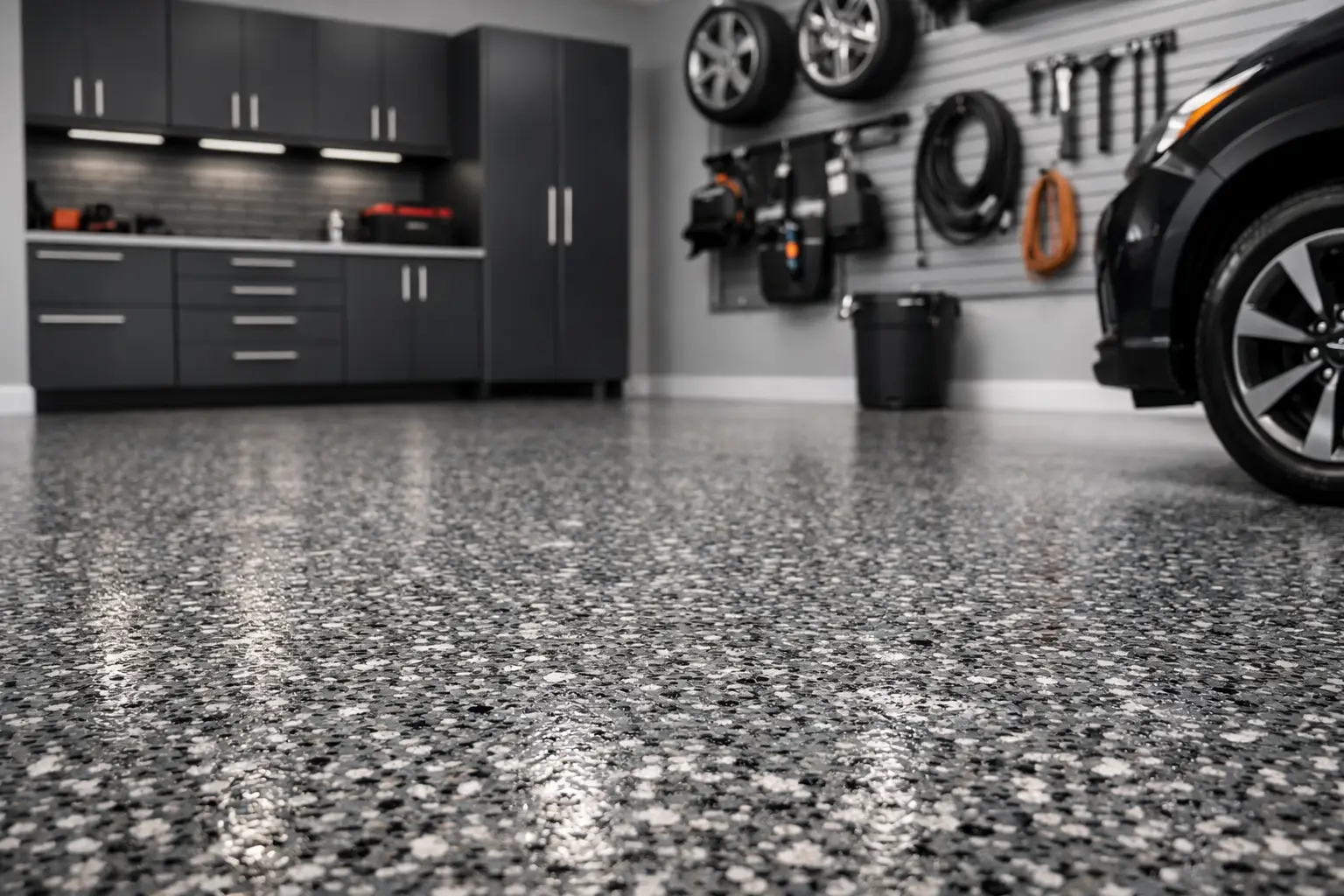
A garage floor takes a different kind of wear than any other surface in the home. It carries hot tires, lawn equipment, dropped tools, muddy shoes, sports gear, oil drips, and the steady traffic of a busy household. The best garage flooring for homes is not simply the option that looks polished on installation day. It is the surface that continues to look intentional, clean, and capable after real life happens.
For homeowners investing in a complete garage transformation, flooring should be considered early, alongside cabinetry, wall storage, and the way the space will be used. A finished floor creates the foundation for a garage that feels less like a catch-all and more like a purposeful extension of the home.
What the Best Garage Flooring for Homes Must Handle
A beautiful garage floor still has to perform. In the Dallas-Fort Worth area, that means considering intense heat, UV exposure near the garage door, occasional moisture, and the pressure created by parked vehicles. The right choice also depends on whether the garage is primarily for cars, storage, hobbies, fitness, entertaining, or a combination of all five.
Before choosing a material, look beyond colour and cost. Consider how the floor responds to chemical spills, whether it is comfortable and safe to walk on, how easily it cleans, and whether it will complement the level of finish planned for the rest of the garage. A premium cabinet system can lose some of its impact when it sits on dusty, stained, cracked concrete. Conversely, a well-finished floor gives every other element of the room a more composed, elevated presence.
A worthwhile garage flooring solution should address four practical concerns: surface durability, stain resistance, slip resistance, and long-term appearance. The strongest choice balances all four instead of excelling in only one.
Polyaspartic Full-Flake Coatings: The Premium All-Around Choice
For many homeowners, a professionally installed polyaspartic full-flake coating is the best fit. It creates a continuous, highly finished surface rather than covering concrete with separate pieces of material. The result is clean, durable, easy to maintain, and visually adaptable to both modern and traditional homes.
A full-flake system begins with the work beneath the surface. Professional installation includes diamond grinding to prepare the concrete, crack repair where needed, and a polyurea primer or base coat. Vinyl flakes are then broadcast across the entire floor before a protective polyaspartic top coat is applied. This process helps create a textured, slip-resistant finish with depth and character, while concealing the minor imperfections that can make a plain concrete slab look unfinished.
Polyaspartic coatings are particularly well suited to garages because they are UV-stable. Unlike many epoxy finishes, they are designed to resist yellowing when sunlight reaches the floor through an open garage door. They also provide strong resistance to common automotive fluids and household chemicals, making spills easier to manage before they become permanent marks.
The practical advantage is just as compelling as the visual one. A quality polyaspartic system can often be installed in one day, minimizing disruption to your household routine. Once complete, the floor can be swept, vacuumed, or cleaned with a mild cleaner and water. There are no grout lines to scrub and no seams where dirt can collect.
Flake colour matters, too. A lighter blend can make a dark garage feel brighter, while a charcoal or mid-tone blend can ground a garage with black cabinetry, metallic details, or a more contemporary design direction. The goal is not to make the floor compete with the rest of the room. It should bring the whole environment together.
Why Polyaspartic Often Outperforms Epoxy
Epoxy has long been a familiar name in garage flooring, and it can be a reasonable choice for some low-traffic applications. It offers a hard surface and can improve the appearance of plain concrete at a lower initial price point. But for a residential garage expected to look refined for years, it has limitations.
Traditional epoxy can be more vulnerable to UV yellowing, especially in garages with regular sun exposure. It may also take longer to cure, and its performance depends heavily on proper concrete preparation and installation conditions. Over time, some epoxy floors can become more susceptible to peeling, cracking, or a worn appearance when exposed to temperature swings, vehicle traffic, and everyday impacts.
Polyaspartic is generally the stronger choice when homeowners want faster installation, better UV stability, and a finish designed for demanding garage use. That does not mean every epoxy floor will fail or every polyaspartic floor is identical. Product quality, substrate condition, and installation expertise all matter. Still, for a premium garage makeover, polyaspartic full-flake flooring delivers a more complete balance of function and finish.
Garage Tiles: Flexible, but Not Always Finished
Interlocking garage tiles appeal to homeowners who want a modular, do-it-yourself-friendly option. They come in many colours and patterns, can be installed without major curing time, and make it possible to replace one damaged section without redoing the entire floor.
The trade-off is in the seams. Dirt, moisture, and debris can work their way below tiles, particularly around vehicles. Some tile systems can shift, click, or feel less solid under rolling loads depending on the product and the condition of the concrete below. Their raised profile can also affect door clearances and create a visible transition at the garage entrance.
Tiles can work well in a workshop zone, a seasonal recreation area, or a garage where flexibility is the priority. They are less ideal when you want the continuous, tailored appearance of a fully designed garage with custom cabinetry and integrated storage.
Roll-Out Mats: Convenient Coverage With Clear Limits
Roll-out mats are quick to place over concrete and can provide a cleaner look without a renovation-level commitment. They are often useful for protecting a portion of the garage floor beneath a vehicle, especially in a rental property or a temporary setup.
However, mats can trap moisture beneath them, curl at the edges, and shift under heavier use. They do not repair cracks or improve the concrete itself, and their narrow range of finishes can make them look more utilitarian than integrated. For a garage that needs a modest protective layer, they have value. For a permanent transformation, they rarely provide the same result as a professionally coated floor.
Sealed or Stained Concrete: Simple, Yet More Exposed
Concrete sealers and stains can refresh an existing slab at a relatively accessible cost. A stain may add colour variation, while a sealer can reduce dusting and help limit surface absorption. This route can suit a garage with light use and an industrial aesthetic.
The limitation is that sealed concrete remains concrete. It may still show imperfections, absorb stains over time, and offer less protection against tire wear and chemical spills than a multi-layer coating system. A clear sealer also does little to hide the uneven colouring, patches, and repairs common in older garage slabs.
For homeowners who want a polished space that feels connected to the quality of the rest of the home, sealed concrete is often a starting point rather than a final solution.
The Floor Is Part of the Whole Garage Design
Garage flooring decisions become easier when viewed in context. If the space will include steel cabinets, overhead racks, slatwall storage, a workbench, or a dedicated zone for bikes and sports equipment, the floor should support that level of organization. It sets the visual baseline for the room and makes daily cleanup simpler when every item has a designated home.
This is also why installation order matters. The concrete should be evaluated before cabinetry is finalized, particularly if it has cracks, coatings, moisture concerns, or uneven areas. Completing the floor preparation correctly gives the entire project a stronger foundation and helps avoid awkward compromises later.
At Orga Spaces, garage transformations are planned as complete environments rather than a collection of separate upgrades. Through consultation, tailored design, and professional installation, homeowners can see how flooring, storage, and layout work together before work begins.
How to Choose With Confidence
Start with the life you want the garage to support. A garage that stores two vehicles and seasonal décor needs a different surface than one that doubles as a home gym, workshop, and family launch point. Think honestly about how often the garage door is open, how much sunlight reaches the floor, whether children and pets use the space, and how much time you want to spend maintaining it.
Then consider the condition of the concrete. Even the best coating cannot compensate for poor preparation. Cracks should be repaired, weak material removed, and the surface mechanically prepared so the new system has the right foundation. Skipping this step may lower the initial price, but it often raises the risk of peeling or premature wear.
Finally, choose a finish that fits the home’s overall character. The most successful garage makeovers do not feel overdesigned. They feel calm, capable, and easy to live with. A durable floor in the right flake blend can make it easier to keep the garage clean, easier to find what you need, and more satisfying to walk into at the end of a long day.
A garage does not need to be a hidden utility room. When the floor is built to handle real use and designed to complement the space around it, it becomes one more part of the home that gives you room to breathe.