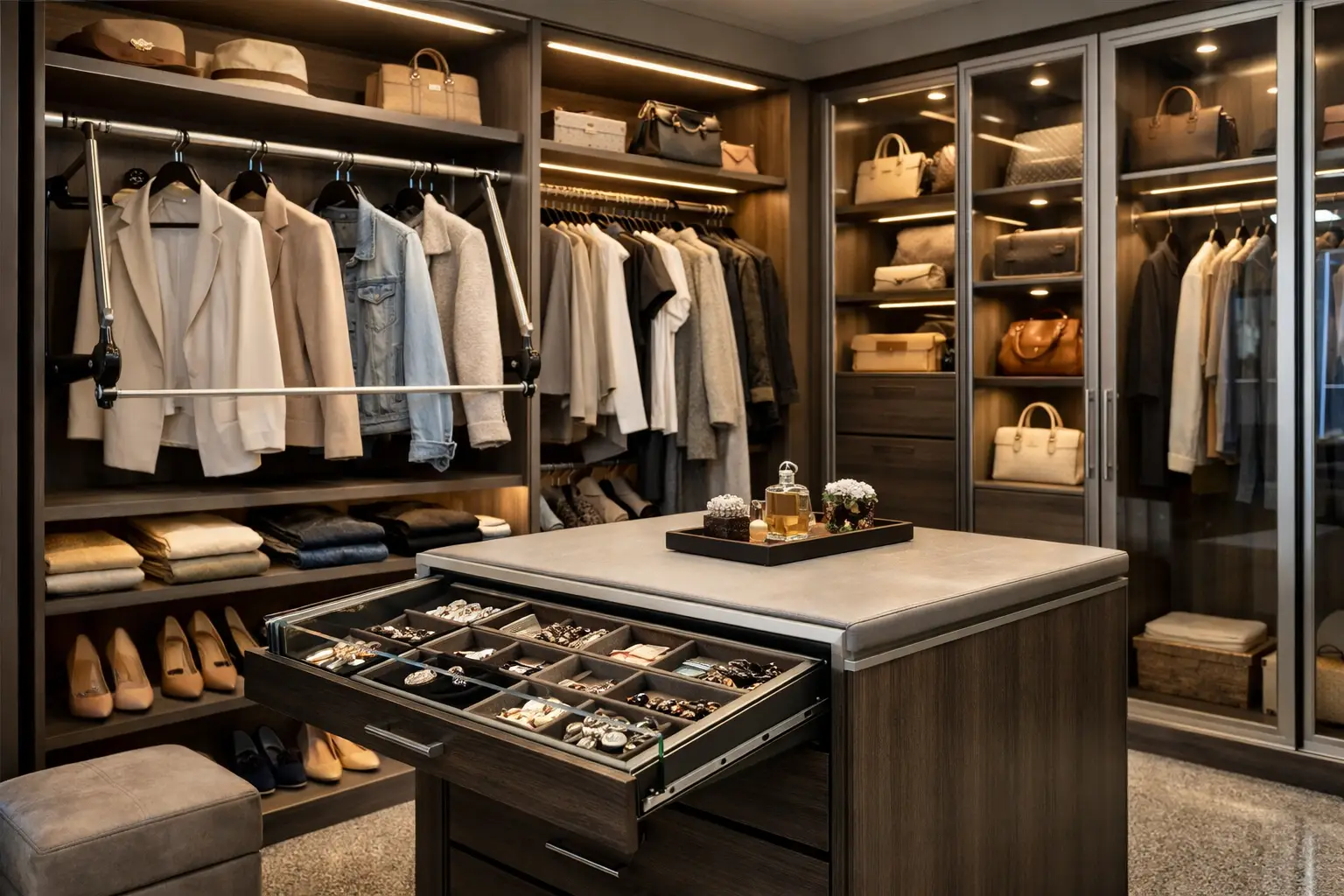
A walk-in closet should do more than hold clothes. It should remove small points of friction from every morning: the missing belt, the folded sweaters collapsing into one another, the shoes that disappear beneath a crowded rack. The best walk in closet features create a place where every item is easy to see, easy to reach, and thoughtfully supported by the room around it.
For homeowners who value an intentional home, a custom closet is not about filling every wall with cabinetry. It is about creating room for you to breathe. The right combination of storage, lighting, finishes, and layout turns an underused footprint into a refined part of your daily routine.
Best Walk In Closet Features Start With the Right Layout
Before selecting shelves, drawers, or hardware, consider how you actually get dressed. A closet designed around a generic floor plan can look polished and still feel inconvenient. One designed around your wardrobe, habits, and available square footage will work harder every day.
A centre aisle is often the foundation of a comfortable walk-in closet. It gives you space to move, open drawers, and view both sides of the room without feeling boxed in. In a larger closet, a central island can add valuable folded storage and a natural surface for laying out outfits. In a more compact space, keeping the aisle clear may be the better investment.
The most successful layouts also separate clothing by use. Everyday pieces belong where they are easiest to access, while seasonal wear, luggage, and occasion-specific items can live higher up or in less convenient zones. This simple planning decision prevents prime storage from being spent on items you only use a few times a year.
Double Hanging Sections
Double hanging is one of the most practical features in nearly every walk-in closet. A lower rod for shirts, skirts, and folded trousers, paired with an upper rod for similar items, can nearly double the capacity of a single wall. It keeps frequently worn clothing at eye level rather than stacking it into crowded drawers.
That said, double hanging should not take over the entire room. Dresses, coats, blazers, and long garments need a dedicated long-hang section. Measuring the clothing you own before the design phase helps establish the right balance. A closet should accommodate your real wardrobe, not ask you to edit it to fit a standard configuration.
Adjustable Shelving for a Closet That Can Evolve
Wardrobes change. A collection of handbags may grow, children may move away and free up storage elsewhere in the home, or a new work routine may call for more space for tailored clothing. Adjustable shelving gives a custom closet flexibility without sacrificing its tailored appearance.
Shelves are particularly useful for knitwear, denim, handbags, and accessories that should not be hung. The key is thoughtful spacing. Shelves set too far apart invite unstable piles; shelves that are too narrow limit what they can hold. A designer can tailor depths and heights to the categories you use most, creating a system that stays orderly with less effort.
Drawer Storage Creates a More Refined Routine
Open shelving makes clothing visible, but drawers bring visual calm. They are ideal for smaller items that can quickly make a closet feel busy: undergarments, socks, workout wear, sleepwear, jewellery, and accessories.
Well-designed drawers should feel deliberate inside as well as out. Dividers prevent watches, sunglasses, belts, and smaller essentials from becoming a tangled catch-all. Shallow drawers can be especially useful for jewellery or accessories, while deeper drawers work well for sweaters and casual clothing.
Consider how many items you prefer to fold versus hang. Some homeowners want a drawer-heavy design because they favour a clean, concealed look. Others rely on hanging storage and need only a few drawers for essentials. Neither approach is inherently better. The best choice is the one that makes putting laundry away feel straightforward rather than like another task to postpone.
Purpose-Built Shoe Storage Protects Your Collection
Shoes are often where a closet loses its order first. Floor piles make it difficult to find a pair, and they can scuff leather, bend delicate footwear, and make cleaning more difficult. Dedicated shoe storage gives each pair a defined home while making the entire collection easier to view.
Angled shelves create a boutique-inspired display and work well for dress shoes, heels, and footwear you enjoy seeing. Flat shelves can be more efficient for sneakers, boots, and everyday shoes. Boot storage requires extra vertical clearance, while tall cubbies may be better suited to handbags or storage boxes.
If you own a substantial shoe collection, visibility matters as much as capacity. It is easier to keep a closet organized when you can see what you have at a glance. In a shared closet, assigning a clear zone to each person also eliminates the gradual spread of one collection into another’s space.
Lighting Is One of the Most Overlooked Walk-In Closet Features
A beautiful closet can still feel unfinished if the lighting is poor. Overhead lighting alone often creates shadows inside drawers, beneath shelves, and around hanging garments. Layered lighting improves visibility and adds the sense of care associated with a professionally designed space.
Integrated LED lighting along hanging areas or within shelving can make colours easier to distinguish and help you find what you need during early mornings or late evenings. Good lighting is especially valuable in closets with limited natural light, which is common in many homes.
Warm, balanced lighting tends to create a more inviting atmosphere than harsh, overly cool bulbs. At the same time, the goal should be accuracy. You want to see whether navy and black work together, not discover the difference after you have left the house. Motion-activated options can add convenience, particularly in drawers, cabinets, or smaller dressing areas.
A Dressing Area Makes the Space Feel Complete
Where square footage allows, a dressing zone gives a walk-in closet a more comfortable purpose beyond storage. This may be as simple as a full-length mirror with enough clear floor space to step back and assess an outfit. In a larger room, it can include a bench, upholstered ottoman, or a compact vanity area.
A seated surface is practical for putting on shoes, setting down a bag, or organizing an outfit for the next day. It also introduces warmth and texture to cabinetry-focused spaces. The trade-off is circulation: a bench or island should never make the closet difficult to navigate. Comfortable movement always comes first.
Mirrors deserve careful placement as well. A full-length mirror near the exit makes final checks easy, while mirrored cabinet doors can be useful in compact closets where wall space is limited. Choose the option that suits the room’s proportions rather than adding a mirror simply because it is expected.
Finishes and Hardware Should Belong in Your Home
A custom walk-in closet is part of your home’s interior, not an isolated utility room. Cabinet finishes, drawer pulls, lighting, and decorative details should complement the character of nearby spaces. A soft wood grain can add warmth to a contemporary home, while clean white or neutral cabinetry can create a bright, tailored look.
Durability matters alongside appearance. Quality materials, properly finished edges, smooth drawer slides, and hardware that feels substantial all affect how the space performs over time. These details may seem small during planning, but they shape the daily experience of opening, closing, reaching, and resetting the closet.
For Dallas-Fort Worth homeowners, a professional design process also helps avoid expensive assumptions. A 3D design presentation can clarify how an island will affect circulation, whether a long-hang section is truly sufficient, and how finishes will look together before installation begins. It replaces guesswork with a plan built for your home.
Create Storage That Supports the Life You Actually Live
The best feature is rarely the most dramatic one. It is the one that quietly makes your day easier, whether that means a drawer that finally contains every accessory, lighting that lets you dress with confidence, or a dedicated place for the clothes you reach for each week.
A well-planned walk-in closet gives your belongings a home and gives your routine more space to breathe. When the room is designed around you, staying organized becomes less of a chore and more of a natural part of coming home.