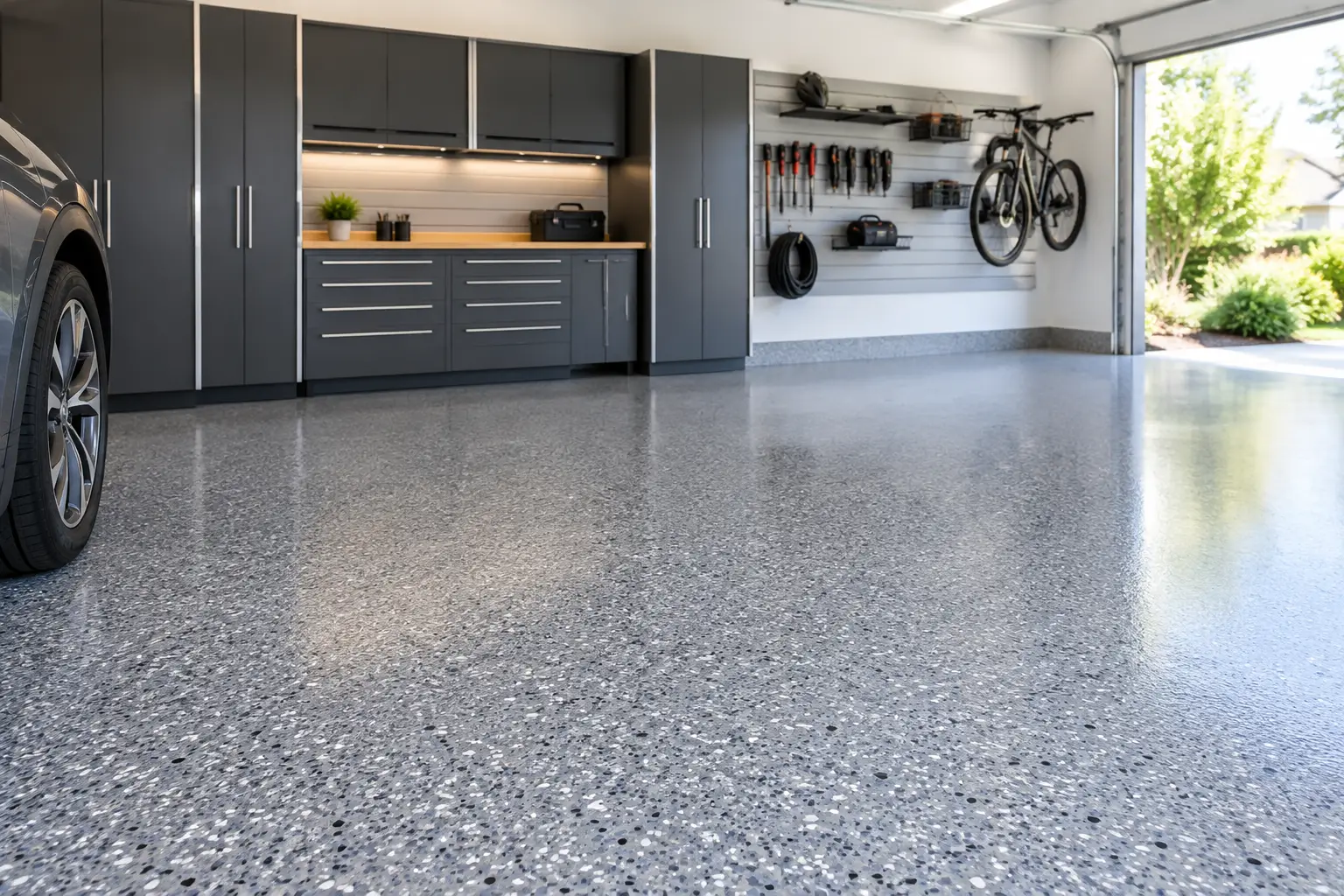
A garage slab can look permanently stained, dusty, and worn long before it has reached the end of its useful life. The good news is that can garage flooring be installed over concrete has a clear answer: yes, in most cases. Existing concrete is the intended foundation for many premium garage flooring systems, provided the surface is properly assessed, repaired, and prepared before installation.
That preparation is what separates a floor that looks polished for years from one that peels, bubbles, or shows every tire mark after a season. For homeowners investing in a more organized, design-forward garage, the floor is not an afterthought. It is the finish that brings cabinets, wall storage, vehicles, and daily routines into one intentional space.
Can Garage Flooring Be Installed Over Concrete? Yes, With the Right Prep
Concrete is a strong base, but it is not automatically ready for a coating or floor covering. Garage slabs absorb moisture, collect oil, develop hairline cracks, and often have a smooth or contaminated surface that prevents new materials from bonding correctly. A professional installer evaluates these conditions before recommending a system.
A sound concrete floor with ordinary cosmetic staining is usually an excellent candidate for a coating. Small cracks can generally be repaired as part of the preparation process. Even an older slab can be transformed if it remains structurally stable and dry enough for the selected flooring system.
The situations that require more investigation are active moisture issues, widespread concrete deterioration, major movement cracks, or a slab that has previously been sealed or painted. These conditions do not always rule out garage flooring, but they do change the preparation plan. Installing over a problem without addressing it first simply hides it temporarily.
What “Over Concrete” Really Means
Installing garage flooring over concrete does not mean applying a product directly onto a dusty slab. The concrete remains the structural base, while the new finish is engineered to bond to its surface.
For a premium flake coating, the process begins with diamond grinding. This mechanically removes surface contaminants and opens the concrete pores to create the profile needed for adhesion. It is more reliable than acid etching, which can be inconsistent on dense concrete and does not resolve embedded oil or old coating residue.
After grinding, technicians repair appropriate cracks and surface imperfections, then apply the coating system in layers. With a full-flake floor, vinyl flakes are broadcast across the entire wet base coat rather than scattered lightly for decoration. Once excess flakes are removed, a clear protective top coat seals the system and creates the finished texture.
The result is not a painted concrete floor. It is a layered surface designed to protect the slab while giving the garage a clean, tailored appearance.
Why Concrete Condition Matters Before Installation
The best flooring choice depends less on the age of the garage and more on the condition of its concrete. A professional evaluation should consider moisture, cracks, contamination, surface hardness, and prior treatments.
Moisture needs an honest assessment
Concrete naturally holds and releases moisture. In North Texas, changing weather, irrigation patterns, and drainage around the home can affect what happens below and beneath a garage slab. If moisture vapor is excessive, it can interfere with adhesion and cause coating failure over time.
Visible dampness, white powdery residue, dark spots that return after cleaning, or water entering at the garage door are reasons to investigate before moving forward. A coating installation may still be possible, but drainage corrections or a moisture-mitigation approach may be necessary first.
Cracks should be repaired, not ignored
Hairline cracks are common in residential concrete and are often cosmetic. Filling and blending them can create a much more refined finished floor. However, a crack caused by active structural movement may continue to shift, and no rigid surface coating can guarantee it will never telegraph again.
This is where practical guidance matters. Repairing a stable crack is part of a quality installation. Promising that every moving crack will disappear forever is not.
Oil and old paint affect adhesion
Decades of vehicle fluids can penetrate unprotected concrete. Likewise, a previous DIY paint job may be loosely bonded even if it still looks intact from above. Both conditions need to be removed or treated during preparation so the new system bonds to sound concrete, not to a failing layer underneath.
Which Garage Flooring Options Work Over Concrete?
Several flooring types can be installed over a concrete garage floor, but they serve different priorities. Interlocking tiles offer a quick visual update and can be useful when access to the slab is needed. Roll-out mats provide basic coverage and are easy to replace, though moisture and debris can collect beneath them. Conventional epoxy coatings can be attractive at a lower initial cost, but they may yellow with UV exposure and often require longer installation and cure times.
For homeowners looking for a durable, finished appearance that supports an elevated garage makeover, a polyaspartic full-flake coating is often the stronger long-term choice. It is installed directly over prepared concrete and provides a UV-stable, slip-resistant, easy-to-clean surface. It also resists many common chemicals and is less prone to the yellowing and cracking associated with some epoxy systems.
The right option depends on how the garage is used. A space that houses collector vehicles, fitness equipment, cabinetry, and family storage calls for a different level of finish than a utility-only garage. Flooring should complement that purpose, not compete with it.
The Professional Installation Process
A well-executed installation is precise, but it does not need to disrupt your household for long. Orga Spaces uses a one-day polyaspartic full-flake installation process for eligible garage floors, allowing homeowners to move from an unfinished slab to a more usable, polished space with minimal interruption.
The work follows a disciplined sequence:
- Surface preparation: Diamond grinding creates the proper concrete profile and removes weak material, coatings, and contaminants.
- Crack repair: Suitable cracks and small imperfections are repaired to improve both performance and visual continuity.
- Primer and base coat: A polyurea primer or base coat is applied to establish strong adhesion to the prepared slab.
- Full flake broadcast: Decorative vinyl flakes are applied at full coverage, creating consistent color, texture, and depth across the floor.
- Polyaspartic top coat: A clear protective coat seals the flakes and delivers the final durability, chemical resistance, and cleanable finish.
Flake colors can be selected to complement cabinet finishes, wall systems, and the home’s overall design direction. A lighter blend can make a compact garage feel more open, while a deeper neutral palette can ground a larger space with a more architectural look.
What to Do Before Your Garage Floor Is Installed
Before installation day, the garage needs to be cleared so the entire slab can be prepared consistently. This is also an ideal moment to decide what deserves to return to the space. Seasonal bins, sports equipment, yard tools, and automotive supplies are easier to manage when a flooring upgrade is paired with a thoughtful storage plan.
Avoid washing the slab immediately before the installer arrives unless specifically instructed. Extra water can complicate moisture readings and preparation. It is also helpful to identify any known issues, such as a past plumbing leak, drainage concern, or areas where water enters during storms.
After installation, follow the curing guidance provided for your particular system. Foot traffic and vehicle traffic may have different timelines. Waiting the recommended period protects the finish during its most critical stage.
A Floor That Makes the Whole Garage Work Better
Garage flooring installed over concrete is more than a cosmetic cover-up. Done correctly, it protects the slab, simplifies cleaning, improves light reflection, and creates a finish worthy of the rest of your home. It also gives every cabinet, storage zone, and parked vehicle a more intentional backdrop.
When your garage is being asked to do more for your household, start with the surface beneath everything else. A professionally prepared floor creates room for you to breathe, maintain order with less effort, and enjoy the space every time the garage door opens.