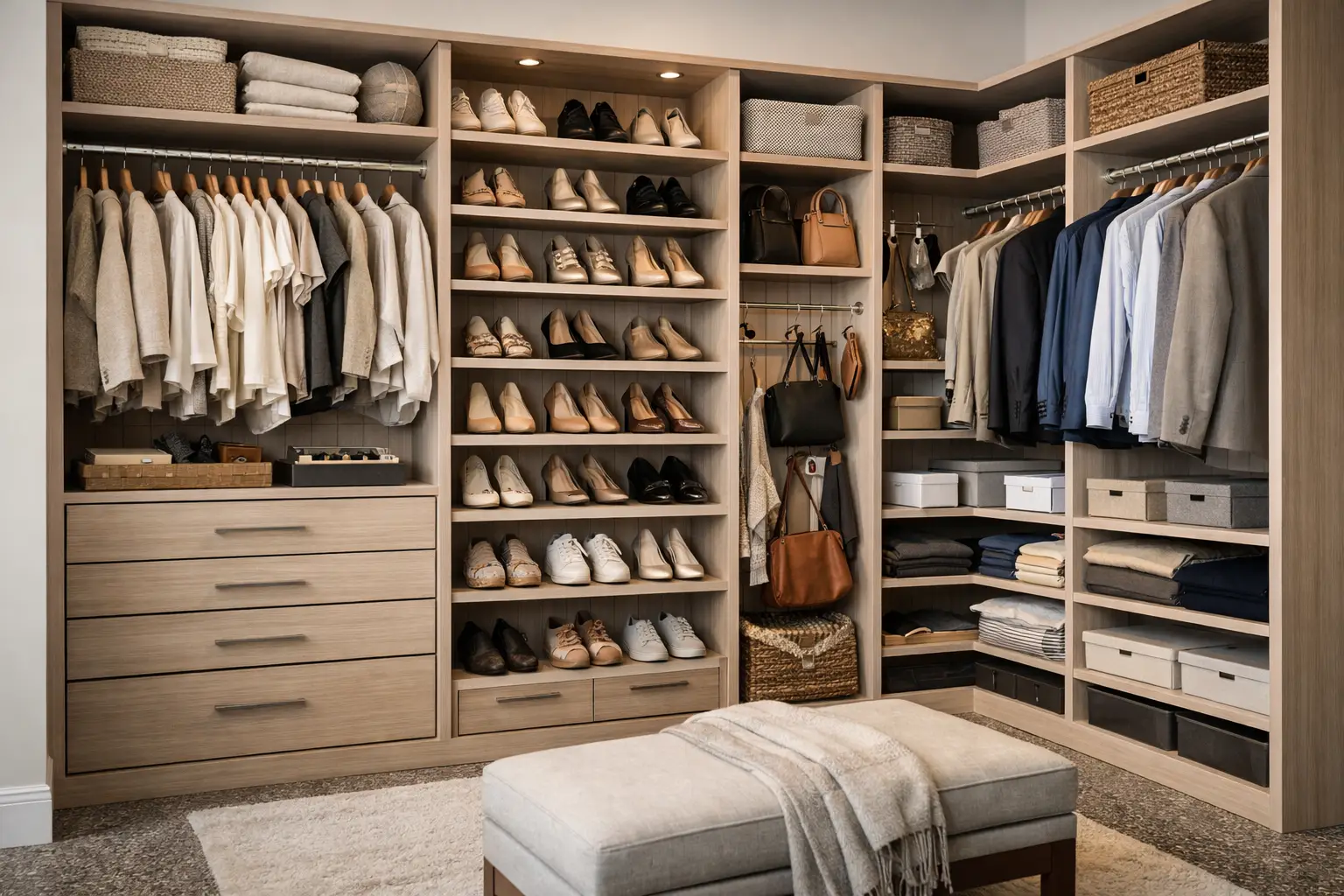
Open your closet on a rushed weekday morning and the truth shows up fast. If shelves are too shallow, hanging space is awkward, and shoes end up in a pile, the problem is not that you own too much – it is that the space was never designed around how you live. That is exactly where custom closet systems make a real difference. They bring order to the part of the home you use every day, while making the room feel more intentional, more usable, and far less stressful.
A well-designed closet is not just a storage upgrade. It changes the pace of your routine. When everything has a place, getting dressed takes less time, laundry is easier to put away, and the room around you feels calmer. For homeowners investing in a more refined and functional home, that shift matters.
Why custom closet systems are worth it
Off-the-shelf organizers often promise a quick fix, but they tend to force your belongings into a generic layout. That works for some secondary spaces, but it rarely holds up in a primary closet where wardrobe size, shoe storage, accessory needs, and daily habits all vary. One person needs long hanging for dresses and coats. Another needs double hanging for workwear and casual clothing. A couple may need a shared layout that feels balanced instead of cramped.
Custom closet systems solve for those differences. They are built around dimensions, routines, and priorities instead of asking you to adapt to a one-size-fits-all product. That means the design can account for actual shelf heights, drawer depth, hamper placement, handbag storage, jewellery organization, and the kind of visibility that keeps the closet easy to maintain.
There is also the design factor. A closet should feel like part of the home, not like an afterthought hidden behind a door. Clean lines, premium finishes, integrated lighting options, and a thoughtful layout can make the space feel elevated without losing practicality. The best result is not just more storage. It is better living through better design.
What separates a good closet from a frustrating one
The biggest difference is usually not square footage. It is planning.
A frustrating closet wastes vertical space, creates dead corners, and mixes categories in ways that make daily use harder. You may have plenty of room overall, but if shoes are far from dressing areas, folded items stack too high, or drawers are placed where doors cannot fully open, the space will still feel inefficient.
A good closet considers movement. It gives frequently used items the easiest access. It creates clear zones for hanging, folding, accessories, and seasonal storage. It leaves enough breathing room so the closet feels composed instead of crowded. In larger walk-in closets, that might mean a central island, display shelving, or a built-in bench. In smaller reach-in closets, it may mean a more disciplined use of double hanging, slim drawers, and upper shelving that works harder.
This is where custom design earns its value. The right system is not about adding more parts. It is about placing the right features in the right proportions.
How custom closet systems should be designed
The best starting point is not measurements alone. It is behaviour. Before materials and finishes are selected, the design should answer a few practical questions. Do you fold most knitwear or hang it? Do you need easy access to daily shoes or more room for special-occasion pieces? Are belts, watches, and jewellery hidden away, or do you want them displayed and easy to reach?
Once those habits are clear, the layout becomes more precise. Hanging sections can be split into long and double hang. Shelves can be adjusted to match handbags, denim, or sweaters. Drawers can be sized for smaller personal items instead of becoming catch-all bins. Even a hamper can be positioned to reduce friction in the laundry routine.
That attention to use is what makes the final space feel effortless. A closet that looks beautiful but creates extra work will not stay organized for long. A closet that supports your actual routine has a much better chance of staying tidy.
Materials and finishes matter more than people expect
Closet design is often discussed in terms of layout, but materials quietly shape the experience. Low-quality systems can sag, chip, or feel dated quickly. Better materials hold their shape, look more polished, and give the room a finished, furniture-like quality.
Finish choice matters too. Some homeowners want bright, light surfaces that make the closet feel larger. Others prefer deeper tones for a more tailored look. Hardware, drawer fronts, and accessory inserts all influence whether the space feels builder-basic or carefully considered. It depends on the home, the architecture, and how much of a design statement you want the closet to make.
When a custom closet is especially worth the investment
Not every closet needs a full transformation, but certain situations almost always benefit from one. Shared primary closets are a common example because they need to support two people without feeling chaotic. Homes with older builder-grade shelving also tend to gain a lot from custom solutions because the original layouts usually leave vertical space underused and storage options limited.
It is also worth considering if you are already upgrading other parts of the home. A thoughtfully designed closet complements a more polished bedroom suite and adds to the sense that your spaces are working together. For homeowners who value both function and finish, that continuity matters.
There is a financial angle as well, though it should not be oversold. A custom closet can add appeal in a well-presented home, especially when buyers are comparing overall quality. But for most homeowners, the immediate return is daily convenience. You reclaim time, reduce visual clutter, and create room for you to breathe.
The trade-offs to think through before you choose a system
Custom work is not the right answer for every budget or every timeline. It costs more than modular retail products, and the reason is straightforward – the design is tailored, the materials are typically better, and the installation is done to fit your exact space. If you are furnishing a temporary home or only need a short-term fix, a simpler option may be enough.
There is also the question of flexibility. Some people assume custom means less adaptable later, but that depends on the design. A smart system can include adjustable shelves and evolving storage zones while still looking built-in and polished. The goal is not to lock you into one lifestyle forever. It is to create a structure that serves you well now and can still adapt as needs change.
The key is being honest about how long you plan to stay, how much the daily frustration is costing you, and how important aesthetics are in the overall feel of your home.
Why professional design changes the outcome
Closets look deceptively simple until real planning begins. Measurements need to be exact. Clearances matter. Proportions matter. So does knowing how to make a room feel balanced rather than overfilled.
Professional design helps you see the full picture before installation starts. A thoughtful consultation can uncover needs you may not have considered, while a 3D design presentation makes it easier to evaluate how the space will function and feel. That reduces guesswork and helps ensure the finished closet reflects both your practical needs and your design standards.
Installation matters just as much. Even a strong design can fall short if it is poorly fitted or finished. Precision is what gives custom cabinetry its clean look and dependable performance over time.
For homeowners in the Dallas-Fort Worth area who want a closet to feel as refined as the rest of the home, working with a team that handles design and installation from start to finish can make the entire process simpler and far more rewarding.
Choosing custom closet systems that fit your life
The right closet should not ask you to compromise between beauty and function. It should support both. That might mean maximizing every inch of a compact reach-in, or turning a walk-in closet into a calmer, more luxurious part of your routine. Either way, the best systems are the ones that feel natural to use from day one.
If your current closet creates friction every morning, that is useful information. It means the space is ready to work harder for you. And when it does, the benefit is bigger than tidiness. Your home feels more intentional, your routine feels lighter, and one of the most-used spaces in the house finally earns its place.
If you are considering a tailored closet upgrade, Orga Spaces offers custom design and professional installation to help turn everyday storage into a more elevated experience. Learn more at https://orgaspaces.com