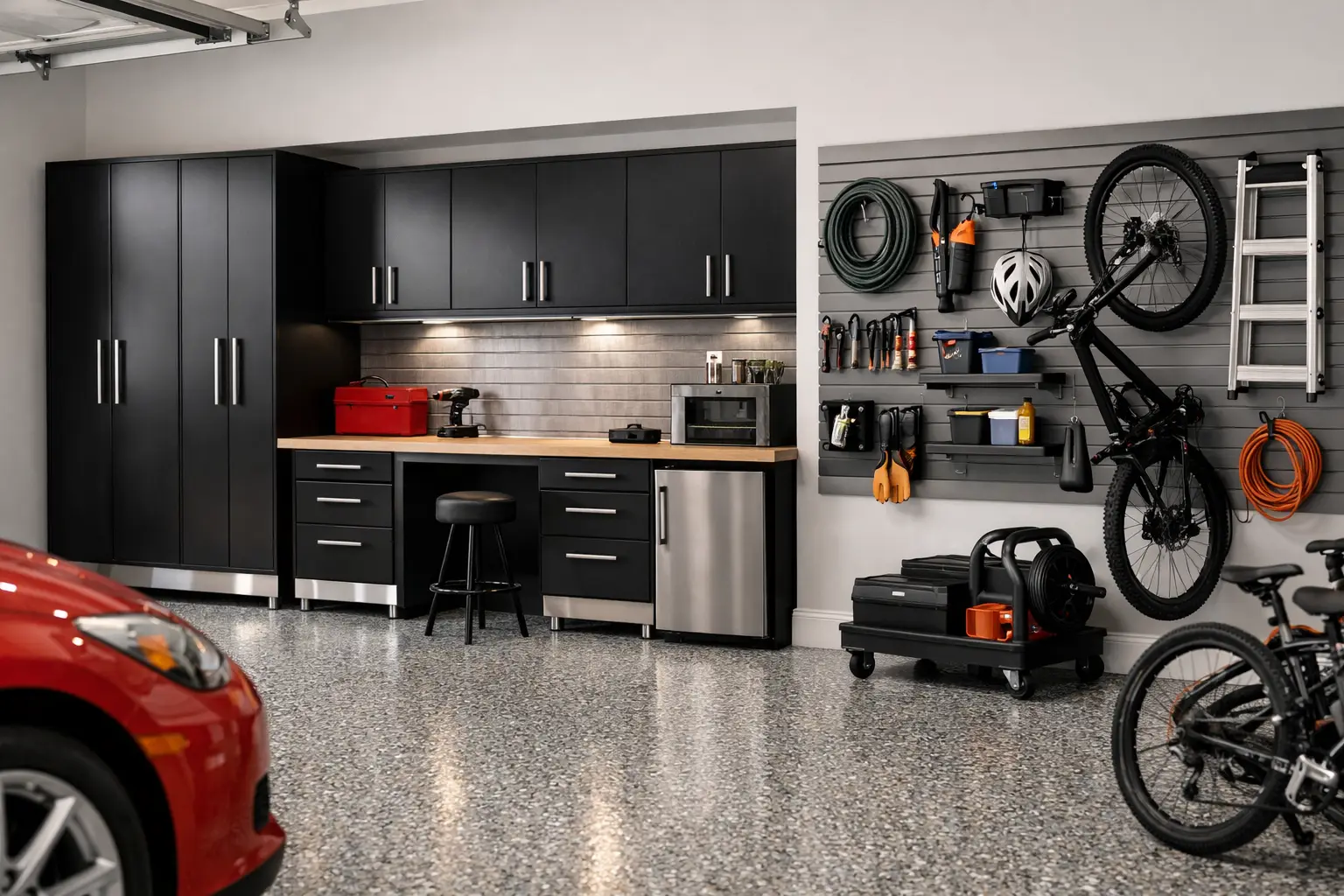
The garage usually tells the truth about a home. It is where overflow lands, where good intentions get stacked in bins, and where square footage quietly disappears under tools, sports gear, holiday decor, and half-finished projects. The best custom garage ideas do not start with products. They start with how you want the space to function when real life is happening.
That distinction matters. A garage can be a place to park, store, build, charge, clean, sort, and transition in and out of the house. If it is designed around only one of those jobs, it tends to slip back into clutter. If it is designed around your routine, it becomes one of the hardest-working spaces in your home.
What good custom garage ideas solve
A well-designed garage should reduce friction. You should be able to find what you need quickly, move through the space without dodging obstacles, and store items in a way that makes sense for the season you are in. That sounds simple, but it takes planning.
The most common issue is not a lack of square footage. It is a lack of zoning. When gardening tools, cleaning supplies, sports equipment, luggage, and power tools all compete for the same footprint, the garage becomes inefficient fast. Custom design fixes that by assigning space based on use, frequency, and weight.
That is why premium garage design feels different from buying a few shelves at a big-box store. It is less about adding storage wherever it fits and more about creating a system that fits your home.
Start with zones, not shelves
One of the smartest custom garage ideas is also the least flashy. Divide the space into functional zones before choosing finishes or storage features. This changes the conversation from what can fit on the wall to what needs to happen in the room.
A parking zone needs clear dimensions and enough buffer to open doors comfortably. A tool zone benefits from cabinets, work surfaces, and durable access. A family drop zone may need hooks, open storage, and a place for shoes or backpacks. If you use your garage for overflow pantry storage, bulk household supplies, or seasonal bins, those categories should live together instead of being scattered around the perimeter.
The advantage of zoning is that it keeps the garage from becoming one giant compromise. You are not simply storing more. You are making each area easier to maintain.
Garage cabinets change the visual noise
Open shelves can be useful, but they also display everything. That works well for a workshop aesthetic, yet it can make a residential garage feel busy even when it is technically organized. Steel garage cabinets create a cleaner look because they hide the visual clutter while protecting items from dust and daily wear.
This is where customization matters. Cabinet depth, height, and placement should reflect what you actually own. Tall cabinets are ideal for larger gear, cleaning tools, and long items that do not sit well on shelves. Base cabinets paired with a worktop create a practical surface for household tasks, projects, or package handling. Wall-mounted options also keep the floor line more open, which makes the room feel lighter and easier to clean.
There is a trade-off here. Fully enclosed storage looks polished, but if everything is hidden without a clear system, items can still disappear into the wrong cabinet. The answer is a balance of concealed storage and intentional access points.
Wall and overhead storage should free the floor
Floor space is premium space. Once that area is crowded, the garage stops functioning well. Some of the best custom garage ideas focus on moving bulky or awkward items upward and outward.
Wall storage works best for gear you use regularly, especially when items need to be seen at a glance. Bikes, ladders, yard tools, and sports equipment can all live vertically when hardware is planned around weight and frequency of use. Overhead storage is better for seasonal bins, holiday decor, or rarely used items. It is not the right place for things you need every week.
That is an important distinction. Overhead systems can reclaim a surprising amount of space, but they are only effective if what goes up there truly belongs in long-term storage. Otherwise, you create a second layer of inconvenience instead of a better garage.
Flooring is not just cosmetic
Homeowners often think about cabinets first and flooring second, but the floor has a major effect on how the garage feels and performs. Bare concrete stains easily, shows wear, and can make the whole space read as unfinished no matter how well the walls are organized.
A professionally installed floor coating brings both durability and design value. For garages that need a clean, refined finish, full flake coverage creates a more elevated appearance while also helping conceal everyday dust and debris. The right coating system should be UV-stable, slip-resistant, easy to clean, and built for long-term performance without yellowing or cracking.
The installation process matters as much as the finish itself. Proper diamond grinding surface preparation, crack repair, a Polyurea primer and base coat, full vinyl flake broadcast, and a final polyaspartic top coat all contribute to durability. This type of system can often be installed in one day and goes directly over existing concrete, which makes it a practical upgrade for busy households. It also offers chemical resistance, which is especially useful in a garage where spills and vehicle-related messes are part of real life.
Design for the way your household moves
Not every garage should look like a car enthusiast’s showroom, and not every family needs a workshop wall. The strongest custom garage ideas reflect the people using the space every day.
For families with school-age children, quick-access storage near the entry point often matters more than a large workbench. For homeowners who enjoy weekend projects, a dedicated task area with cabinetry and durable surfaces may deserve the prime wall. For empty nesters downsizing clutter, the goal may be visual calm and easier access to long-term storage.
This is where custom design earns its value. It accounts for habits, not just dimensions. A garage that supports your routine helps you reclaim your time because you spend less of it looking for equipment, shifting bins around, or postponing cleanup.
Why a 3D plan changes the outcome
Garage transformations are easier to commit to when you can see the result before installation starts. A 3D design plan removes much of the guesswork from layout decisions, cabinet placement, and storage capacity.
That matters more than people think. It is one thing to imagine a wall of cabinetry. It is another to see how it affects parking clearance, workflow, and the balance between open and closed storage. Visual planning helps prevent expensive missteps and creates confidence that the finished space will feel as good as it looks.
For premium projects, this design-first approach is often the difference between a garage that appears upgraded and one that genuinely works better.
The best custom garage ideas feel intentional
A polished garage is not about making the space look empty. It is about making it feel resolved. When cabinetry aligns cleanly, storage has a purpose, and the floor ties the room together, the garage starts to feel like an extension of the home instead of a leftover zone.
That shift has practical benefits, but it also changes the daily experience of living there. You come home to order rather than visual noise. You know where things belong. The space supports your routine instead of slowing it down.
In the Dallas-Fort Worth area, where garages often carry a heavy load between family storage, hobbies, home maintenance, and vehicle use, that kind of planning can make a noticeable difference in how a household runs.
A thoughtful garage makeover does not need to include every available feature. It needs the right combination of storage, surface durability, and layout for your life. If you are considering custom garage ideas and want a design that feels tailored from the start, you can request an consultation here: https://orgaspaces.com/garage/
The most satisfying spaces are rarely the ones with the most stuff. They are the ones designed with enough clarity that everything finally has a place, and you have room to breathe.