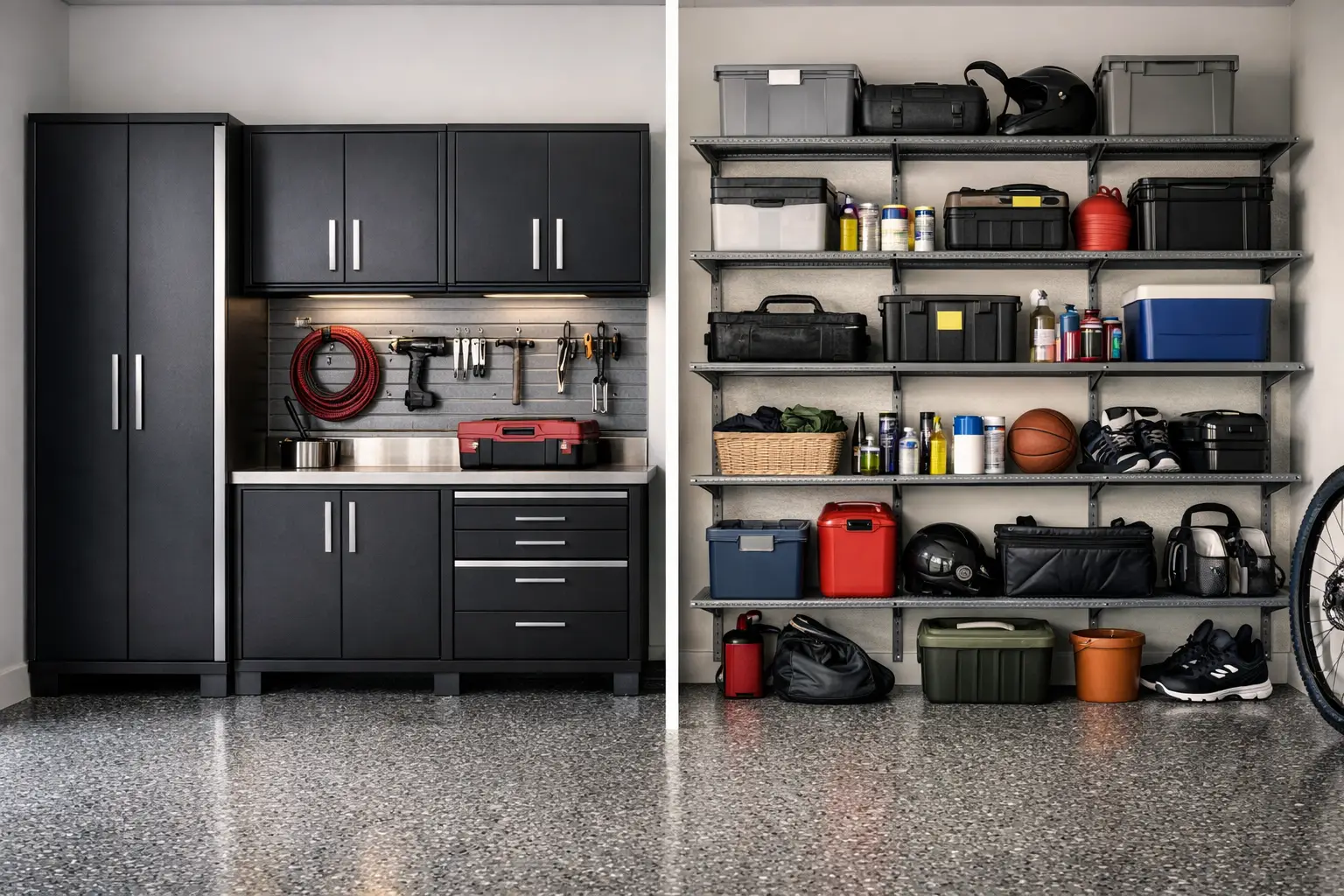
The real question behind garage cabinets vs open shelving is not which storage option is better. It is which items deserve to be seen, which need protection, and how you want your garage to feel when the door opens. A well-planned garage can support busy mornings, weekend projects, family gear, and the simple relief of knowing everything has a place.
For many homeowners, the strongest answer is not an all-or-nothing choice. Cabinets and shelving do different jobs. Combining them thoughtfully creates a garage that works hard without looking like a storage room.
Garage cabinets vs open shelving: the core difference
Garage cabinets create visual calm. Their doors conceal supplies, protect contents from dust, and establish a more finished, furniture-like look. They are especially effective for homeowners who want the garage to feel like an intentional extension of the home rather than a catch-all space.
Open shelving prioritizes immediate access. You can see what you own at a glance, reach frequently used items quickly, and adjust the storage as your needs change. It works well for bins, tools, gardening supplies, sports equipment, and project materials that are easiest to manage when visible.
The best decision starts with behaviour. If an item is used weekly and returning it needs to be effortless, open storage may help it stay organized. If an item creates visual clutter, contains chemicals, or only comes out occasionally, a cabinet is often the better home.
When garage cabinets are worth the investment
Custom garage cabinets are built for the items that make a space feel messy even when they are technically put away. Paint cans, car-care products, cleaning supplies, power-tool accessories, pet supplies, bulk paper goods, and seasonal décor can all disappear behind clean cabinet fronts.
That visual control matters. A garage with coordinated steel cabinetry and clear work surfaces feels easier to maintain because there are fewer decisions competing for your attention. Instead of seeing dozens of labels, cords, bottles, and mismatched containers, you see a composed space with defined zones.
Cabinets also offer better protection. Dallas-Fort Worth garages regularly deal with windblown dust, humidity, and the everyday grime that comes with parking vehicles and working on projects. Closed storage helps keep supplies cleaner between uses. For households with young children, lockable cabinet options can also keep potentially hazardous products more secure.
There is a practical layout advantage, too. Base cabinets can anchor a workbench or countertop, creating a durable station for repairs, hobbies, potting plants, or packing for a trip. Tall cabinets make excellent use of vertical space while keeping long, awkward items contained. When designed around the wall dimensions and what the household actually owns, cabinets eliminate the dead zones common with standard retail units.
Their trade-off is straightforward: cabinets require a larger investment and a little more planning. Doors need clearance to open, and a cabinet that is too deep or poorly divided can become a place where forgotten items accumulate. This is why interior configuration matters as much as the exterior finish.
Cabinets suit homeowners who want less visual noise
Choose cabinets as the primary storage solution when the goal is a polished garage, when clutter causes stress, or when the space is visible from the home. They are also a strong fit for owners who want to protect valuable tools and equipment, create a dedicated work area, or keep household supplies out of sight.
Where open shelving performs best
Open shelving is not a lesser version of cabinetry. Used intentionally, it is one of the most efficient ways to organize gear that is bulky, frequently used, or easier to identify visually.
Clear, labelled bins on sturdy shelves make seasonal rotation simple. One shelf can hold pool supplies, another can manage camping equipment, and another can keep soccer balls, helmets, and folding chairs ready for the next outing. You do not have to open several doors to find what you need, which can be a real advantage during a busy week.
Shelving is also adaptable. As children grow, hobbies shift, or storage needs change, bins and shelf contents can move without altering the entire system. This makes open storage particularly useful in utility zones where function is more important than display.
The limitation is that shelves reveal everything. Without matching bins, labels, and a clear category for each level, open shelving can quickly become a wall of visual clutter. The issue is rarely the shelf itself. It is the lack of a system for what belongs there.
Open shelves also collect more dust than enclosed cabinets. That may not matter for a bin of outdoor toys, but it matters for linens, paper products, small electronics, or detailed project supplies. Keep those categories behind doors or in sealed containers.
Open shelving works best for active categories
Use shelving for items you grab and return often: sports gear, gardening tools, reusable shopping bags, coolers, bins of holiday decorations, and supplies for regular home projects. Place heavier bins on lower shelves, reserve upper levels for lighter seasonal items, and avoid storing loose, unrelated objects together just because there is open space.
A hybrid garage usually delivers the best result
For most premium garage transformations, the most effective approach is a hybrid. Closed cabinets handle the visual and protective work, while open shelving manages practical access. The room feels refined, but it still supports real life.
Imagine a wall of steel cabinets with a built-in work surface. Below the counter, drawers hold hand tools and hardware. Tall cabinets contain cleaning supplies and less-used equipment. Nearby, a section of open shelving holds labelled bins for camping, team sports, and holiday items. Wall storage lifts bicycles, rakes, ladders, and other oversized gear off the floor. Each storage type is doing the job it does best.
This approach also helps preserve open floor area. The goal is not to fill every wall with storage. It is to make room for vehicles, a home gym, a project table, or simply a clear path through the garage. When every category has a designated zone, the floor stops becoming the default landing place for everything else.
Design details that determine whether storage stays organized
The right storage system begins with an inventory, not a cabinet colour. Before choosing finishes or shelf heights, assess what is actually in the garage. Separate daily-use items from seasonal items, identify anything that needs child-safe storage, and measure bulky equipment such as bicycles, golf bags, coolers, and lawn tools.
Next, plan around movement. Frequently used items should sit between knee and shoulder height. Heavier objects need lower storage. Items used once or twice a year can move overhead or higher on shelving. A work zone should have nearby drawers, cabinets, and accessible power where appropriate rather than forcing you to cross the garage for every small tool.
Appearance deserves attention as well. Consistent cabinet finishes, coordinated bins, and thoughtful wall storage turn a functional room into a finished environment. If you are investing in flooring, cabinetry, and storage together, the components should be designed as one space rather than chosen as separate purchases.
Professional design helps prevent expensive compromises. With a consultation and 3D design presentation, Orga Spaces can show how cabinetry, wall storage, overhead storage, and activity zones will work before installation begins. That clarity is valuable when you are deciding how much should be concealed, displayed, or stored overhead.
Choose storage around the life you want to live
If you want a clean, design-forward garage where supplies disappear behind tailored finishes, lean toward cabinets. If speed and visibility matter most for active gear and labelled bins, make room for open shelving. If you want both a calm visual experience and a garage that handles the realities of family life, combine them.
The most successful garage is not the one with the most storage. It is the one that gives every important item a logical home, clears space for what you enjoy, and makes it easier to leave the house – and come back to it – with room to breathe.