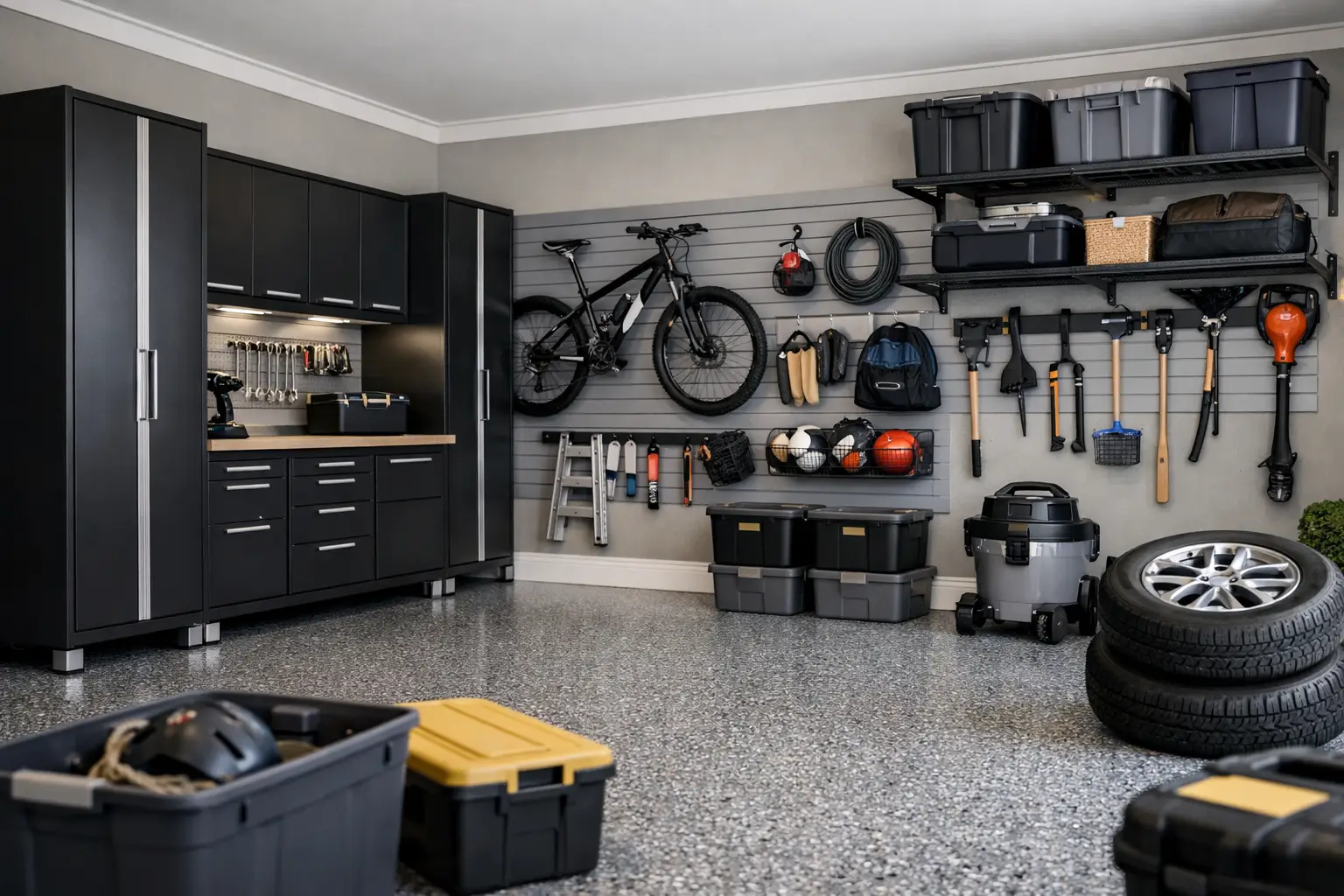
The moment you have to move the car outside to make room for boxes, bikes, tools, and seasonal décor, your garage has stopped supporting your life. This garage storage system buying guide helps you choose a solution that does more than hide clutter. The right system creates clear routines, protects the items you value, and makes one of your home’s largest spaces feel intentional again.
A garage is rarely just a garage. It may be a workshop on Saturday, a sports-equipment hub during the week, a landing zone for groceries, or a place to store holiday bins and bulky household supplies. Buying storage without accounting for those real habits is how a neat-looking installation becomes frustrating within a year.
Start With How You Want the Garage to Work
Before comparing cabinet finishes or rack capacities, consider what needs to happen in the space. Do you want to park two vehicles comfortably? Is a workbench essential? Are children regularly reaching for scooters, helmets, and balls? Do you need a dedicated place for gardening equipment, golf clubs, or automotive supplies?
Think in zones rather than individual products. A practical garage usually has an arrival zone near the door, an active-use zone for tools and hobbies, a sports zone, and a long-term storage zone for items used only a few times each year. This approach prevents the common mistake of filling every wall with cabinetry, then realizing there is nowhere suitable for bikes or tall equipment.
Also measure the footprint with vehicles inside. Cabinets that look modest on a floor plan can narrow a parking bay or make it difficult to open a vehicle door. A professional design accounts for circulation space, door swings, garage-door tracks, electrical panels, windows, and the actual dimensions of what you plan to store.
A Garage Storage System Buying Guide to the Main Options
The best storage systems combine several components. Each category solves a different problem, and the right balance depends on your possessions, ceiling height, and preference for visible versus concealed storage.
Steel cabinets for a clean, protected look
Garage cabinets are ideal for supplies you want contained and protected from dust: paint, chemicals, power tools, car-care products, cleaning materials, and household overflow. Premium steel cabinets bring a tailored, architectural appearance to the garage while standing up to heavy daily use better than many lightweight retail units.
Pay attention to construction, not just colour. Look for durable steel, adjustable shelving, quality hinges, secure doors, and a finish designed for a garage environment. Wall-mounted cabinets keep the floor clear for easier cleaning, while base cabinets can anchor a work surface. Full-height cabinets are especially valuable for brooms, rakes, leaf blowers, and other awkward items that tend to lean in corners.
Cabinetry is a worthwhile investment when visual calm matters to you. The trade-off is that cabinets use wall space and do not suit every oversized item. They work best when paired with open or overhead storage rather than expected to hold everything.
Wall storage for frequently used gear
Slatwall or other modular wall-storage systems turn vertical space into flexible storage. Hooks, baskets, shelves, and specialized holders can keep bikes, ladders, hoses, helmets, and garden tools off the floor while remaining easy to reach.
This is often the most adaptable part of a garage system. A family’s needs can change quickly as children grow, hobbies evolve, or a home renovation introduces new tools. Components can be repositioned without rebuilding the entire room.
Avoid treating wall storage as a random collection of hooks. Plan a purpose for each section. Long-handled tools belong together, sports gear should be low enough for regular use, and heavy equipment needs appropriate mounting hardware. A well-designed wall feels calm because every item has a defined home.
Overhead racks for seasonal storage
The ceiling is valuable real estate for bins, luggage, camping equipment, and seasonal decorations. Overhead racks free up floor space, especially in garages where vehicles must fit comfortably, but they should be reserved for lightweight-to-manage items that you do not need every week.
Capacity and installation matter here. Ceiling-mounted storage must be properly secured to the garage structure, and clearance from the garage door and vehicle roofline needs to be confirmed before installation. Store items in durable, clearly labelled bins and keep the heaviest belongings lower whenever possible. If retrieving an item feels unsafe or inconvenient, it does not belong overhead.
Work surfaces and utility details
A workbench can make a garage far more useful, but only if it serves a real routine. For homeowners who repair bikes, tackle DIY projects, or maintain outdoor equipment, a durable bench with nearby drawers and tool storage is a practical centrepiece. For others, a compact folding surface may be enough.
Do not overlook small decisions that make the system easier to live with: charging access for tools, a designated recycling area, space for a vacuum, and shelves sized for the bins you already own. These details are where a custom plan begins to feel genuinely personal.
Choose Materials Built for Garage Conditions
Garages experience temperature swings, humidity, dust, and hard use. That is why household furniture and bargain shelving often disappoint in this setting. Materials should be selected for durability, cleanability, and load requirements, not only appearance.
Steel cabinetry offers strength and a refined finish, while quality wall systems provide flexible organization without sacrificing visual order. Shelves and racks should have clearly defined weight capacities. Be realistic about what you will place on them. A few storage totes are very different from heavy tools, automotive parts, or bulk household supplies.
Flooring also influences how the finished garage performs. A durable floor coating makes the room easier to clean and gives cabinetry and wall storage a more finished foundation. If you are considering this upgrade, ask how the concrete will be prepared and whether the coating is UV-stable, chemical-resistant, and designed to resist wear over time. A floor should support the storage plan, not become another maintenance concern.
Decide Between Modular and Custom Storage
Modular systems can be a sensible choice for a simple garage with predictable needs. They are generally quicker to purchase and can offer useful flexibility. The compromise is fit. Standard sizes may leave wasted gaps, create awkward transitions around obstacles, or provide more of one type of storage than you need.
A custom system is more suitable when the garage has unusual dimensions, multiple functions, or a specific design standard. It allows cabinetry, wall storage, overhead racks, work areas, and flooring to be considered as one environment. You can also see how proportions, finishes, and storage zones work together before anything is installed.
That planning process has practical value. A 3D design presentation can expose problems early, such as a tall cabinet blocking access to a hose bib or an overhead rack interfering with the garage door. It also makes it easier to make confident choices about layout and finish before the project begins.
Ask Better Questions Before You Buy
A storage system should be evaluated as a long-term home improvement, not a collection of containers. Ask the provider whether installation is included, how wall and ceiling components are secured, what load limits apply, and whether the design can adapt as your household changes.
You should also ask what happens before installation. Quality work begins with accurate measurements, an assessment of wall conditions, and a plan for protecting the home during the project. The lowest quote is not always the best value if it leaves you coordinating multiple trades or solving fit issues after the fact.
A clear budget helps, but prioritize the parts that affect daily use: durable cabinetry where you need concealment, accessible storage for active gear, and enough open floor area for vehicles and movement. It is better to install a thoughtful first phase than to overcrowd the garage with storage that does not match your habits.
Let the Finished Space Support Your Routine
The strongest garage designs do not ask you to become a different kind of person to stay organized. They make the right action easier. Helmets return to their hooks, tools go back into labelled drawers, and seasonal bins have a designated place overhead instead of migrating across the floor.
A personalized plan from Orga Spaces can turn those small daily improvements into a polished, high-performing part of your home. When your garage has room for the car, the gear, and the life happening around both, you reclaim more than square footage. You create room for you to breathe.