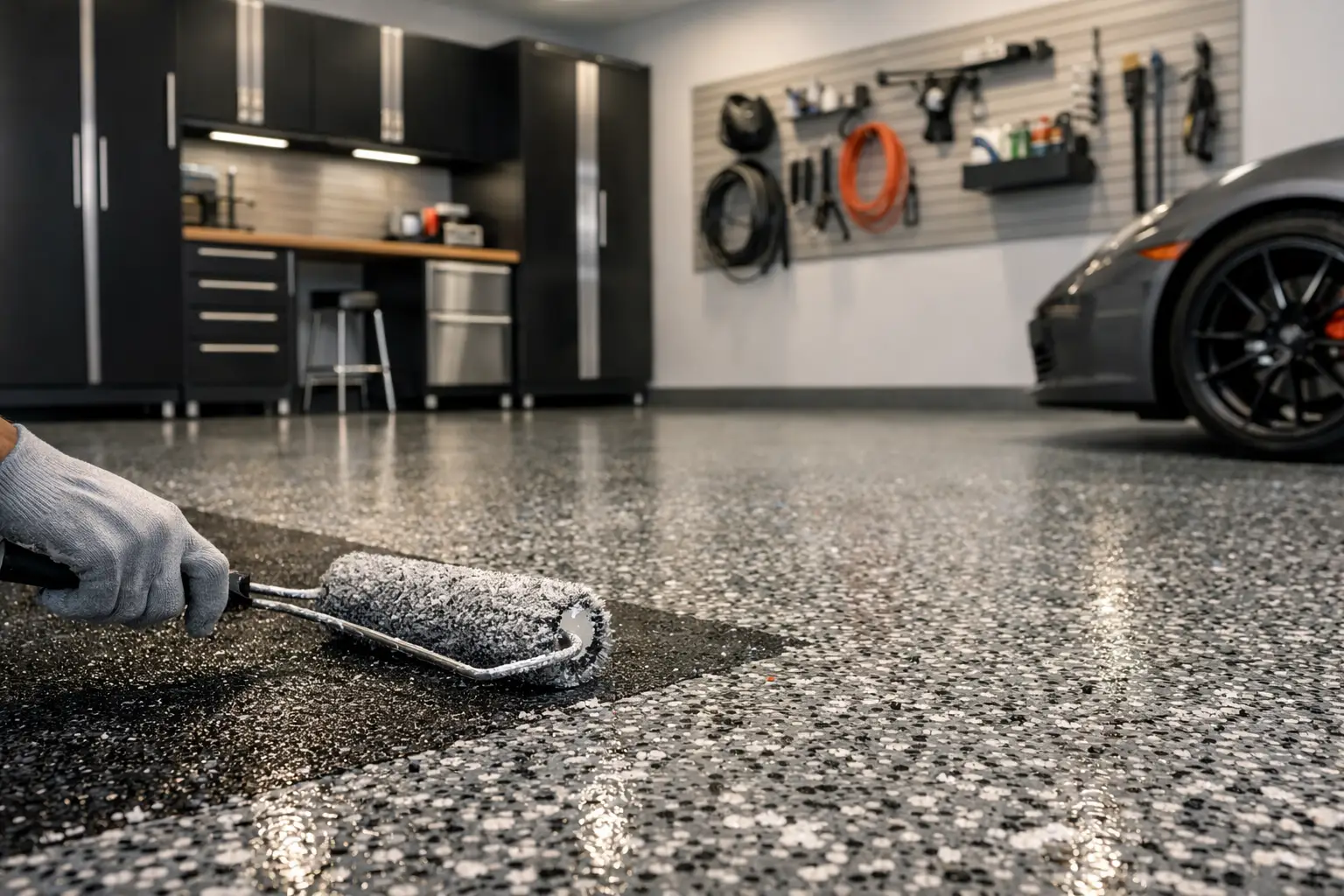
A garage floor has a harder job than almost any other surface in your home. It carries vehicles, lawn equipment, tools, sports gear, dropped boxes, muddy shoes, and the occasional DIY project. Learning how to choose garage coating starts with recognizing that the right finish should do more than cover concrete. It should support the way your household actually uses the space while making the garage feel cleaner, more intentional, and easier to maintain.
For many homeowners, the garage is no longer a forgotten utility room. It is the first place you arrive home, a storage hub for busy family life, and often the foundation of a larger garage transformation. A well-chosen coating can make custom cabinetry, wall storage, and overhead systems feel even more polished because the entire room has a finished, considered appearance.
Start With the Condition of Your Concrete
A beautiful coating is only as reliable as the surface beneath it. Before comparing colours or finishes, look closely at the concrete itself. Cracks, spalling, moisture concerns, old paint, oil stains, and uneven areas all affect what preparation is required and which system will perform best.
Hairline cracks are common and are often repairable as part of the coating process. Larger cracks or areas where concrete is breaking apart may need more extensive correction first. Oil contamination also deserves attention. A floor that has absorbed years of automotive fluids cannot simply be painted over and expected to hold up.
Preparation is where professional installation makes a meaningful difference. Diamond grinding creates the proper concrete profile for adhesion, removing weak surface material and opening the pores of the slab. This is more dependable than relying on an acid wash or a light cleaning alone. If a contractor does not spend much time explaining preparation, that is a reason to ask more questions. It is not the glamorous part of a new floor, but it is often the difference between a coating that lasts and one that peels prematurely.
How to Choose Garage Coating by Performance
The best material depends on your expectations for durability, installation timing, appearance, and exposure to sunlight or chemicals. Not every garage needs the same system, and the lowest initial price is not always the best value over time.
Epoxy: familiar, but not always the strongest choice
Epoxy has long been a common garage-floor option. It can offer a clean appearance and solid chemical resistance when installed correctly. However, traditional epoxy may yellow when exposed to UV light, and it can take longer to cure. Some epoxy systems can also become less flexible over time, which matters in a garage floor that experiences temperature changes, impact, and regular vehicle traffic.
Epoxy may suit a lightly used, enclosed garage where budget is the main concern. But homeowners seeking a premium finish with faster installation and stronger long-term colour stability often compare it with polyaspartic or polyurea-based systems.
Polyaspartic and polyurea: built for demanding use
Polyaspartic coatings are valued for their fast cure time, UV stability, and resistance to many household and automotive chemicals. Unlike many traditional epoxies, a quality polyaspartic top coat is designed to resist yellowing from sunlight. That can be especially useful in garages with windows, glass doors, or frequent open-door exposure.
Polyurea is often used as a primer or base coat because it bonds effectively to properly prepared concrete and offers flexibility. When paired with a polyaspartic top coat, it creates a system designed for daily use, including vehicle traffic, dropped tools, and the movement that naturally occurs in a busy garage.
A professionally installed polyaspartic full-flake floor can often be completed in one day, depending on site conditions. This is a practical advantage for homeowners who want to minimize disruption without compromising on finish quality.
Paint kits: useful only for limited expectations
DIY paint kits can improve the look of a floor temporarily, particularly in a low-traffic workspace. They are also accessible and inexpensive upfront. The trade-off is that most do not offer the same adhesion, thickness, chemical resistance, or longevity as a professionally prepared coating system.
If you are transforming the garage into a refined extension of your home, a paint kit may create more work later. Chipping, hot-tire pickup, visible wear paths, and difficult cleaning can quickly undermine the upgrade you intended to make.
Consider Safety, Cleaning, and Daily Living
A garage coating should feel good to live with, not just look good in photographs. Think about what happens on the floor in an ordinary week. Are children coming in with wet shoes? Is the garage used for gardening supplies, home projects, bicycles, or pet care? Do you want a place where you can sweep quickly before guests arrive?
Full vinyl flake coverage is a practical option because it creates visual texture that helps disguise dust, minor debris, and everyday marks between cleanings. It also contributes to a more slip-resistant surface than a smooth, high-gloss solid-colour floor. No floor is completely slip-proof, especially when wet, but texture and the right top coat can improve underfoot confidence.
Chemical resistance matters as well. Drips from oil, fuel, cleaners, fertilizer, and automotive products happen. A quality top coat allows these messes to be cleaned more easily before they become permanent stains. This helps preserve both the floor and the sense of calm that comes from having a garage you can keep in order.
Choose a Colour That Supports the Whole Garage Design
Floor colour affects how large, bright, and polished a garage feels. It should be selected alongside cabinetry, wall finishes, storage systems, and the amount of natural light in the room. A coating is not an isolated decision. It is part of the visual foundation for the entire space.
Mid-tone grey flake blends are a popular choice because they are timeless, versatile, and forgiving of daily dust. They pair naturally with steel cabinets, white walls, black hardware, and a range of vehicle colours. Warmer blends can soften a garage that connects visually to the home, while darker blends can create a more dramatic, workshop-inspired look.
Avoid choosing a sample based only on a small chip. Ask to see larger samples in natural and artificial light, then consider how the floor will look beside your planned storage. A personalized garage should feel cohesive rather than assembled one decision at a time.
Ask What the Installation Process Includes
When comparing proposals, look beyond the name of the product. Two contractors may both say they install a polyaspartic floor, yet the quality of preparation, crack repair, product layers, and final protection can vary considerably.
A complete premium system should clearly explain how the concrete will be prepared, how cracks will be repaired, what primer or base coat will be used, whether flakes are broadcast lightly or to full coverage, and what top coat protects the finished surface. Full-flake coverage means the vinyl flakes are applied until the base coat is fully covered, creating a more consistent appearance and a textured, durable finish.
At Orga Spaces, garage flooring is approached as part of a complete transformation, not as a standalone afterthought. The process includes diamond grinding, crack repair, a polyurea primer and base coat, full vinyl flake broadcast, and a final polyaspartic top coat. The result is a UV-stable, easy-to-clean surface designed to resist chemicals, yellowing, and cracking while complementing a custom garage design.
Balance Cost Against the Life of the Floor
Garage coating prices vary according to the size and condition of the slab, the extent of repairs, the coating system, and the level of professional preparation. It can be tempting to compare only the per-square-foot price. A better question is what you are receiving for that investment and how long the floor is expected to perform.
A lower-cost installation that skips proper grinding or uses a thin coating may require repair or replacement sooner. A more durable system can protect the concrete, reduce cleaning effort, and maintain the finished look of your garage for years. For homeowners investing in custom storage and cabinetry, choosing a coating that matches that standard helps protect the overall value of the renovation.
The right garage coating creates more than a clean floor. It gives your everyday routines a more durable, composed setting – a place where parking, projects, storage, and family life can coexist without the usual visual clutter. When the floor is designed with the rest of the garage in mind, the space becomes easier to care for and far more enjoyable to come home to.