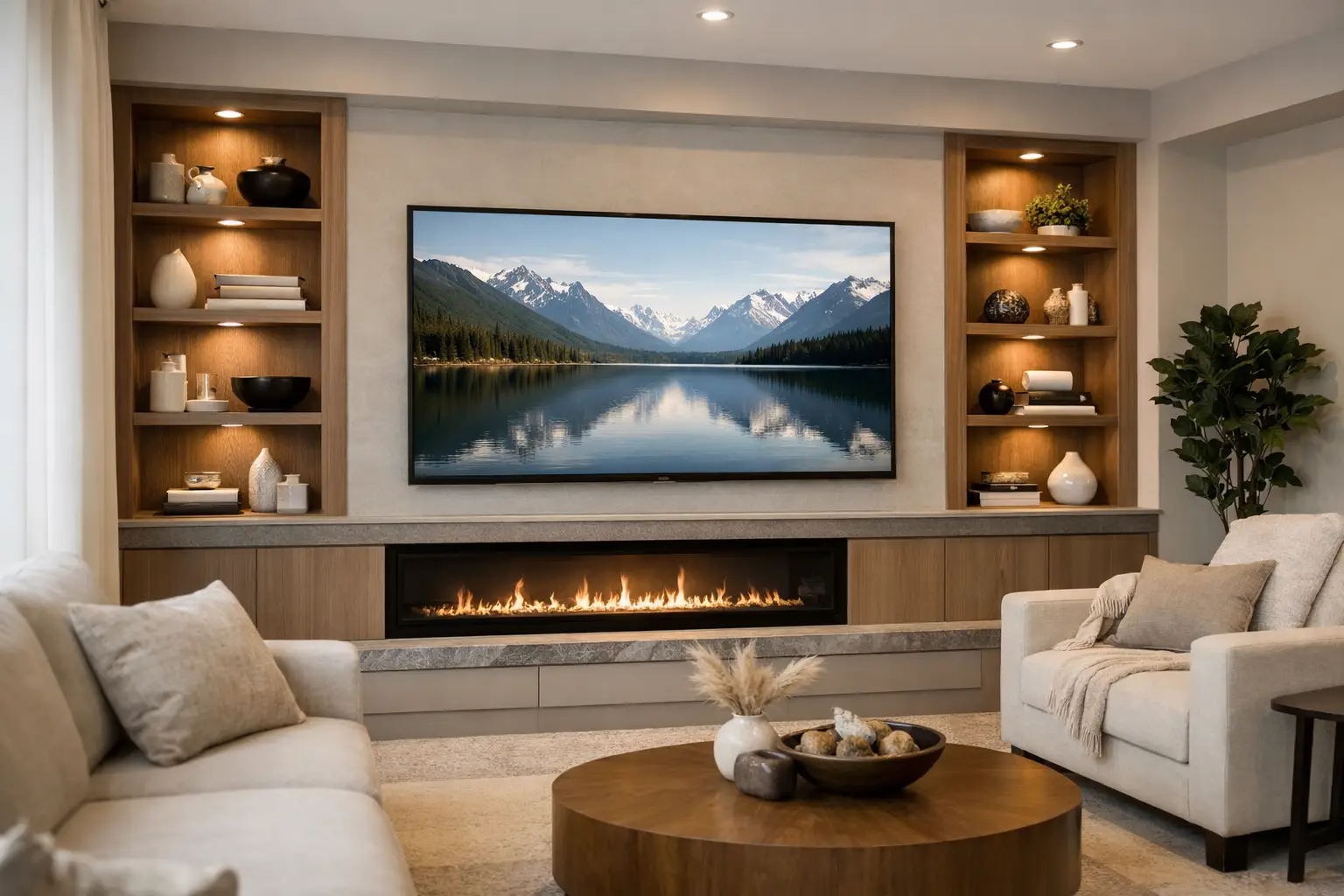
A television wall can either become the visual clutter centre of a room or the feature that makes the entire space feel considered. The strongest modern entertainment wall ideas do more than give a screen a place to hang. They conceal cords, create purposeful storage, balance the room’s proportions, and make everyday downtime feel more refined.
For homeowners investing in a living room, family room, or multifunctional space, the goal is not to make technology disappear completely. It is to give it a setting that feels intentional. A custom entertainment wall can hold the practical pieces of family life while creating room for you to breathe.
Modern Entertainment Wall Ideas Start With How You Live
Before choosing finishes or shelving, consider what the wall needs to support. A media wall used for movie nights, gaming, and family storage needs a different layout than one in a formal sitting room. The right design considers viewing height, sound equipment, natural light, furniture placement, and what you would rather not see every day.
A wall that looks exceptional in a photo can still be frustrating if it offers nowhere for remotes, game consoles, speakers, blankets, or children’s items. Tailored cabinetry makes the difference. It lets the architecture of the room lead the design while giving daily essentials a proper home.
1. Frame the TV With Full-Height Cabinetry
Full-height cabinetry turns an ordinary TV wall into a complete architectural feature. Tall cabinets on either side provide generous concealed storage for books, board games, media equipment, and seasonal pieces, while a lower cabinet run grounds the television.
This approach works especially well in rooms with high ceilings or wide blank walls. Choose flat-panel doors for a clean contemporary look, or add a subtle routed detail if the surrounding home has more traditional character. The trade-off is visual weight: in a smaller room, full-height units should be balanced with lighter finishes or open sections so the wall does not feel too enclosed.
2. Use a Floating Base Cabinet for a Lighter Look
A floating media cabinet creates an airy, modern effect and leaves more visible floor area beneath it. This can make a compact den or condo living space feel larger, while still providing enclosed storage for the items that tend to gather around a television.
Plan the cabinet depth around the equipment you intend to store. A shallow unit may look sleek, but it needs enough clearance for devices, wiring, and ventilation. Integrated cable management is essential here. Nothing interrupts a carefully designed wall faster than visible cords trailing down to an outlet.
3. Layer Wood Panels Behind the Screen
Warm wood panelling brings depth without requiring an overly decorated wall. Vertical slats can add height to a low room, while wide horizontal panels can make a narrow wall appear broader. A natural oak tone feels inviting; a deeper walnut stain creates a more dramatic, tailored mood.
Wood is particularly effective when the television needs visual grounding. Rather than appearing as a black rectangle on a pale wall, the screen becomes part of a material composition. Keep the rest of the millwork simple so the grain and scale of the panels have room to stand out.
4. Pair Closed Storage With Open Display Niches
The most functional entertainment walls rarely rely on open shelving alone. Open shelves are useful for a few books, ceramics, framed photos, or meaningful objects, but too many quickly become another surface to manage. Combining them with closed cabinetry gives the wall both personality and discipline.
A good rule is to reserve open niches for objects you genuinely want to display and use doors for the rest. This creates a composed look that is easier to maintain, especially in active family spaces. Consider placing open niches off-centre rather than making every shelf identical for a more custom, less showroom-like result.
5. Add Integrated Lighting With Restraint
Well-placed lighting changes the mood of an entertainment wall after dark. Soft LED strips inside display niches, beneath floating cabinets, or behind a panel can add dimension and reduce the harsh contrast of a bright screen in a dark room.
The key is restraint. Lighting should reveal texture and create atmosphere, not compete with the television. Warm lighting generally feels more comfortable in a living area than cool white tones. Dimmable controls are worth including, since movie night and daytime hosting call for very different levels of light.
6. Create a Stone or Porcelain Feature Wall
Large-format porcelain, natural stone, or a stone-look surface gives an entertainment wall a substantial, high-end presence. It is a strong option for a fireplace-and-TV composition, particularly in an open-concept home where the wall is visible from the kitchen or dining area.
Material scale matters. Large slabs with minimal grout lines create a cleaner, more contemporary result than small, busy tiles. Natural stone adds variation and character, while porcelain offers a more uniform appearance and easier maintenance. Either can be paired with warm wood cabinetry to keep the finished wall from feeling cold.
7. Build Around a Linear Fireplace
A linear fireplace beneath the television creates an immediate focal point, but it requires careful planning. The television must be positioned at a comfortable viewing height, and the fireplace specifications need to be respected to protect electronics and surrounding finishes.
If the screen would sit too high above the firebox, consider a media cabinet on an adjacent wall instead. Comfort should take priority over a trend. When the proportions work, a long fireplace and low cabinetry can create an elegant horizontal composition that suits contemporary homes beautifully.
8. Choose a Tone-on-Tone Colour Palette
A tone-on-tone wall lets cabinetry, paint, and panels work together without feeling flat. Soft greige cabinetry against a slightly deeper wall colour, for example, adds quiet depth while keeping the television from dominating the room. Charcoal, taupe, warm white, and muted green can all work depending on the home’s existing finishes.
Dark walls are effective for reducing the visual impact of a screen, but they are not the only answer. Lighter palettes can feel equally sophisticated when the cabinetry is built with precise proportions and thoughtful material contrast. Sample colours in the room itself, as natural and artificial light will shift their appearance throughout the day.
9. Extend the Design Beyond the TV Zone
An entertainment wall feels more integrated when it relates to the rest of the room. Extending lower cabinetry to include a reading bench, bar storage, a workstation, or a window seat can make better use of an awkward wall and bring several functions into one tailored design.
This is especially useful in Dallas-Fort Worth homes with generous living areas that need clearer zones. Instead of adding several stand-alone furniture pieces, one connected built-in can bring visual order to the room while supporting how your household actually uses it.
10. Design a Dedicated Gaming and Media Centre
Gaming systems, routers, sound bars, and charging cords need a more technical approach than a basic wall mount. Ventilated cabinets, accessible power, wire channels, and equipment-friendly dimensions should be addressed before installation, not after.
Closed doors can conceal the hardware, but certain devices may need infrared-friendly solutions or carefully planned open sections to function properly. A professional design can keep the experience simple without sacrificing the clean lines that make a custom wall feel elevated.
11. Make a Small Wall Work Harder
A limited footprint does not rule out a built-in entertainment wall. In fact, small rooms benefit most from furniture that performs more than one role. A compact floating cabinet, a narrow vertical storage tower, and a panel behind the TV can provide definition without consuming valuable floor space.
Avoid oversized cabinets and overly deep shelving in a tight room. Prioritize the storage you need most, then use a restrained material palette to preserve a sense of openness. A smaller, well-designed solution will always feel more polished than a large wall crowded into the wrong proportions.
12. Let Custom Details Do the Quiet Work
The details are what make a media wall feel truly built-in. Consistent reveals around doors, cabinetry aligned to ceiling lines, carefully placed outlets, soft-close hardware, and proportionate drawer sizes all contribute to the finished impression.
These decisions also shape how the space functions years later. Custom storage is not simply about hiding clutter for a photograph. It is about creating habits that are easier to keep, so the room stays calm after a busy week, not only on the day it is installed.
A considered entertainment wall should make the room feel less like a place to manage and more like a place to enjoy. With a tailored design, premium materials, and professional installation, Orga Spaces can help turn an underused wall into a feature that supports the way your home lives every day.