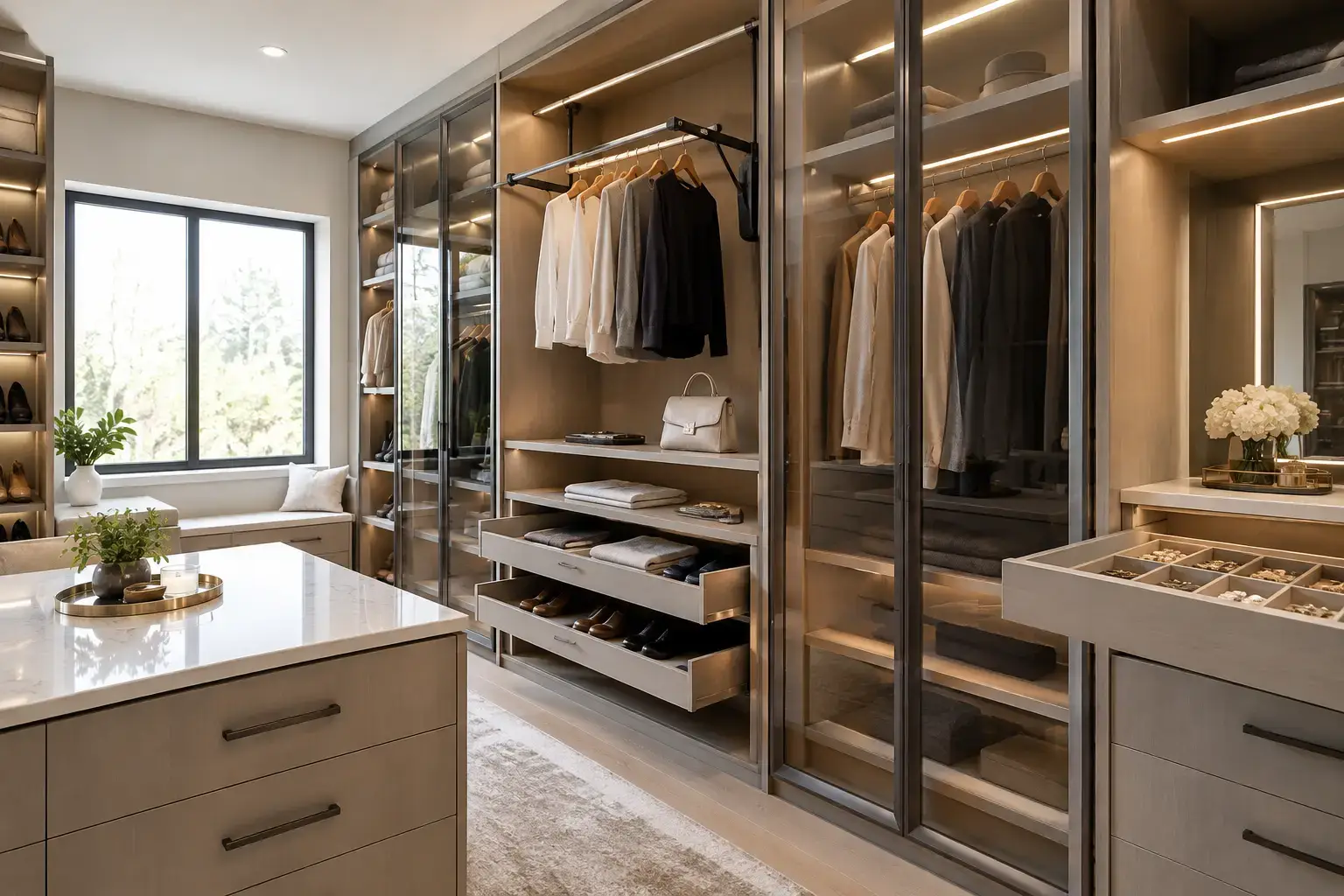
A closet can look spacious and still make every morning harder. When shirts disappear behind deeper shelves, shoes collect on the floor, and accessories migrate from one surface to another, the issue is rarely a lack of square footage. It is a lack of purpose-built storage. The top closet storage features turn a closet into a place where everything has a visible, accessible home – and where getting ready feels calmer from the first step.
For homeowners investing in a custom closet, the goal is not to add the most components possible. It is to create a layout that reflects how you dress, what you own, and what you want your daily routine to feel like. A well-designed system should hold more while making the room feel less crowded.
Top Closet Storage Features That Improve Daily Life
Double hanging sections
Double hanging is one of the most effective ways to increase usable capacity without increasing the footprint. By stacking two hanging rods, a closet can comfortably accommodate folded-length pieces such as shirts, blouses, skirts, and trousers. It is a practical choice for wardrobes built around workwear, casual clothing, or school uniforms.
The trade-off is obvious: double hanging is not suitable for dresses, coats, jumpsuits, or longer garments. A thoughtful closet plan balances both. One or two dedicated long-hang sections prevent longer pieces from becoming creased at the hem, while double-hang zones make efficient use of the remaining wall space.
Adjustable shelving
Fixed shelves can be neat on installation day and frustrating a year later. Adjustable shelving gives a closet room to evolve as a wardrobe changes. It can make space for larger handbags, taller boot boxes, stacks of sweaters, or bins for seasonal pieces without requiring a new system.
This flexibility matters most in shared closets and family homes, where storage needs are likely to shift. Shelves should still be planned with intention, however. Excessively deep shelves often become a place where items vanish behind one another. Moderate depths, paired with clear categories, create better visibility and easier upkeep.
Full-extension drawers
Drawers bring visual quiet to a closet. They are especially useful for undergarments, activewear, T-shirts, sleepwear, swimwear, and accessories that do not stay orderly on open shelves. Full-extension drawer hardware makes the entire drawer accessible, including the back corners that are often wasted in standard cabinetry.
Drawer interiors deserve just as much consideration as drawer fronts. Dividers can separate sunglasses, watches, belts, jewelry, or smaller essentials so that opening a drawer does not mean sorting through a pile. For a refined finish, reserve deeper drawers for bulkier folded items and shallow drawers for the pieces you reach for every day.
A dedicated shoe strategy
Shoes are one of the quickest ways for a closet floor to feel cluttered. A dedicated shoe area keeps pairs visible, protected, and easy to put away. Angled shoe shelves create a polished display and make footwear easy to scan, while flat shelves may be more efficient for sneakers, flats, and storage boxes.
The right approach depends on the collection. Someone with a curated selection of heels may value presentation, while an active family may need durable, open shelves that make grab-and-go storage simple. Tall boot storage requires more vertical clearance, and a pull-out shoe rack can be helpful in a narrower reach-in closet. The best solution is not always the most decorative one. It is the one that makes the return trip from the door effortless.
Pull-out accessories and valet features
Small accessories cause disproportionate clutter because they are easy to toss on a counter or shelf. Pull-out belt racks, tie racks, jewelry trays, and valet rods give these items a designated place without demanding much visual space.
A valet rod is particularly useful for planning an outfit, steaming a shirt, or setting aside dry cleaning. It may seem like a small detail, but features that support real habits are often the ones clients appreciate most after installation. The key is selecting accessories that match your routine rather than adding specialty hardware for the sake of it.
Integrated lighting
A closet should not require a phone flashlight to find a navy blouse or match a pair of shoes. Integrated LED lighting improves visibility and gives cabinetry a more considered, architectural presence. It can be placed under shelves, along hanging sections, inside drawers, or around a central display area.
Lighting is also a functional design decision. Motion-activated options are convenient when hands are full, while warmer light can make a walk-in closet feel inviting. For color-sensitive decisions, such as selecting clothing for work or an event, lighting with accurate color rendering is worth discussing during the design stage.
A center island, when the room supports it
In a walk-in closet, an island can provide valuable drawer storage, a folding surface, and a natural focal point. It can hold accessories, denim, loungewear, or seasonal items while giving the room a tailored furniture-like character.
An island is not automatically the right answer for every walk-in. It needs adequate clearance on all sides so doors, drawers, and people can move comfortably. In a smaller room, perimeter cabinetry may deliver more storage and better circulation. A professional layout can show the difference before a single cabinet is installed, which helps homeowners invest confidently in the features that truly fit.
Floor-to-ceiling cabinetry
Unused space above a closet system is often treated as a dust-catching ledge. Floor-to-ceiling cabinetry turns that overlooked height into purposeful storage for luggage, seasonal clothing, keepsakes, and less frequently used items. It also creates a more finished look, with cabinetry that feels designed for the room rather than placed inside it.
Upper storage works best when it is intentional. Keep everyday items between waist and eye level, place occasional-use items higher up, and avoid filling elevated cabinets with items you need to access weekly. A clean visual line is valuable, but daily convenience should lead the decision.
Choosing Features Around Your Actual Wardrobe
The most successful closets begin with an honest inventory. Count the dresses that need full-length hanging space. Notice whether sweaters are folded or hung. Consider how many pairs of shoes actually need a home, not how many you hope to own someday. If two people share the closet, account for each person’s habits and preferences rather than dividing the room evenly by default.
It also helps to identify friction points. Maybe one person starts every day looking for a belt. Maybe laundry ends up on a chair because there is no practical hamper location. Maybe formalwear has nowhere to go except a guest-room closet. Those details shape a custom design more effectively than a generic checklist ever could.
Material and finish selections matter as well. Durable surfaces, quality drawer hardware, and a cohesive palette help the closet feel like a true part of the home. A light finish can brighten an interior room, while wood tones or darker accents may create warmth and contrast. Neither is universally better. The best choice should complement the home while making the space feel personal.
Why Professional Design Makes the Difference
A custom closet project is a balance of storage engineering and visual restraint. Too many open shelves can feel busy. Too many drawers may limit flexibility. An oversized island can interrupt circulation, while insufficient hanging space can undermine an otherwise beautiful room. Seeing a detailed 3D design before installation makes these decisions easier because the layout becomes tangible long before the final reveal.
For Dallas-Fort Worth homeowners, Orga Spaces approaches closet design as a complete transformation, from consultation and tailored planning through premium installation. The result is not simply more places to put belongings. It is a room that supports a more organized, composed start and finish to every day.
A closet should make it easier to care for what you own and easier to move through your routine. Plan for the features that remove small points of friction, and you create room for you to breathe – even on the busiest mornings.