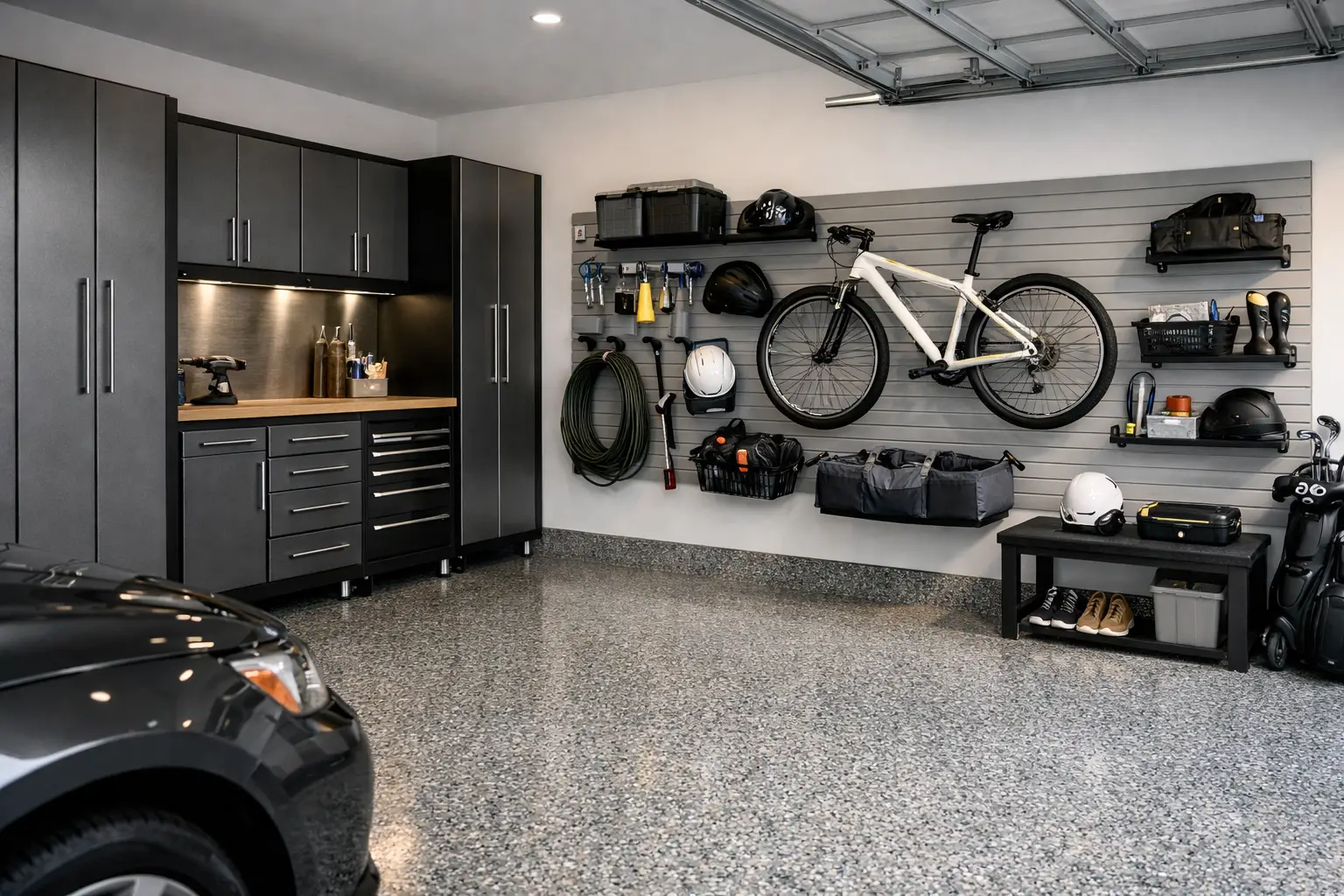
You notice it the moment the garage door opens. The floor is stained, the walls are working too hard, and every square foot feels like it is holding something that never found a proper place. A thoughtful garage makeover design guide starts there – not with products, but with how you want the space to function every day.
The best garage transformations are not about filling walls with cabinets and hoping for the best. They are about creating a space that supports the rhythm of your home. That might mean making room for two vehicles again, giving sports equipment a permanent home, or turning a cluttered catch-all into a clean extension of the house. When the design is right, the garage feels less like overflow and more like part of your lifestyle.
What a garage makeover design guide should solve
A successful makeover solves more than visible clutter. It addresses friction. If you are stepping around bins to reach a freezer, digging through shelves for tools, or storing seasonal items in places that make no sense, the problem is not simply a lack of storage. It is a lack of planning.
That is why good garage design begins with zones. Garden tools should live near the door to the yard. Sports gear should be easy for kids and adults to access without unloading half the room. Holiday décor belongs up high or behind closed storage, not stacked in your path all year. Workbench space, bulk household supplies, cleaning products, and hobby items all need their own logic.
The right layout also considers what should stay visible and what should disappear. Open wall systems are useful for frequently used items, but not everything benefits from being on display. Closed cabinetry brings visual calm. It also protects items from dust and helps the garage feel more finished, especially when the goal is a space that looks as intentional as the rest of the home.
Start with function, then refine the look
The most common design mistake is choosing finishes first and trying to force daily life around them later. A cleaner result comes from reversing that order.
Begin by asking a few direct questions. Do you want to park inside every day? Is the garage also your home entry point? Are bikes, golf clubs, tools, luggage, and holiday bins all competing for the same wall? Do you need a work area, or would you rather prioritize hidden storage and open floor space?
Those answers shape everything else. Cabinet depth, overhead storage placement, wall-mounted systems, and even floor finish selection should support actual use. A beautiful design that does not account for how your household moves through the space will always feel slightly off.
Once the practical needs are clear, the visual direction becomes easier. Many homeowners want the garage to feel crisp, modern, and low-maintenance. That usually means a restrained colour palette, coordinated finishes, and storage that looks integrated rather than pieced together over time. Steel cabinets are especially effective here because they offer a refined look while standing up to heavy use.
The core elements of a high-performing garage
Cabinetry sets the tone
Cabinetry is often the backbone of a premium garage design. It gives large categories of items a defined home, reduces visual noise, and creates a more architectural feel. For homeowners who are done with mismatched shelving and plastic bins, this is often the upgrade that changes the experience of the space most dramatically.
That said, more cabinets are not always better. The right amount depends on what you are storing and how often you need access to it. Too little storage leaves clutter exposed. Too much can make the room feel heavy and limit flexibility. Custom planning matters because it helps balance capacity with breathing room.
Wall storage keeps daily items accessible
Wall-mounted storage is ideal for tools, ladders, bikes, and utility gear that should stay off the floor but remain easy to reach. It is one of the smartest ways to reclaim square footage without making the space feel crowded.
Placement matters. If wall systems are installed without considering door swing, vehicle clearance, or natural traffic flow, they can create just as much frustration as floor clutter. A good design uses wall storage selectively, where it improves access rather than adding visual busyness.
Overhead storage should be strategic
Overhead storage is excellent for long-term or seasonal items, especially in garages where floor space is at a premium. It works best for bins and belongings you do not need every week.
The trade-off is convenience. If you need a step stool every time you access something, that storage should not hold everyday essentials. Overhead systems are most effective when they support the rest of the layout, not when they become a catch-all for unresolved clutter.
Flooring changes the entire feel
A garage floor does more than improve appearance. It affects durability, maintenance, and how finished the room feels overall. If the concrete is cracked, stained, or constantly dusty, no amount of storage will make the space feel complete.
For homeowners considering floor coatings, material choice matters. Polyaspartic full flake systems offer clear advantages over traditional epoxy. They are UV-stable, resist yellowing, and hold up well against chemicals, wear, and temperature changes. They are also easier to clean and can be installed in one day, which matters when you want a fast transformation without sacrificing performance.
Just as important is the preparation beneath the finish. A lasting result depends on proper surface grinding, crack repair, base coat application, full flake broadcast, and a durable top coat. It is one of those areas where the unseen steps matter as much as the final look.
Why custom design makes a difference
There is a reason off-the-shelf garage storage often disappoints. It assumes every homeowner uses the space the same way. In reality, one family may need room for hockey gear and seasonal décor, while another wants a streamlined workshop with hidden utility storage and a showroom-clean finish.
Custom design closes that gap. It allows the garage to reflect the way you actually live, not the way a standard kit expects you to live. Dimensions are tailored. Storage zones are intentional. Finishes feel coordinated. And when the plan is presented in 3D before installation, it becomes much easier to make smart decisions with confidence.
That visual step is especially valuable in a premium project. Homeowners are not just buying cabinets or flooring. They are investing in a better version of daily life – one where the garage is easier to use, easier to maintain, and far more pleasant to come home to.
A practical garage makeover design guide for planning your project
Know what stays
Before any design begins, decide what truly belongs in the garage. Paint cans from a previous owner, broken equipment, duplicate tools, and items you have not touched in years can quietly consume the project budget and space. A makeover works better when it starts with clarity.
Design around movement
Think beyond storage volume and focus on flow. You need room to open car doors, walk comfortably, unload groceries, and reach key items without shifting three others. A garage can have plenty of storage and still feel inconvenient if movement was not considered from the start.
Choose quality where it counts
Not every part of the garage needs to be high-spec, but the hard-working elements should be. Cabinets, wall systems, and floor coatings take the daily wear. If they fail early, the space quickly loses its polish. Durable materials cost more upfront, but they usually deliver better value over time.
Plan for how the space should feel
This is the part many guides skip, but it matters. Do you want the garage to feel tucked away and utilitarian, or aligned with the finish level of the rest of the home? For many homeowners, the garage is a primary entry point. That makes it worth designing with the same care you would give a mudroom, laundry area, or walk-in closet.
When professional installation is the better route
Some garage updates are simple enough to tackle in stages. But a full transformation usually benefits from professional design and installation, especially when cabinetry, wall systems, overhead storage, and flooring all need to work together.
The biggest advantage is coordination. Instead of piecing together products from different sources and hoping measurements align, you get one cohesive plan. The result is cleaner, more functional, and typically less stressful. It also protects the investment. Precision matters in premium spaces, and installation quality shows in the final details.
For homeowners who want the process handled from consultation through finished installation, working with a design-led team can remove a great deal of guesswork. Orga Spaces approaches garage makeovers that way, combining tailored planning, 3D design, and professional installation to create spaces that feel both highly functional and visually refined.
A well-designed garage does not just store your things. It gives your home more order, more calm, and more room for you to breathe.