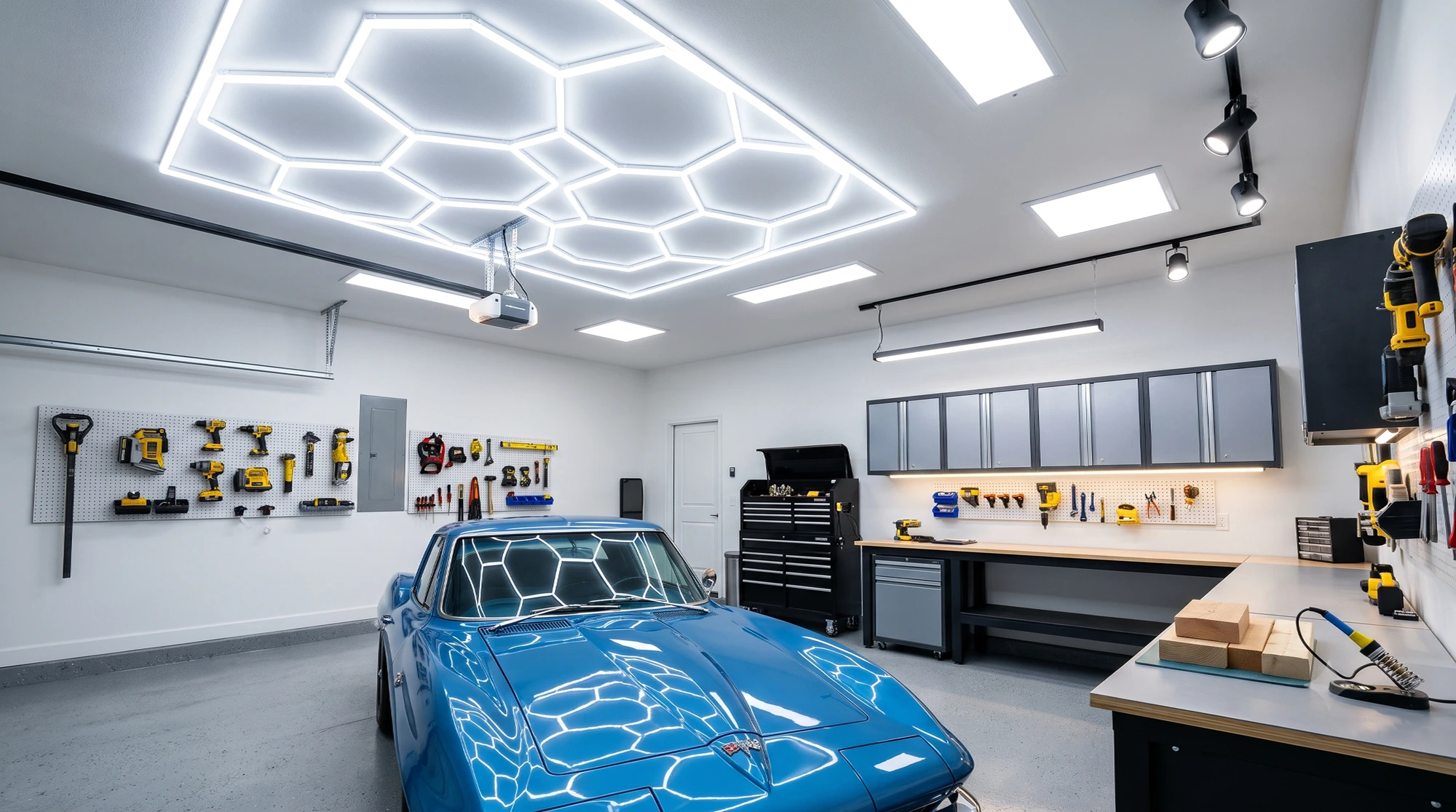
A garage is more than just a place to park your car. It can be a workshop, home gym, storage room, hobby space, or even a home business. No matter how you use it, good garage lighting makes a huge difference.
Choosing the right garage lighting is crucial for safety and efficiency.
Most garages come from the builder with a single, sad 60-watt bulb hanging in the middle of the ceiling, enough light to find your car keys, not enough to actually do anything. Upgrading your garage lighting is one of the cheapest, highest-impact changes you can make to a garage, whether you’re turning it into a woodshop, a home gym, or just a place where you can finally find the right-size Allen key.
Lighting your workspace is one of the highest ROI upgrades you can make, but it’s often just the catalyst for a much larger transformation. Once you can actually see every corner of your space, you might decide it’s time for a full-scale garage renovation. Whether that means ditching the stained concrete for a seamless, professional-grade garage floor or finally designing the custom garage storage system your tools deserve, the right lighting ensures your newly upgraded space truly shines.
Before comparing the different lighting options, it’s important to understand a few lighting terms. Let’s explore various types of garage lighting available today.
- Lumens measure brightness. The higher the lumens, the brighter the light. Most garages benefit from approximately 5,000 to 10,000 lumens, while workshops often need 12,000 to 20,000 lumens or more.
- Kelvin (K) measures color temperature. This determines the “color” of the light. Warm yellow light (2700K) is great for living rooms. For garages, 5000K daylight white is generally the preferred choice because it closely resembles natural daylight and improves visibility.
- Color Rendering Index (CRI) measures how accurately colors appear under the light. For painting, detailing, woodworking, or mechanical work, choose lighting with a CRI of 80 or higher, while 90+ CRI provides exceptional color accuracy.
With that out of the way, let’s break down your seven best options available today.
1 . Commercial LED Shop Lights (Linear/Long
Fixtures)
| Metric | Rating (1-10) |
| Installation Complexity | 4 |
| Upfront Cost | 4 |
| Brightness / Output | 8 |

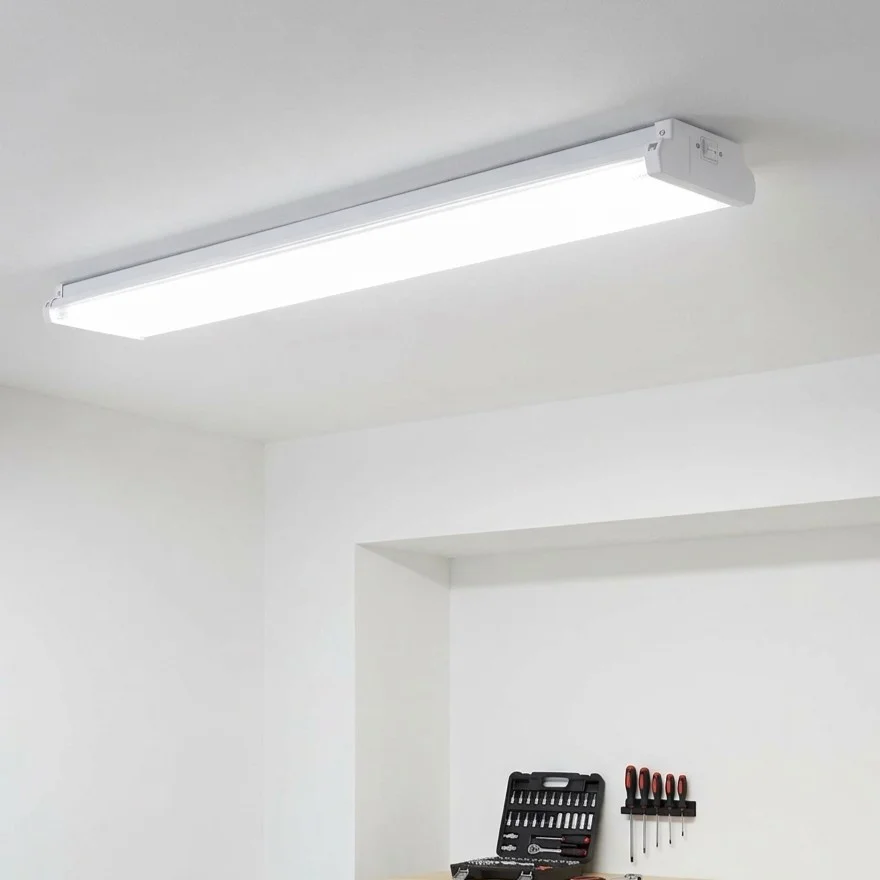
- Best Used For: Classic workshops, multi-purpose two-car garages, and open-bay ceilings. They are incredibly versatile and serve as the gold standard for overhead ambient lighting when suspended over workbenches or parked cars.
- Installation & Cost Reality: These are highly accessible. Most modern 4-foot or 8-foot LED shop lights are “plug-and-play” and can be daisy-chained together. You simply hang them from ceiling hooks via included chains and plug the first one into a standard ceiling outlet. A solid 4-pack will run you anywhere from $40 to $80, making them highly budget-friendly for the sheer volume of light they produce.
- Lumens & Brightness: Expect a robust 4,000 to 5,000 lumens per 4-foot tube. Because they are linear, they cast a wide, even blanket of light that significantly reduces harsh shadows across large surface areas.
- Why Choose This Over the Rest? The daisy-chain capability is unmatched for scaling your lighting. You can illuminate an entire 400-square-foot garage from a single electrical outlet without ever calling an electrician or running new Romex wire behind the drywall.
2. Recessed Pot Lights (Can Garage Lighting)
| Metric | Rating (1-10) |
| Installation Complexity | 8 |
| Upfront Cost | 6 |
| Brightness / Output | 5 |
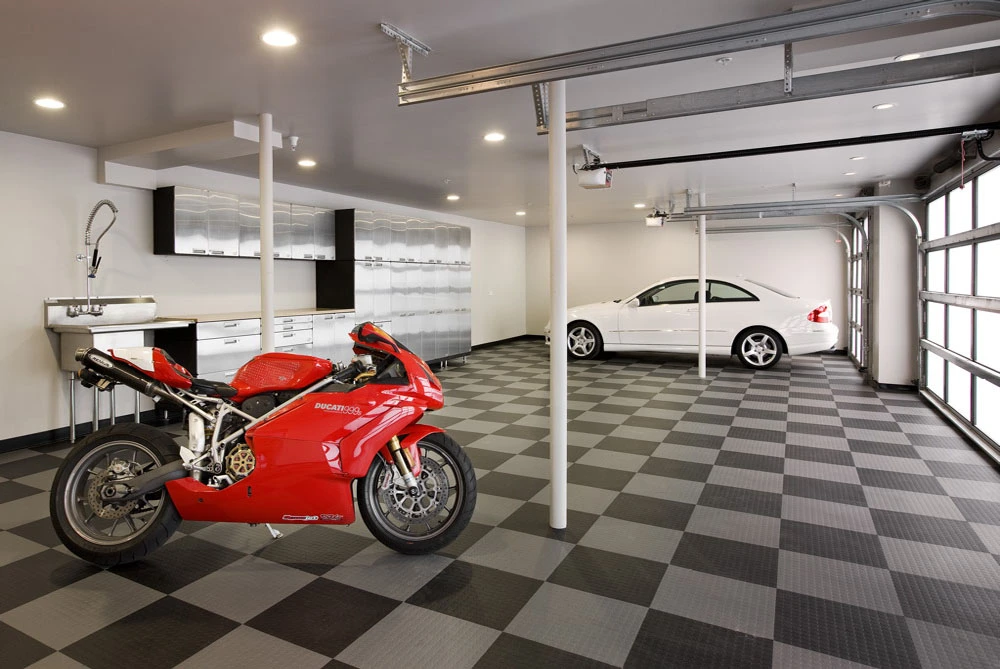
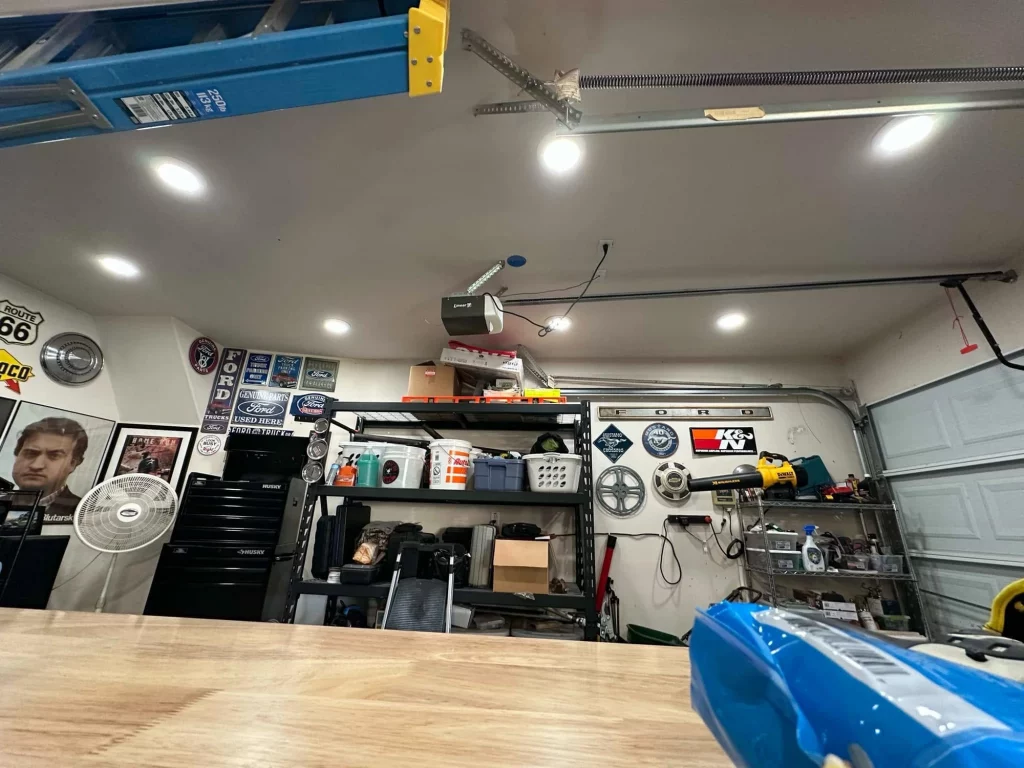
Proper garage lighting can influence your mood and productivity
- Best Used For: Finished garages that double as true extensions of the home, think man caves, home gyms, and polished vehicle showrooms. They provide a high-end, residential aesthetic that industrial fixtures simply can’t match.
- Installation & Cost Reality: If your garage ceiling is unfinished and joists are exposed, running the wires is straightforward. However, retrofitting pot lights into finished drywall is a major chore that involves cutting precise holes, fishing Romex wire blindly, and working around insulation. While the LED retrofit kits and housings are cheap (often $15 to $30 per light), the sheer amount of electrical work required pushes the real-world cost and complexity much higher.
- Lumens & Brightness: Individually, pot lights aren’t powerhouses. Most 6-inch LED can lights max out around 1,000 to 1,500 lumens each. Because they cast a cone-shaped beam straight down, you can’t just install two of them; you need a calculated grid of 6 to 10 fixtures in a standard two-car garage to overlap the beams and prevent dark shadows between the lights.
- Why Choose This Over the Rest? Unmatched architectural integration. They take up absolutely zero headroom and make the garage feel like a premium, welcoming room rather than a raw utility shed. If aesthetics and a clean ceiling line are your top priorities, this is the way to go. Utilizing natural light alongside garage lighting can enhance brightness.
3. Deformable Screw-in LED Lights (3-7 adjustable heads)
| Metric | Rating (1-10) |
| Installation Complexity | 1 |
| Upfront Cost | 2 |
| Brightness / Output | 9 |
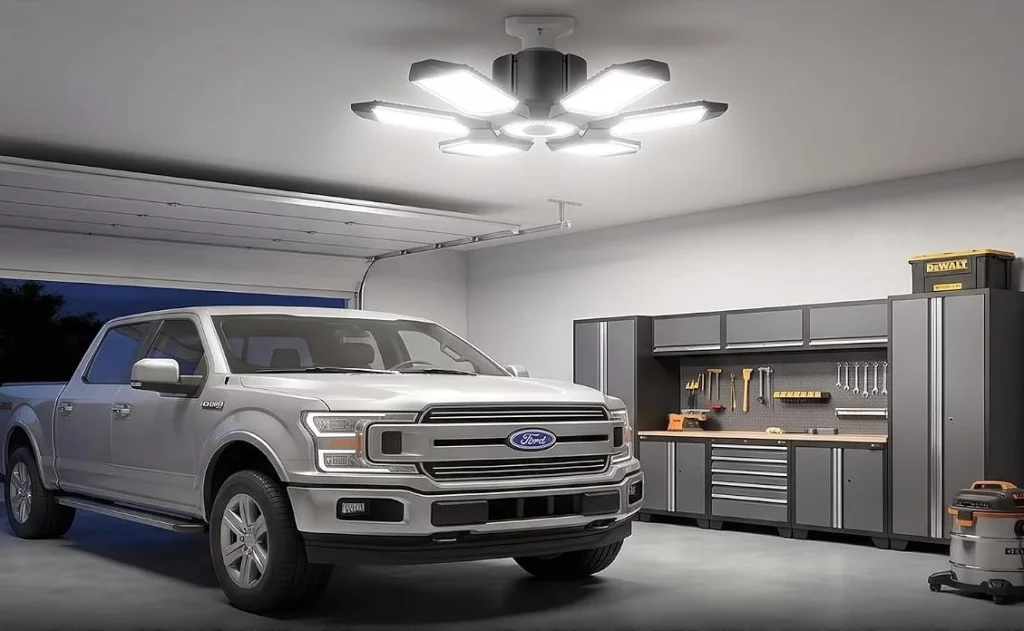
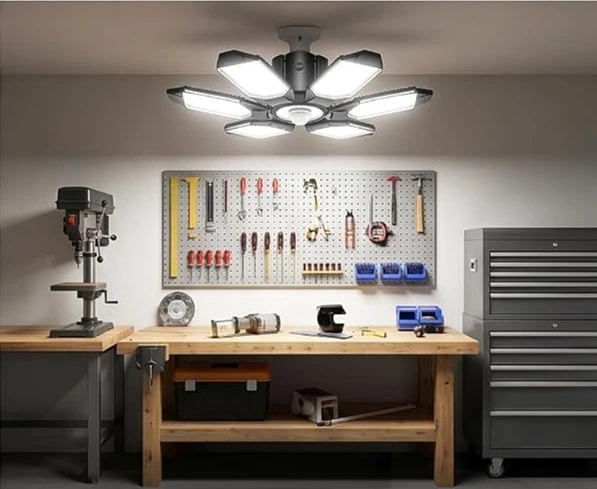
Modern designs in garage lighting are practical and stylish.
- Best Used For: The absolute beginner, renters who cannot hardwire fixtures, or anyone dealing with high ceilings and limited existing bulb sockets. They are perfect for an instant, dramatic transformation.
- Installation & Cost Reality: It genuinely does not get easier than this. If you can unscrew a traditional lightbulb, you can install one of these. They screw directly into a standard E26 medium base socket. At roughly $20 to $40 a piece, they offer the highest lumen-to-dollar ratio on the market.
- Lumens & Brightness: These viral sensations typically boast anywhere from 6,000 to 12,000 lumens from a single fixture. Because the aluminum LED panels (leaves) can be angled independently up to 90 degrees, you can push the light out toward the corners of the garage or aim it straight down.
- Why Choose This Over the Rest? It provides a massive, retina-searing upgrade in brightness with literal zero-tool installation. It is the ultimate instant-gratification DIY upgrade.
4. Hexagon LED Grid Lights (Detailing style)
| Metric | Rating (1-10) |
| Installation Complexity | 8 |
| Upfront Cost | 9 |
| Brightness / Output | 10 |
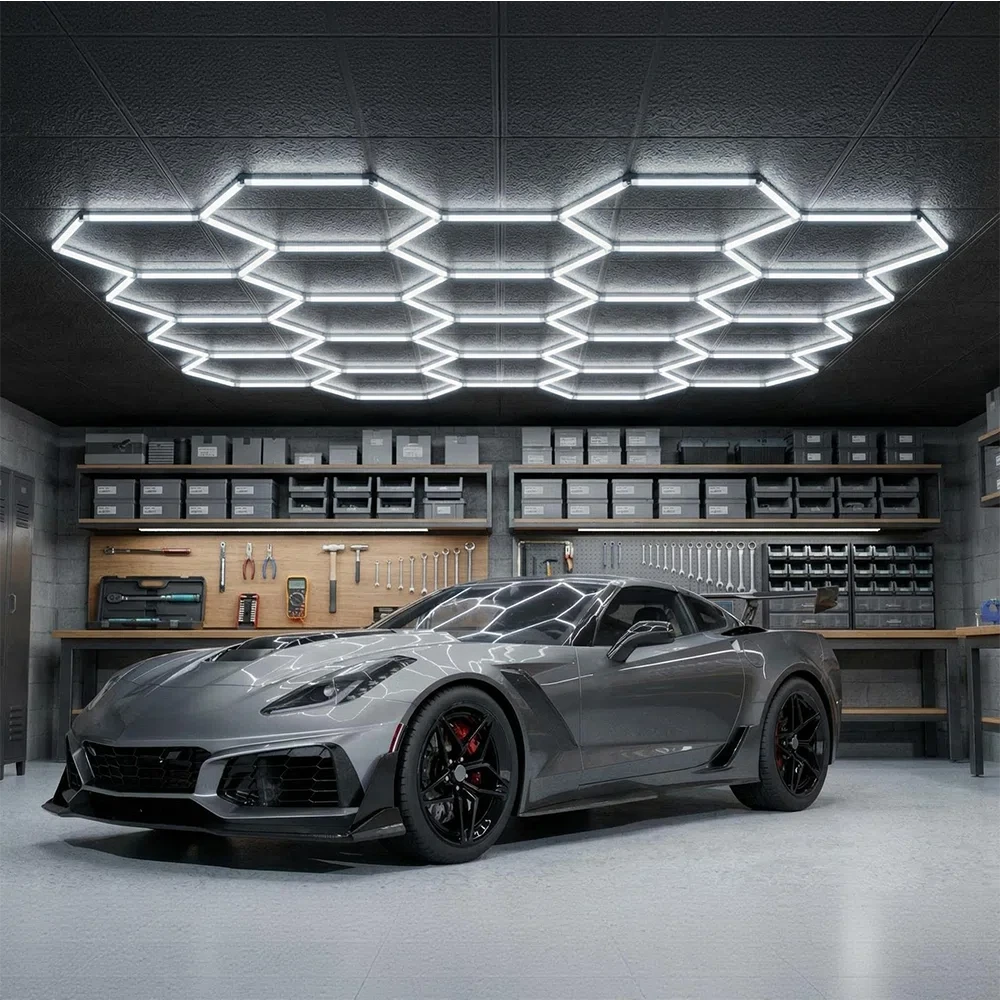
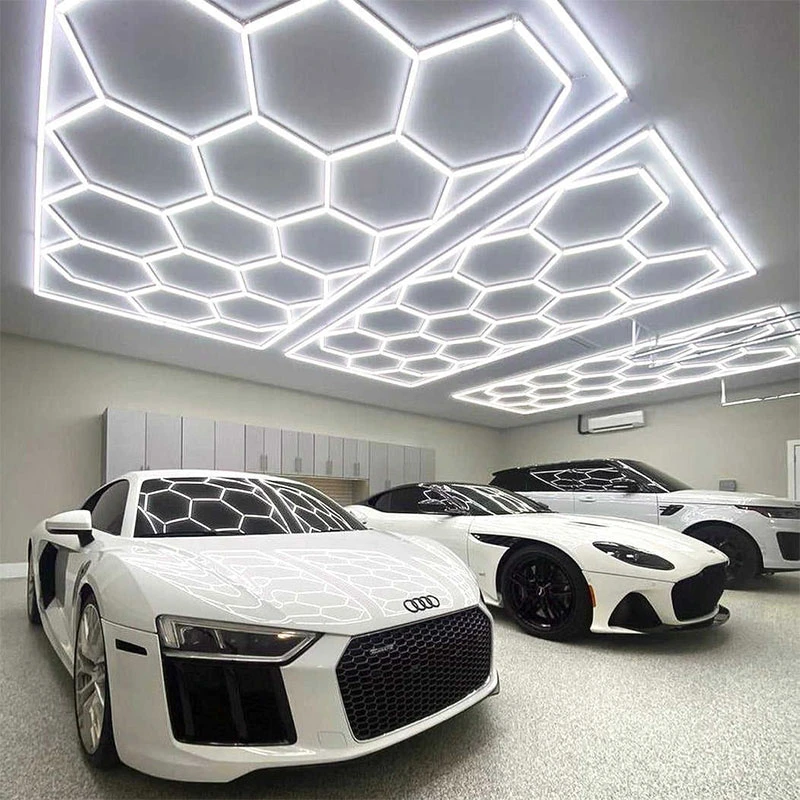
Innovative garage lighting solutions are available for every budget.
- Best Used For: High-end detailing bays, luxury car showcases, and serious gearheads who want their garage to look like a futuristic spaceship.
- Installation & Cost Reality: Be prepared to invest both time and money. A full ceiling grid can run anywhere from $400 to $1,500 depending on the size and brand. Installation requires snapping together dozens of polycarbonate tubes, mapping out the ceiling grid, anchoring it securely, and usually hardwiring it to a dedicated switch.
- Lumens & Brightness: Off the charts. A full grid can output upwards of 60,000 lumens. Because the light source comes from every angle in a honeycomb pattern, it entirely eliminates shadows. It wraps the room in a diffused, incredibly even glow.
- Why Choose This Over the Rest? The aesthetic factor is legendary, but functionally, the shadowless illumination is indispensable for automotive paint correction, spotting micro-scratches, and applying ceramic coatings.
5. Flush-Mount LED Panel Lights
| Metric | Rating (1-10) |
| Installation Complexity | 7 |
| Upfront Cost | 7 |
| Brightness / Output | 7 |
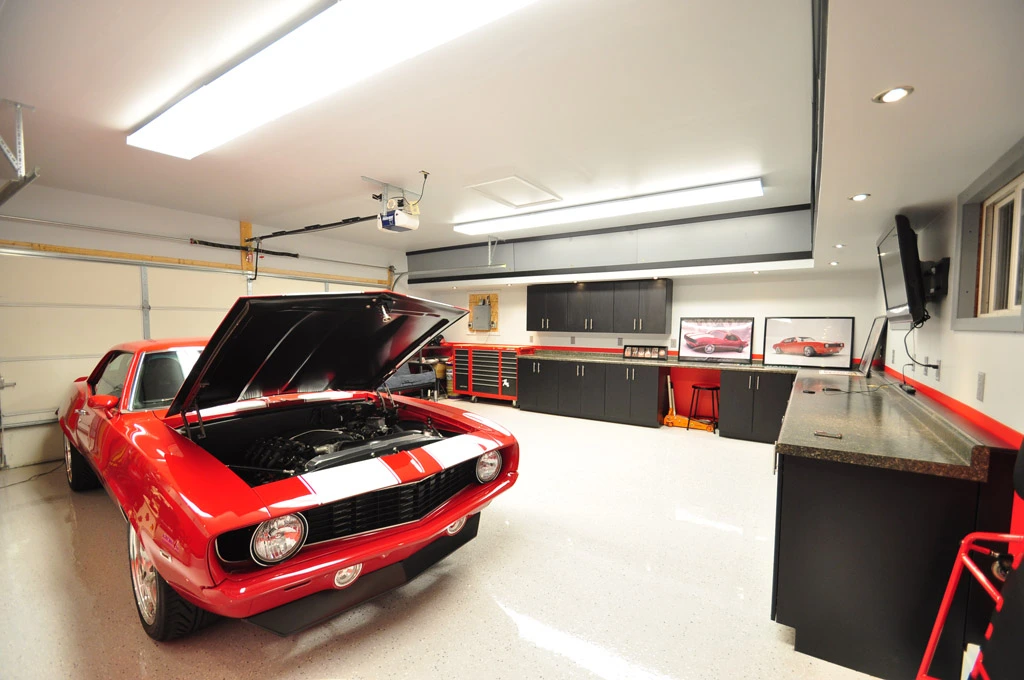
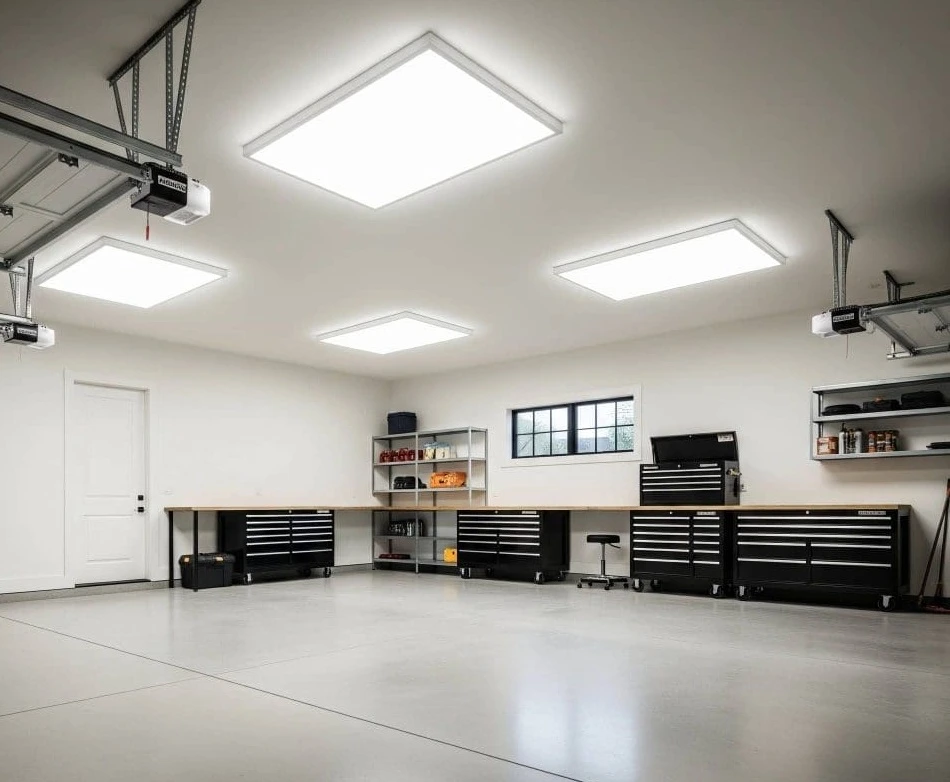
Smart choices in garage lighting go a long way.
- Best Used For: Garages with very low ceilings where hanging fixtures would obstruct overhead clearance (like opening a tall SUV hatch or swinging long lumber). They are also ideal for finished garages acting as hybrid living spaces.
- Installation & Cost Reality: These sit completely flush against the drywall, which means you either need an existing recessed can to retrofit, or you have to cut the drywall and hardwire driver boxes into the ceiling joists. A quality set of edge-lit panels will cost between $50 and $100 per panel.
- Lumens & Brightness: Usually hovering around 2,000 to 4,000 lumens per panel. The frosted acrylic diffusers create a very soft, pleasant light that won’t blind you if you accidentally look up.
- Why Choose This Over the Rest? The ultra-clean, modern aesthetic. They don’t attract cobwebs or sawdust on top like suspended shop lights do, making them the lowest-maintenance option over the long haul.
6. Smart Garage Lights (With integrated Bluetooth speakers, motion sensors, or app controls)
| Metric | Rating (1-10) |
| Installation Complexity | 4 |
| Upfront Cost | 8 |
| Brightness / Output | 6 |
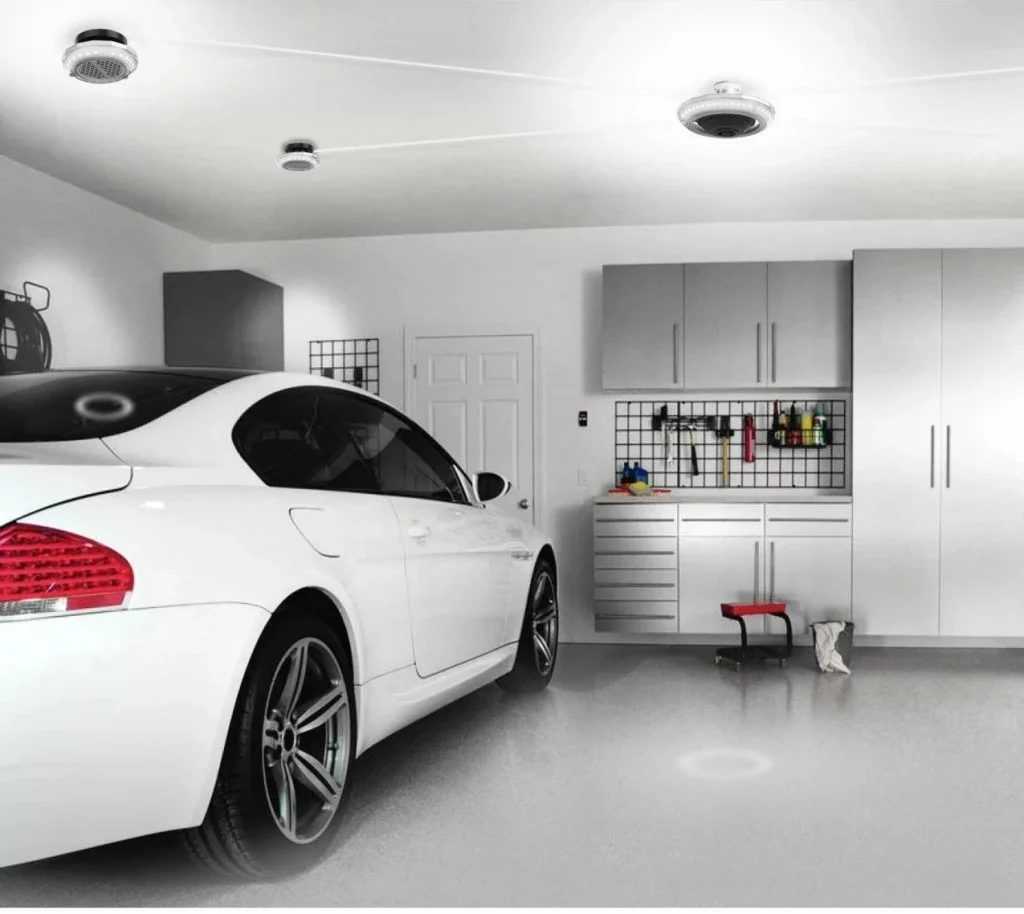
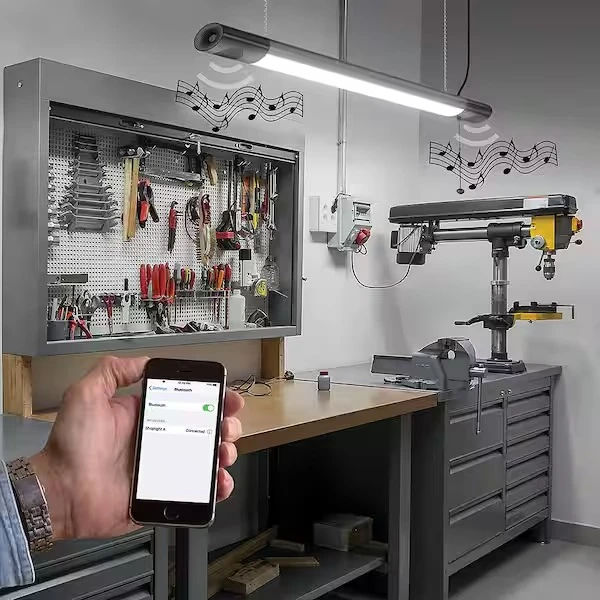
- Best Used For: The tech enthusiast who loves automation, or the multi-tasker who wants their garage to seamlessly transition from a quiet workspace to an energetic home gym environment.
- Installation & Cost Reality: Many are simple plug-and-play or screw-in designs, though the initial setup via Wi-Fi/Bluetooth apps can be finicky. The integration of sensors, microphones, and speakers drives the price up significantly, often costing $80 to $150+ for a single smart fixture.
- Lumens & Brightness: Generally sitting in the middle of the pack (around 1,500 to 4,000 lumens). What they lack in raw, blinding power, they make up for in tunability, allowing you to dim the lights or change the color temperature via voice command.
- Why Choose This Over the Rest? The convenience ecosystem. Having the lights turn on automatically when your car pulls in, and immediately being able to blast your favorite podcast through the ceiling fixture while you unpack groceries, adds incredible lifestyle value.
7. Flexible LED Strip Lights (For workbench task lighting or slatwall integration)
| Metric | Rating (1-10) |
| Installation Complexity | 3 |
| Upfront Cost | 3 |
| Brightness / Output | 4 |
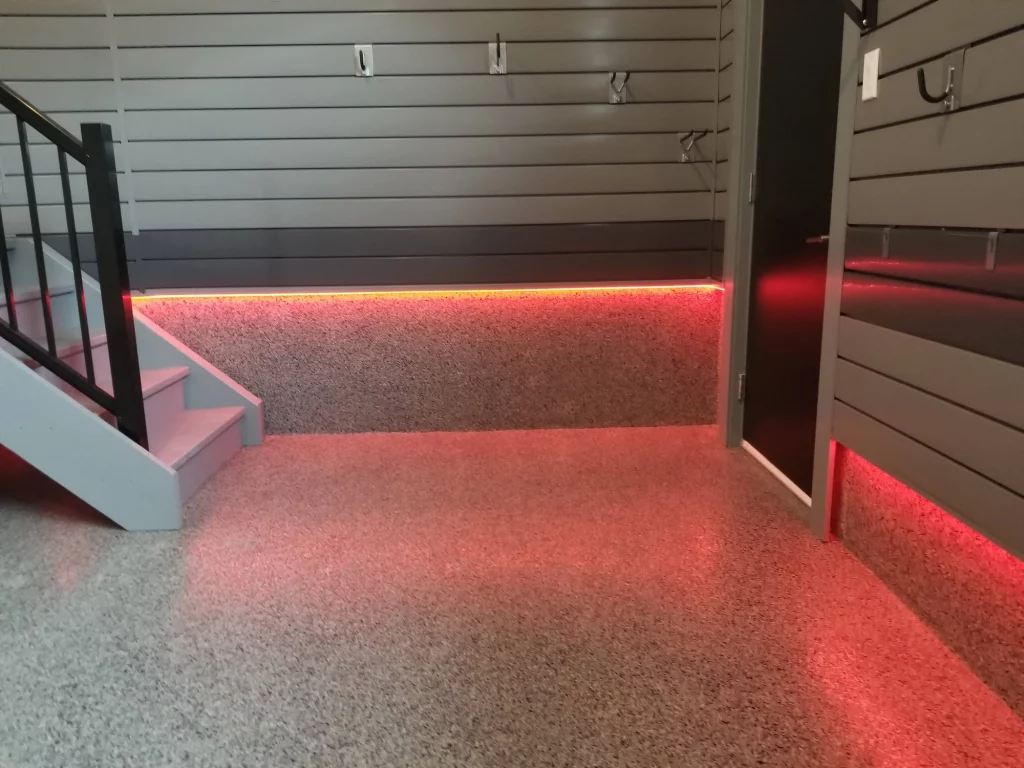
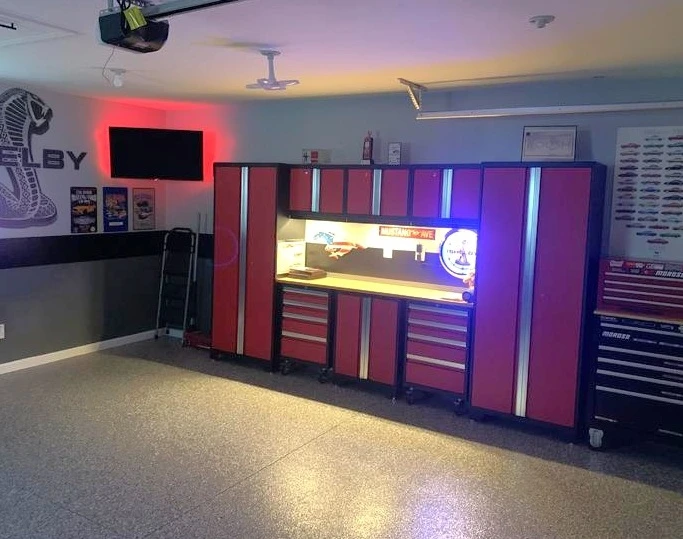
- Best Used For: Micro-task lighting. Think underneath overhead storage cabinets, wrapped inside tool chests, or nested into the grooves of a PVC slatwall organization system.
- Installation & Cost Reality: Extremely budget-friendly, often costing less than $20 for a 16-foot roll. Installation is mostly peel-and-stick, though you’ll need to strategically route the thin wires and stick the power supply somewhere discreet.
- Lumens & Brightness: They are not meant to light the whole room. They produce highly localized brightness (around 300 to 1,000 lumens per meter). High-density COB (Chip on Board) LED strips offer a seamless line of light without the dotted “hotspot” look of older strips.
- Why Choose This Over the Rest? They illuminate the blind spots that overhead lighting simply can’t reach. Sticking a strip under a shelf immediately banishes the shadow cast by the shelf itself, turning a dark workbench corner into a highly usable precision workstation.
The Buyer’s Verdict
Choosing the right light ultimately comes down to how you actually use the space. To make it easy, here is our breakdown of the ideal setup based on your garage persona:
| User Persona | The Ideal Garage Setup | Why It Wins |
| The Weekend Mechanic | Commercial Shop Lights + Spotlights | Gives you broad overhead ambient light, plus directional beams to cut through the darkness of deep engine bays. |
| The Woodworker | Flush-Mount Panels + Strip Lights | Clean panels won’t collect sawdust on top, and strips under the cabinets ensure you can measure and cut with high precision. |
| The Detailer | Hexagon LED Grid Lights | The shadowless, 360-degree diffusion makes it impossible for swirl marks, wax residue, or paint imperfections to hide. |
| The Casual User / Renter | Deformable Screw-in Lights | Maximum brightness with zero electrical work, zero permanent changes, and zero hassle. Just screw it in and enjoy. |
| The Tech Geek / Gym Rat | Smart Garage Lights | Hands-free motion activation and built-in speakers let you focus on your workout or your tech projects without fumbling for wall switches. |
Choosing the best garage lighting isn’t just about brightness; it’s about functionality and style. Ensure you select options that enhance your garage space effectively.
Combining various garage lighting types can create a dynamic and efficient workspace. Consider your needs and preferences to make the best choice.