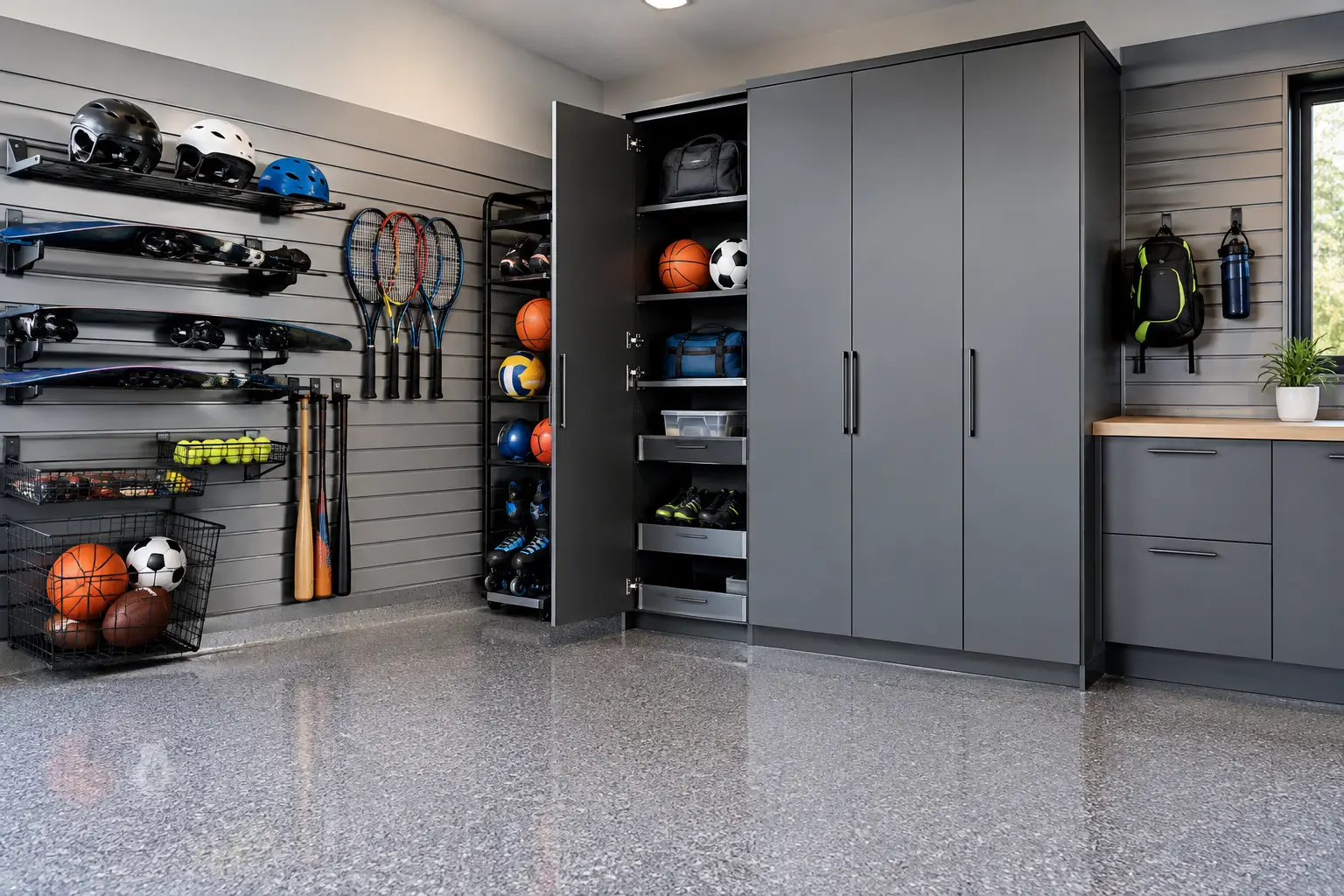
A garage can become the place where family activity begins – or the place where it gets delayed. When soccer cleats disappear beneath pool noodles, bikes block the car, and a last-minute search for a glove becomes routine, the issue is not a lack of space. It is a lack of intention. Thoughtful garage storage for sports equipment gives every item a clear home, so getting out the door feels easier and coming home feels calmer.
For active households, sports gear presents a particular design challenge. It is bulky, irregularly shaped, often dirty, and constantly changing with the seasons. A few plastic bins may contain the clutter for a while, but they rarely create a system that works through busy weekdays, tournaments, summer pool days, and changing interests. A well-designed garage should support the way your family actually lives.
Start with how your household moves
Before choosing cabinets, hooks, or overhead racks, pay attention to the traffic pattern in your garage. Which door does the family use most? Where do children naturally drop their bags? How much clearance does each vehicle need? The best storage plan protects those essential pathways rather than asking everyone to work around the storage.
Think about sports equipment in terms of frequency. The bike used every afternoon deserves an easy-to-reach wall position. The ski gear or camping equipment used twice a year can live higher up. Equipment that must stay dry, clean, or out of sight belongs in enclosed cabinetry. This simple distinction keeps the garage functional without making it feel overbuilt.
It also helps to consider who needs access. A lower hook for a child’s helmet encourages independence. A premium golf bag, however, may be better protected in a tall cabinet away from moisture, dust, and accidental bumps. Good organization is not about making every item equally visible. It is about placing each item where it makes the most sense.
Build garage storage for sports equipment in zones
A garage performs best when it is divided into purposeful zones, much like a well-planned kitchen or walk-in closet. Instead of storing all equipment in one crowded corner, create zones that reflect the activities and routines in your home.
The grab-and-go zone
Reserve a section near the most-used entry for gear that leaves the house several times a week. Open wall storage is ideal here. Adjustable hooks, baskets, and specialty holders can keep bicycles, helmets, tennis racquets, baseball bags, and scooters off the floor while remaining visible and accessible.
This is also the right place for a bench or landing surface if space allows. It gives kids a spot to change shoes, set down a backpack, or unload gear after practice. The goal is not simply to display equipment neatly. It is to make the return-home routine easy enough that items are put away without a second reminder.
The protected equipment zone
Some equipment benefits from enclosed storage. Golf clubs, fishing gear, uniforms, training accessories, and expensive protective equipment stay cleaner and more secure inside durable garage cabinets. Cabinetry also brings visual quiet to a garage, hiding the small items that tend to create clutter fastest: balls, pumps, cleats, resistance bands, goggles, and spare water bottles.
Custom cabinets are especially valuable when your collection includes tall or awkward items. Rather than forcing everything into standard shelves, cabinet interiors can be planned around the actual dimensions of your gear. Adjustable shelving allows the space to evolve as children grow, sports change, or new hobbies take hold.
The seasonal storage zone
Overhead storage is one of the most effective ways to reclaim square footage, particularly for equipment that is valuable but not needed every week. Seasonal bins for snow gear, paddleboards, camping supplies, beach toys, and team memorabilia can move above the main activity area, keeping the floor open for vehicles and daily routines.
The trade-off is accessibility. Overhead storage works best for lighter, clearly labeled containers and infrequently used items. It is not the place for a child’s everyday bike or anything you need to retrieve in a hurry. A professional plan accounts for ceiling height, garage door clearance, lighting, and safe access before assigning items to this zone.
The wet and dirty gear zone
Dallas-Fort Worth families know that muddy cleats, wet pool towels, and rain-soaked umbrellas can make a clean garage feel disorderly fast. Designate one contained area for equipment that needs to air out or be cleaned before it goes back into storage. Wall-mounted baskets, ventilated shelves, and easy-clean flooring near the entry can make this routine far more manageable.
If your garage renovation includes a floor upgrade, a full-flake polyaspartic coating offers a polished, slip-resistant surface that stands up well to moisture, chemicals, and regular cleaning. Unlike traditional epoxy, it is UV-stable and designed to resist yellowing or cracking. The practical benefit is simple: dirt and spills are easier to handle, so the garage stays ready for real life rather than looking good only on day one.
Choose systems that can change with your family
Sports storage should not be treated as permanent in the same way as a pantry shelf. A family may move from tricycles to mountain bikes, from Little League to lacrosse, or from weekend soccer to a serious golf habit. Fixed solutions can become frustrating when the equipment changes.
Wall systems with adjustable accessories provide flexibility without sacrificing a refined look. Hooks can move as bike sizes change. Shelves can be repositioned for bins or bags. Cabinets can hold sports supplies now and become automotive or hobby storage later. This adaptability is one reason custom garage design delivers more long-term value than a collection of disconnected racks and shelves.
Materials matter as well. Garage storage needs to handle temperature fluctuations, dust, impact, and daily use. Steel cabinetry offers a clean architectural finish with the strength to support heavier items, while professionally installed wall storage keeps load-bearing equipment properly secured. A polished garage should still feel durable enough to handle weekend games, home projects, and everything in between.
Avoid the storage mistakes that create clutter again
The most common mistake is storing by category alone without considering use. Putting every ball in one bin may look tidy, but it does not help when the basketball is needed at the driveway and the soccer ball is needed at the front door. Store items where they are used and where they are returned.
Another issue is relying too heavily on the floor. Floor piles expand quickly, obstruct parking, and make cleaning harder. When bikes, bags, and loose equipment are lifted onto walls, shelves, or into cabinetry, the garage immediately feels larger and more intentional.
Finally, avoid designing for the amount of gear you own today with no room to grow. Leaving some cabinet space open and choosing adjustable components gives your system breathing room. That flexibility is what keeps an organized garage from slowly becoming a holding area again.
Make the design feel like part of your home
A garage does not need to feel utilitarian just because it works hard. Coordinated cabinetry, considered finishes, organized wall storage, and a clean floor create a space that feels aligned with the rest of the home. The difference is emotional as much as practical: you can pull in at the end of the day and feel relief instead of another task waiting for you.
A custom design process also removes guesswork. With a consultation and 3D presentation, you can see how cabinetry, wall storage, overhead solutions, and clear walkways will work together before installation begins. Orga Spaces approaches the garage as a complete environment, balancing storage capacity with proportions, aesthetics, and your family’s day-to-day rhythm.
The right system does more than hold equipment. It gives every practice, ride, game, and weekend plan a smoother start – and gives you room to breathe when everyone comes home.