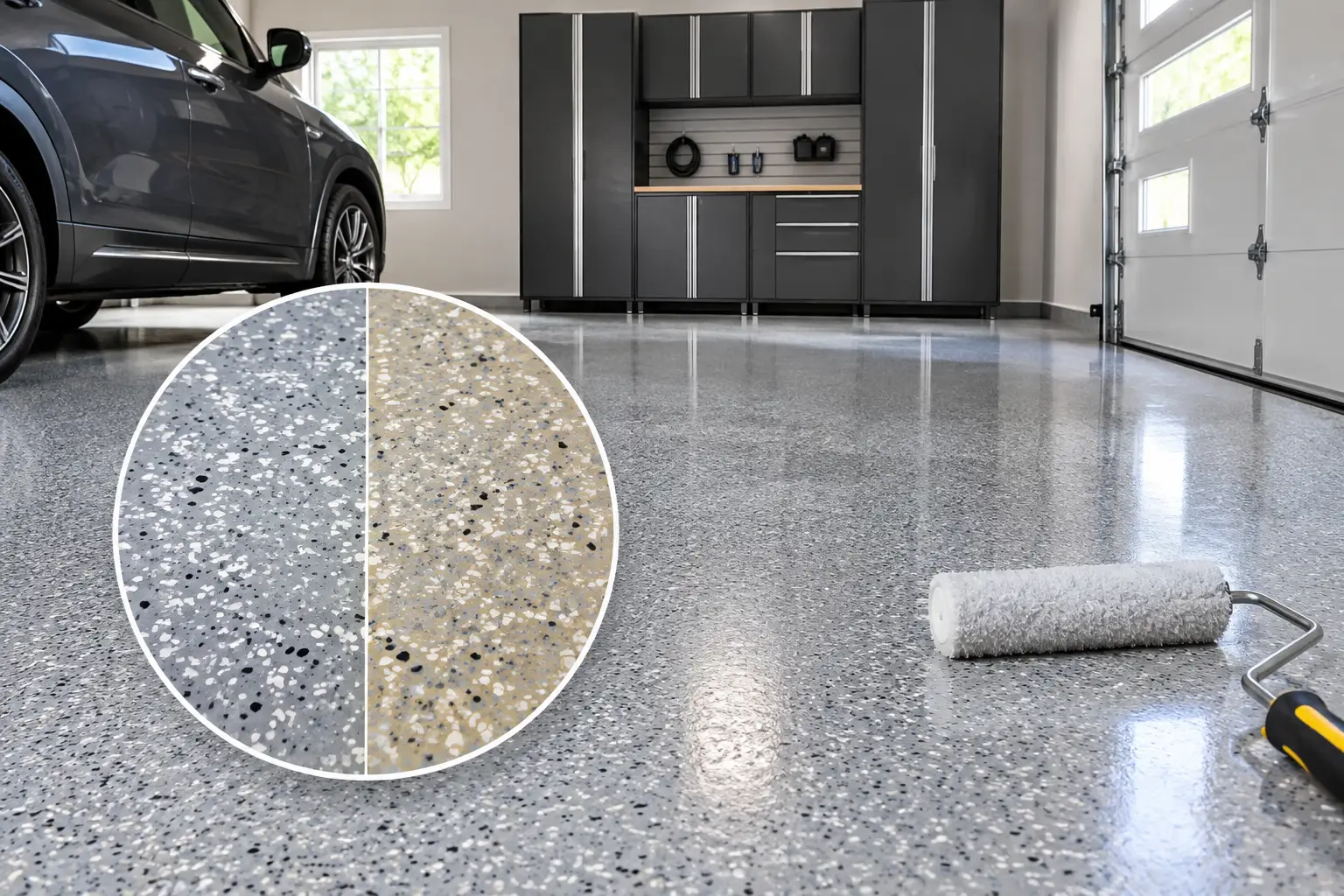
A bright garage floor can make the entire space feel more intentional – especially when it sits beneath tailored steel cabinetry, wall storage, and the equipment that supports everyday life. So it is reasonable to ask: does polyaspartic coating yellow after years of sunlight, vehicles, spills, and Texas heat?
A quality polyaspartic floor coating is designed to resist yellowing far better than traditional epoxy. But the honest answer is not that every product will look identical forever. The coating chemistry, the installation process, the amount of UV exposure, and day-to-day care all influence how a floor ages. When specified and installed correctly, a polyaspartic full-flake system should retain its color and finish exceptionally well, without the amber cast commonly associated with epoxy.
Does Polyaspartic Coating Yellow Over Time?
High-quality polyaspartic top coats are UV-stable, meaning they are formulated to resist the chemical changes that cause surfaces to yellow or amber in sunlight. This is a major advantage in garages with glass doors, windows, frequent open-door exposure, or strong indirect daylight.
Traditional epoxy is more vulnerable to UV degradation. Over time, direct sunlight can cause many epoxy surfaces to develop a warmer, yellowed appearance. The floor may still perform structurally, but its original color and clean visual effect can change. That matters in a garage renovation where the floor is part of the overall design, not an afterthought.
Polyaspartic coatings are different because their finish coat is typically aliphatic, a chemistry known for better color stability outdoors and in sun-exposed interiors. A professionally installed polyaspartic system can maintain a crisp, consistent appearance for years rather than taking on the amber tone people often associate with older epoxy floors.
That said, “polyaspartic” is not a guarantee by itself. Product formulations vary. Some installers use lower-grade materials, skip necessary surface preparation, or apply a system without a properly UV-stable top coat. The result may still look good on installation day, but long-term performance can be less predictable.
Yellowing Is Not Always the Same as Discoloration
Not every change in a garage floor’s appearance is true yellowing. This distinction can help homeowners make better decisions when comparing flooring options or evaluating an existing floor.
True yellowing occurs when ultraviolet light changes the coating itself. It often appears as an overall amber tint, most noticeably in areas that receive the most sunlight. This is the classic issue with many epoxy systems.
Surface staining is different. Tire residue, oil, fertilizer, rust, leaves, road grime, and household chemicals can leave marks on almost any floor if spills sit for too long. Even a UV-stable polyaspartic top coat needs routine cleaning to look its best. A stain sits on or interacts with the surface; it does not necessarily mean the coating has degraded.
There can also be a visual difference between covered and uncovered areas. For example, a section of floor beneath a storage cabinet or floor mat may remain cleaner than the surrounding space simply because it sees less traffic and fewer contaminants. That is not necessarily a sign of yellowing.
Why Full-Flake Polyaspartic Floors Hold Their Look
A full-flake floor system adds another layer of visual durability. Rather than relying on one solid color across the entire garage, vinyl flakes are broadcast across the surface to create complete coverage. The flakes give the floor depth, texture, and a finished appearance that works beautifully alongside custom garage cabinetry and storage systems.
Because the decorative flakes create a varied pattern, minor dust, tire marks, and everyday use are less visually obvious than they would be on a flat, solid-color coating. This does not replace cleaning, but it makes the space easier to live with between cleanings.
At Orga Spaces, our garage flooring system uses a polyurea primer and base coat, full vinyl flake broadcast, and a final polyaspartic top coat. The top coat provides the UV-stable, easy-to-clean surface that protects the design underneath. It also contributes to chemical resistance and a slip-resistant finish, helping the garage function as a polished extension of the home.
The Installation Details That Protect Long-Term Color
A floor coating is only as dependable as the concrete beneath it. Even the best top coat cannot compensate for poor preparation, moisture issues, or cracks left untreated.
Professional installation begins with diamond grinding, which opens the concrete surface and removes contaminants that can interfere with adhesion. This mechanical preparation creates the profile needed for the coating system to bond properly. Acid washing or simple pressure washing may seem convenient, but neither provides the same level of consistency for a premium garage floor installation.
Cracks should be repaired before the coating is applied. Small concrete imperfections can otherwise remain visible or create weak points in the finished surface. Once the base coat, flakes, and polyaspartic top coat are installed in the proper sequence, the result is a floor that is built for daily use rather than a temporary cosmetic upgrade.
One practical advantage is timing. Polyaspartic systems can often be installed in a single day, minimizing disruption to your household. For homeowners planning a complete garage transformation, that efficiency makes it easier to coordinate flooring with new cabinets, overhead storage, and wall organization.
What Can Make a Polyaspartic Floor Look Dull?
Even a coating that resists yellowing can lose some of its fresh appearance when maintenance is neglected. Fine dust, dried road salt, grease, lawn chemicals, and residue from vehicle tires can build up gradually. In a busy garage, that buildup can make the floor look hazy or less reflective than it did when new.
The solution is straightforward. Sweep or blow out loose debris regularly, and clean the floor with a soft mop and a pH-neutral cleaner as needed. Avoid harsh abrasive pads and highly caustic cleaners, which can leave residue or affect the sheen over time. If oil, gasoline, paint, or another spill occurs, clean it promptly rather than allowing it to sit.
Rubber-backed mats deserve a little attention, too. Some low-quality mats can trap moisture and dirt, while certain rubber compounds may leave marks on coated surfaces. Choose mats intended for garage use and lift them periodically when cleaning.
Choosing a Floor System for Your Garage Design
Floor color is not just a technical selection. It sets the tone for the garage and should work with the cabinet finish, wall color, lighting, and the way you use the space. A lighter flake blend can make a compact garage feel brighter. A mid-tone blend often hides everyday dust well. Darker blends can create a more dramatic, tailored appearance but may show pale debris more readily.
A thoughtful design process considers all of those details together. The goal is not merely a floor that resists yellowing. It is a garage that remains easy to maintain, supports your routines, and continues to feel refined long after installation day.
If you are investing in custom storage and a more organized home, the floor should carry the same standard of performance. Choose a professionally prepared, UV-stable polyaspartic full-flake system, care for it consistently, and you can create room for the vehicles, projects, and daily rituals that make your garage work harder for you.