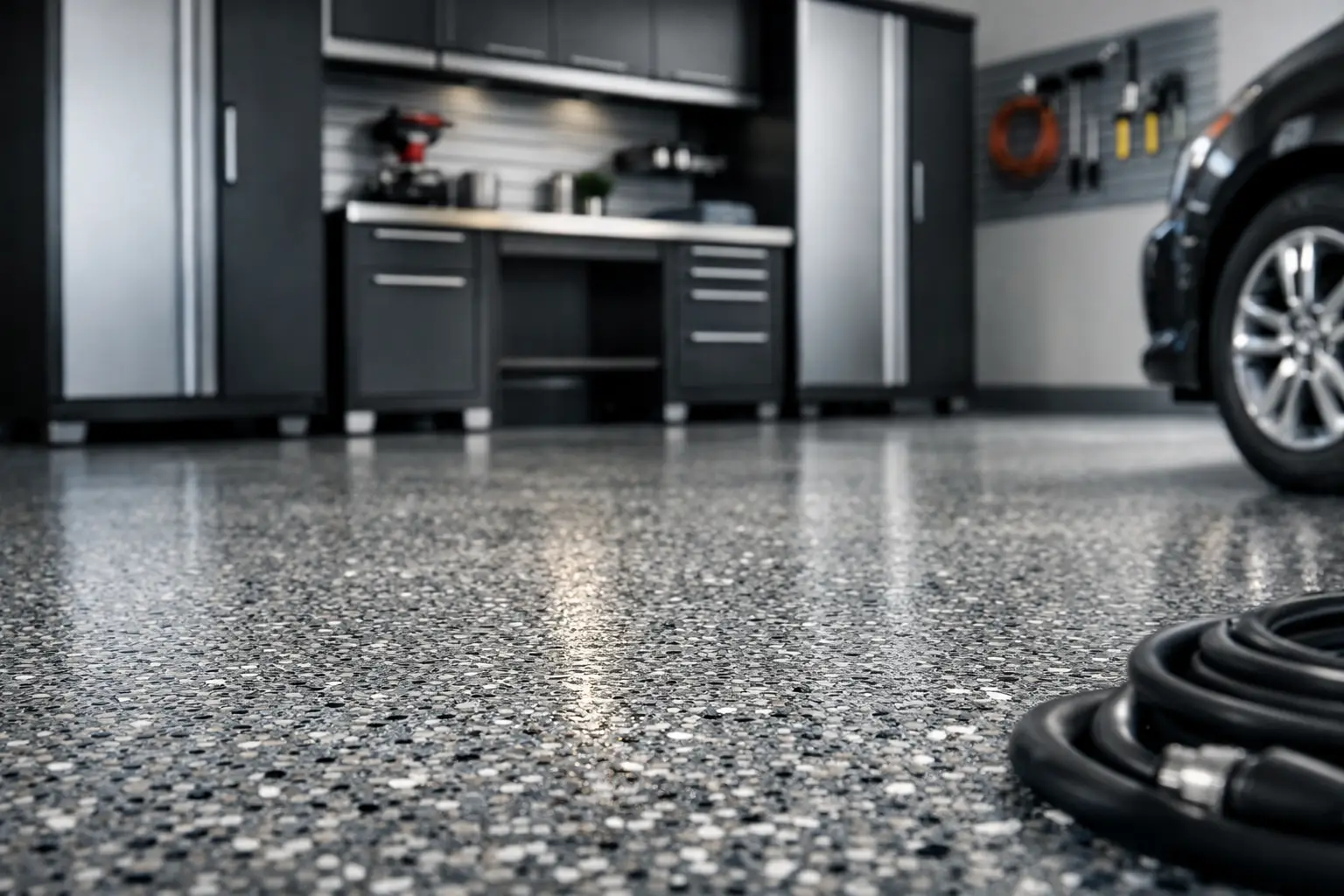
A garage floor can take a surprising amount of heat before the first box is even unpacked. Sun pouring through an open door, tires returning from a long drive, summer temperatures trapped in the space, and concrete that expands and contracts all put pressure on the finish below your vehicles. The best garage flooring for heat is not simply the toughest-looking option. It is the system that can handle thermal movement, resist UV exposure, and continue looking refined after years of real family life.
For homeowners investing in a complete garage transformation, flooring sets the tone. It creates the clean, finished foundation for custom cabinets, organized wall storage, and the kind of space that makes mornings easier rather than more chaotic.
What Is the Best Garage Flooring for Heat?
For most residential garages, a professionally installed polyaspartic full-flake coating is the strongest choice for heat, sunlight, and everyday wear. It is built to perform where many traditional finishes struggle: on hot concrete, under warm tires, and in garages with regular UV exposure.
A full-flake polyaspartic system combines a protective coating with a dense broadcast of decorative vinyl flakes and a clear top coat. The result is a finished surface that feels intentional rather than industrial. It also provides practical advantages that matter when temperatures rise, including UV stability, chemical resistance, slip resistance, and easier cleaning.
This does not mean every garage needs the same solution. Interlocking tiles and garage mats can make sense in specific situations, particularly when a homeowner wants a temporary or low-commitment update. But for a long-lasting, built-in result that supports a premium garage renovation, a properly prepared polyaspartic coating is difficult to beat.
Why Heat Is Hard on Garage Floors
Heat affects more than the air inside your garage. Concrete absorbs it, holds it, and releases it gradually. Over time, repeated warming and cooling can contribute to movement in the slab and place stress on any coating applied over it. A finish without the right flexibility or adhesion may crack, peel, or separate from the concrete.
Hot tires create another concern. Tires carry heat from the road directly onto the floor, along with oils, rubber compounds, and road residue. In a lower-quality coating, this can leave marks, soften the finish, or create areas where the surface begins to lift.
Sunlight adds a separate challenge. Garages with windows, glass doors, or doors that stay open for long periods need a finish that will not yellow or fade noticeably under UV exposure. This is especially relevant in Dallas-Fort Worth, where long, bright summers can turn an unprotected garage floor into one of the hottest surfaces in the home.
The right floor needs to work with these conditions, not merely look good on installation day.
Polyaspartic Coatings: The Best Long-Term Fit
Polyaspartic coatings are often compared with epoxy, but the distinction matters. Traditional epoxy has been a common garage-floor option for years and can be effective in controlled conditions. However, it can be more vulnerable to UV yellowing and may not offer the same performance in spaces exposed to significant heat and sunlight.
A polyaspartic system is designed for greater UV stability, so the colour and finish remain more consistent over time. It also cures efficiently, allowing a professional installation to be completed in one day in many cases. For homeowners planning a larger garage makeover, that shorter timeline means less disruption and a faster path from cluttered storage zone to a space that feels calm, useful, and considered.
At Orga Spaces, the coating process begins below the surface. The concrete is diamond-ground to create the profile needed for dependable adhesion, and existing cracks are repaired before the coating is applied. A polyurea primer and base coat are followed by a full broadcast of vinyl flakes, then sealed with a polyaspartic top coat for lasting protection.
That preparation is not an optional detail. Even the best coating material can fail if it is installed over concrete that is dusty, smooth, contaminated, or poorly repaired. A beautiful finished floor starts with disciplined surface preparation.
Full-flake coverage adds more than colour
The decorative flake layer gives a garage floor its distinctive texture and visual depth. It helps disguise small amounts of dust and everyday debris better than a single solid colour, while creating a more forgiving surface for busy households. With multiple flake colours available, the floor can complement cabinetry, wall finishes, and the overall design of the garage.
Full-flake coverage also contributes to traction. No garage floor should feel aggressively rough, but a lightly textured surface can offer more confident footing than bare concrete when water, rain, or a vehicle brings moisture inside.
How Other Garage Flooring Options Handle Heat
Polyaspartic coating may be the leading choice for a permanent renovation, but other options deserve a fair look.
Epoxy coatings
Epoxy can provide a glossy, durable surface at a lower initial cost. In garages with limited sunlight and moderate use, it may be a reasonable option. The trade-off is its lower UV resistance. Epoxy can amber or yellow when exposed to sunlight, and its performance depends heavily on concrete preparation, moisture conditions, and installation quality.
If your garage receives direct afternoon sun or you want a finish that will stay visually consistent for years, polyaspartic is generally the more reliable investment.
Interlocking garage tiles
Rigid or flexible interlocking tiles are appealing because they install over existing concrete and can be replaced individually. They also create a finished appearance quickly. However, heat can cause some tile systems to expand, shift, or develop gaps if they are not installed with appropriate perimeter allowance.
Tiles can also allow dust, moisture, and small debris to collect beneath the surface. They are useful when access to the slab is temporary or when a homeowner wants a removable solution, but they do not create the clean, continuous finish of a coated floor.
Roll-out mats
Garage mats are one of the fastest ways to cover stained concrete, and they are easy to remove. They work best as a limited-area solution, such as under a workbench or parking spot. In high heat, however, mats can trap moisture beneath them and may shift under vehicle traffic. Their edges can also collect dirt, making the garage feel less finished than a wall-to-wall system.
Bare or sealed concrete
A concrete sealer can reduce dusting and offer modest stain protection, but it will not provide the visual transformation or durability of a professional coating. It is a practical maintenance measure, not a true garage flooring upgrade.
Choosing the Best Garage Flooring for Heat in Your Home
Start by considering how your garage actually functions. A space used only for parking has different needs than one that doubles as a workshop, home gym, hobby area, or family drop zone. If you are adding steel cabinetry, overhead storage, and organized zones for tools and sports equipment, the floor should support the same level of function and finish.
Also consider sun exposure. A garage that faces west, has large windows, or often remains open needs UV-stable protection. If vehicles enter after long highway drives, hot-tire resistance should be part of the conversation. For households that use the garage daily, easy cleaning and slip resistance are just as valuable as visual appeal.
Colour selection deserves some thought as well. Mid-tone flake blends are often a smart choice because they hide dust and tire residue while still keeping the room bright. Very light finishes can feel airy but may show more marks, while very dark floors can make an enclosed garage feel smaller and warmer. The best choice is one that works with the cabinetry, lighting, and the way your household uses the space.
Protecting Your Investment After Installation
A quality polyaspartic floor is low maintenance, not no maintenance. Sweep away grit regularly, especially near the garage door where wind and vehicle traffic bring in abrasive dirt. Clean spills before they sit, and use a mild floor cleaner rather than harsh products that can leave residue.
Avoid dragging sharp metal equipment across the surface, and place protective pads beneath very heavy stationary items when appropriate. These simple habits help preserve the finish so the garage continues to feel polished, organized, and ready for whatever the week brings.
A garage should not be the room where heat, clutter, and unfinished concrete collect. With the right floor as its foundation, it can become a space that supports your routines, protects your vehicles and equipment, and creates room for you to breathe. When you are ready to plan that transformation, a tailored design consultation can turn the possibilities into a garage that feels made for your home.