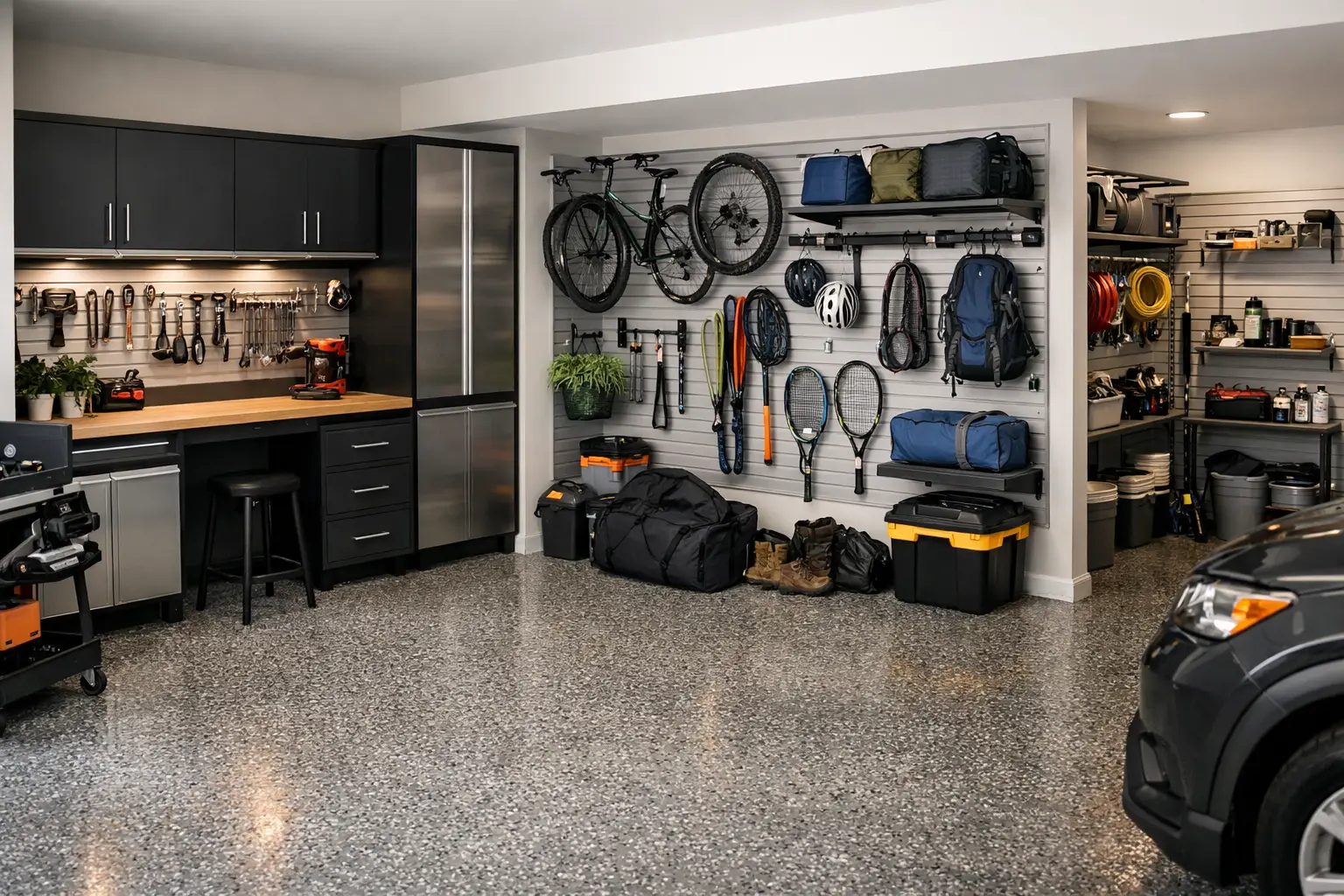
The fastest way to make a garage feel smaller is to treat it like one big, undefined room. Bikes lean against holiday bins, yard tools drift toward the door, and the workbench becomes a holding area for everything that has nowhere else to go. If you’re wondering how to plan garage zones, the goal is not simply to store more. It is to give every square foot a clear purpose so the space works better every day.
A well-zoned garage feels calmer because it removes decision fatigue. You know where sports gear lands after practice, where seasonal decor lives in the off-months, and where cleaning supplies stay contained instead of migrating into corners. That clarity matters just as much as capacity.
Why how to plan garage zones starts with daily life
Before measuring walls or choosing cabinets, take a step back and look at how your household actually uses the garage. For some homes, it is primarily an entry point. For others, it carries a heavier load – overflow pantry storage, lawn care supplies, tools, family gear, and weekend projects. The best zoning plan reflects real habits, not an idealized version of them.
Start by noticing what comes in and out most often. Items used several times a week should be the easiest to reach. That usually includes shoes, backpacks, sports equipment, recycling, pet supplies, and basic tools. Less frequently used items, such as camping gear or holiday decor, can live higher up or farther from the main path.
This is also the stage where trade-offs become obvious. If you want to keep both vehicles parked inside, storage needs to move vertically and efficiently around the perimeter. If one bay is more flexible, you may have room for a dedicated hobby or fitness zone. There is no single right layout. The right plan supports your routine without making the garage harder to navigate.
The five garage zones most homes need
When people think about garage organization, they often think in terms of products first. Cabinets, racks, hooks, shelves. Those matter, but zones come first. Storage should follow function.
1. Arrival and drop zone
If your garage is your main family entrance, this area deserves more intention than it usually gets. A drop zone near the door into the home can hold shoes, bags, umbrellas, and grab-and-go essentials. This keeps everyday clutter from spreading across the garage and into the house.
The most effective version is compact and controlled. Closed storage works well if you want a cleaner visual finish, while a mix of hooks and cubbies can suit busy families who need quick access.
2. Tool and project zone
This is where many garages lose control. Tools tend to multiply, and without a defined home, they end up scattered across shelves and tabletops. A tool zone should be close to power access and planned around the kind of work you actually do. Light household repairs need a different setup than woodworking or car care.
A work surface helps, but only if the surrounding storage supports it. Wall organization, drawers, and durable cabinetry make it easier to keep hand tools, fasteners, and supplies sorted by use.
3. Sports and active lifestyle zone
Balls, helmets, scooters, racquets, and folding chairs can overwhelm a garage because they are awkwardly shaped and used often. This zone should be easy for the whole family to access, especially children if they are expected to put things away independently.
Open wall storage can be useful here, but it depends on your tolerance for visual activity. Some homeowners prefer that gear stay behind cabinet doors for a more refined look. That choice comes down to whether speed or visual simplicity matters more in your space.
4. Lawn and utility zone
Yard tools, fertilizer, hoses, cleaning products, and paint all need careful placement. Ideally, this zone sits closer to the garage door for easy movement in and out. It should also be separated from family drop areas when possible, especially if it includes chemicals or sharp tools.
Vertical wall storage is especially valuable here because long-handled tools consume a surprising amount of floor space when left loose.
5. Seasonal and long-term storage zone
This is the zone for things you want to keep but do not need every week. Holiday bins, keepsakes, travel gear, and occasional-use items can live in overhead storage or higher cabinetry. The key is to avoid placing heavy, frequently needed items too high simply because there is room.
Good zoning is not just about fitting everything in. It is about making retrieval safe and reasonable.
How to plan garage zones without wasting space
The most common planning mistake is ignoring clearance. A garage may look spacious on paper, but once you account for vehicle doors opening, pathways into the home, and room to pull out bins or drawers, the usable footprint changes.
Sketch the space with actual dimensions, including the parked cars. Then mark the walking paths you need to preserve. From there, assign each zone based on convenience and frequency of use. Daily-use zones belong in the easiest-to-reach areas. Bulk storage can move upward or deeper into the layout.
Wall height is one of the biggest missed opportunities. A custom plan can use the full vertical envelope of the garage, balancing open access with a polished built-in look. Overhead storage can be excellent for bulky seasonal items, but it should be used selectively. If everything goes overhead, every retrieval becomes a project.
This is also where premium cabinetry changes the experience. Steel cabinets, for example, create structure and visual calm while protecting contents from dust and garage wear. They make the garage feel less like a catch-all and more like an intentional extension of the home.
Design matters more than most homeowners expect
A garage can be highly functional and still feel elevated. In fact, the two often support each other. When a space looks considered, people are more likely to maintain it.
That does not mean every garage needs a showroom aesthetic. It means the finishes, storage lines, and layout should feel coherent. Clean cabinetry, coordinated wall storage, and a durable floor create a stronger foundation for daily organization. You are not just hiding clutter. You are reshaping how the room performs.
If floor coatings are part of the plan, they should support both durability and ease of maintenance. A premium finish can make sweeping simpler, improve slip resistance, and give the entire garage a more finished appearance. That matters in a room that often handles everything from muddy shoes to home projects.
When custom zoning is worth it
Some garages can improve with a few smart adjustments. Others need a more integrated solution because the problems are structural, not cosmetic. If your garage serves multiple roles, houses irregular gear, or never seems to stay organized despite repeated efforts, custom zoning usually delivers better long-term results.
A tailored design accounts for your vehicles, your routines, your storage volume, and the way you want the space to feel. It also helps prevent overbuilding. More storage is not always better if it creates hard-to-reach areas or turns the garage into a wall of generic compartments.
For homeowners who want a cleaner, more intentional result, professional planning removes much of the guesswork. With consultation, measured layouts, and 3D visualization, it becomes easier to see how each zone will function before installation begins. That kind of clarity can save time, reduce costly changes, and lead to a garage that truly supports daily life.
A practical way to decide your layout
If you are still unsure how to plan garage zones, try this simple filter. Ask of every category: how often is it used, who uses it, and how quickly should it be accessible? Those three questions usually tell you where something belongs.
Daily and shared items should be low, visible, and close to the main path. Occasional or adult-only items can be higher, deeper, or behind closed storage. Messier tasks should stay grouped together rather than bleeding into family circulation space. Once those rules are clear, the layout becomes much easier to shape.
A garage works best when it stops being a storage afterthought and starts acting like a designed room with a clear purpose. When each zone reflects how your household actually moves, stores, and resets, the space becomes easier to maintain and far more enjoyable to use. If you are ready to create room for you to breathe, thoughtful garage zoning is a strong place to begin.
Learn more at https://orgaspaces.com