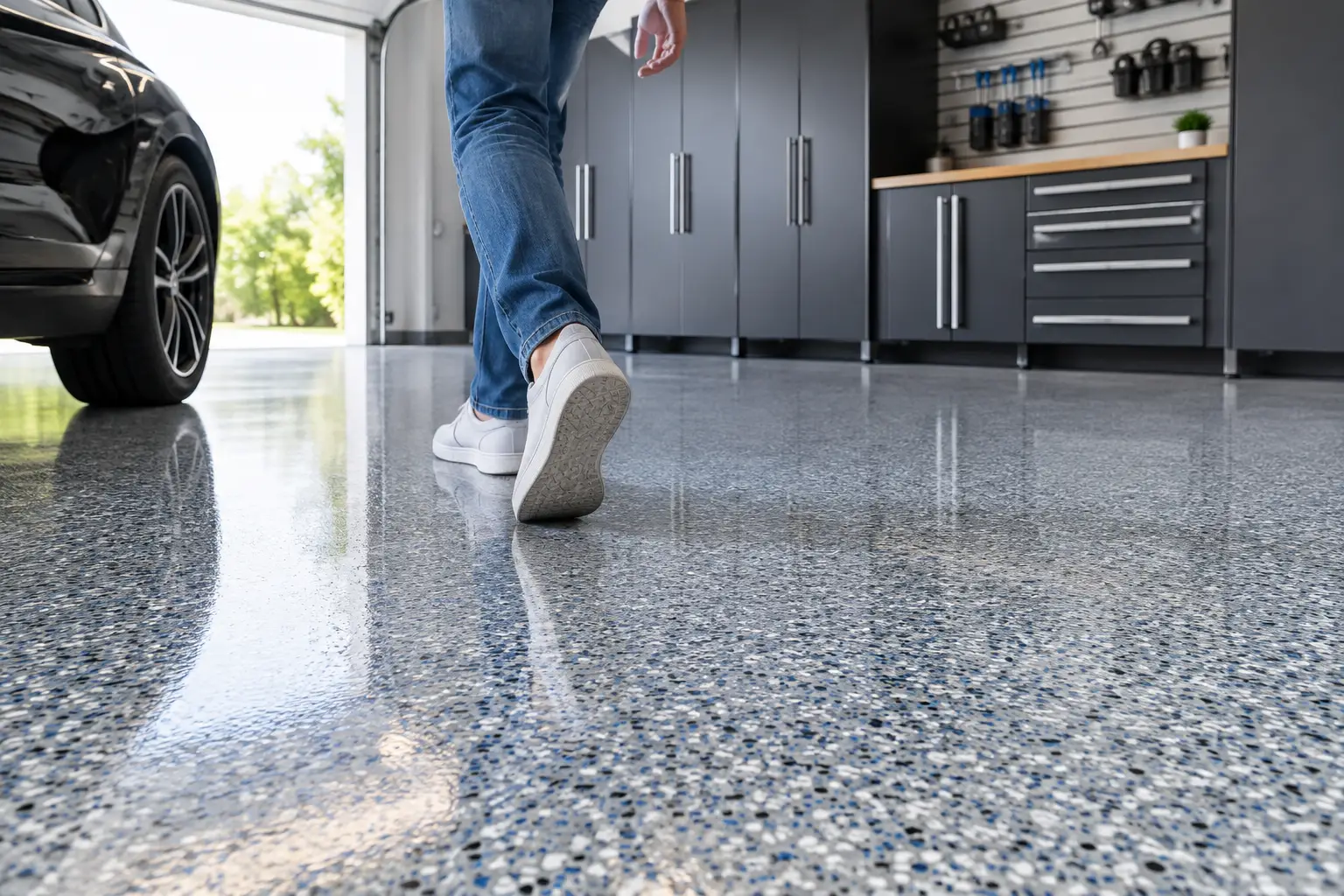
A polished garage floor can make a home feel more considered the moment the door opens. But before choosing a finish, many homeowners ask: are garage floor coatings slippery? The honest answer is that they can be, but they do not have to be. Slip resistance depends far more on the coating system, texture, installation quality, and everyday conditions than on the fact that the concrete has been coated.
A well-designed floor coating should make garage life easier: less dust, fewer stubborn stains, quicker cleanups, and a more refined foundation for cabinetry, storage, vehicles, and projects. It should also give you confidence when walking in with wet shoes, carrying groceries, or moving around a busy family garage.
Are Garage Floor Coatings Slippery in Real Life?
Any hard surface can become slippery when water, oil, soap, or road residue is sitting on top of it. Bare concrete is not automatically safer. In fact, smooth or worn concrete can be unexpectedly slick when damp, while its porous surface holds dirt and stains that make cleanup more difficult.
The concern usually comes from high-gloss floors. A glossy finish can look smooth, which leads people to assume it has no traction. Appearance and traction are not the same thing. The right broadcast media, surface profile, and topcoat can create a lightly textured finish that offers dependable grip without feeling rough underfoot or becoming hard to clean.
There is a trade-off worth understanding. More texture generally improves traction, especially in wet conditions, but an overly aggressive texture can trap grime and make sweeping less pleasant. For most residential garages, the goal is balanced performance: enough texture for secure footing, with a finish that still feels clean, polished, and easy to maintain.
What Makes a Coated Garage Floor Safer?
Slip resistance is built into the system, not added as an afterthought. Several details influence how the finished floor performs.
Texture from full flake coverage
A full flake floor is created by broadcasting vinyl flakes across the wet base coat until the surface is fully covered. Once excess flakes are removed and the floor is top-coated, their varied edges create a subtle, consistent texture. This helps interrupt the slick feeling associated with a completely smooth painted surface.
Full flake coverage also has a design advantage. It gives the floor visual depth, softens the appearance of dust or small marks between cleanings, and can be selected in colors that complement cabinetry and the rest of the home. A garage should not feel like an afterthought. The floor sets the visual foundation for the entire transformation.
The topcoat matters
A topcoat protects the decorative layer and affects how the floor feels underfoot. Quality polyaspartic coatings are designed for durability and can be formulated to support a slip-resistant finish. They also resist common garage exposures, including vehicle fluids, household chemicals, and the grime that comes in from a driveway.
This is different from applying a generic clear sealer over concrete or using a do-it-yourself paint kit. Those products may create a very smooth surface, wear unevenly, or lack the adhesion and protection needed for an active garage. When the finish begins to fail, safety and appearance often decline together.
Preparation beneath the coating
A floor is only as reliable as the concrete beneath it. Professional surface preparation typically begins with diamond grinding, which removes weak surface material and creates the proper profile for the coating to bond. Cracks should also be repaired before the coating is installed.
Skipping this work can lead to peeling, uneven areas, and premature wear. It can also create patches that behave differently underfoot. Proper preparation is not the glamorous part of a garage makeover, but it is one of the reasons a finished floor performs beautifully for years rather than looking good only on installation day.
Where Slippery Conditions Still Happen
Even a textured, professionally installed floor needs sensible care. Water is the most common factor, especially after rain, washing a vehicle, or walking in from the pool. In areas with frequent wet weather, a floor mat near the entry door or vehicle landing zone can help catch moisture before it spreads.
Oil, grease, and chemical spills deserve prompt cleanup. A coating makes this much easier because spills sit on the surface rather than soaking into porous concrete, but they should not be left there. Wipe up fresh spills with an absorbent towel, then clean the area with a gentle, coating-safe cleaner as needed.
Footwear matters, too. Smooth-soled shoes, wet flip-flops, and muddy work boots can reduce traction on almost any hard flooring. That does not mean a coated floor is unsuitable for a family garage. It simply means real-world safety comes from a combination of a well-specified surface and good habits.
Choosing the Right Finish for Your Garage
The best coating choice starts with how you use the space. A garage used mainly for parking and storage may need a different level of texture than one that doubles as a workshop, home gym, or frequent gathering space. If you have children, regularly carry equipment in and out, or use the garage as a daily entry point, mention that during the design consultation.
A thoughtful installer can recommend a finish that suits your lifestyle rather than pushing a one-size-fits-all product. Consider how much sunlight reaches the floor, whether vehicles regularly bring in rain or mud, the condition of the existing concrete, and how the floor should coordinate with cabinets, wall storage, and overhead systems.
For homeowners who want a premium balance of appearance and performance, Orga Spaces uses a polyaspartic full flake system installed directly over properly prepared concrete. The process includes diamond grinding, crack repair, a polyurea primer and base coat, full vinyl flake broadcast, and a protective polyaspartic topcoat. The result is a UV-stable, chemical-resistant, easy-to-clean floor designed to resist yellowing and cracking while providing practical texture.
Polyaspartic systems also offer a major convenience benefit: they can often be installed in one day. That means less disruption to the routines that already pass through your garage, from school mornings to weekend projects.
A Few Maintenance Habits That Preserve Traction
A coated floor does not require complicated upkeep. Sweep away grit regularly, since fine sand and driveway debris can act like tiny ball bearings on any smooth surface. For a deeper clean, use a soft mop or microfiber pad with water and a mild cleaner approved for coated floors.
Avoid waxes, silicone-heavy products, and harsh cleaners that leave a residue. The goal is a clean surface with its intended texture exposed, not a shiny buildup that changes how the floor feels underfoot. If you are ever unsure about a cleaner, test it in an inconspicuous area first.
Pay attention to drainage as well. A coating cannot solve standing water caused by a significant slope issue, a leaking vehicle, or water entering beneath the garage door. Addressing those sources protects the floor and creates a more comfortable, safer space overall.
The Floor Should Support the Way You Live
A garage floor coating should not force you to choose between a beautiful finish and a practical one. With full flake coverage, appropriate texture, professional preparation, and simple maintenance, a coated garage floor can be far easier to live with than dusty, stained concrete.
When you plan your garage as a complete space rather than a place to hide what does not fit inside, every detail begins to work harder for you. Choose a floor that feels secure underfoot, stands up to everyday life, and gives the rest of the room a calm, finished place to begin.