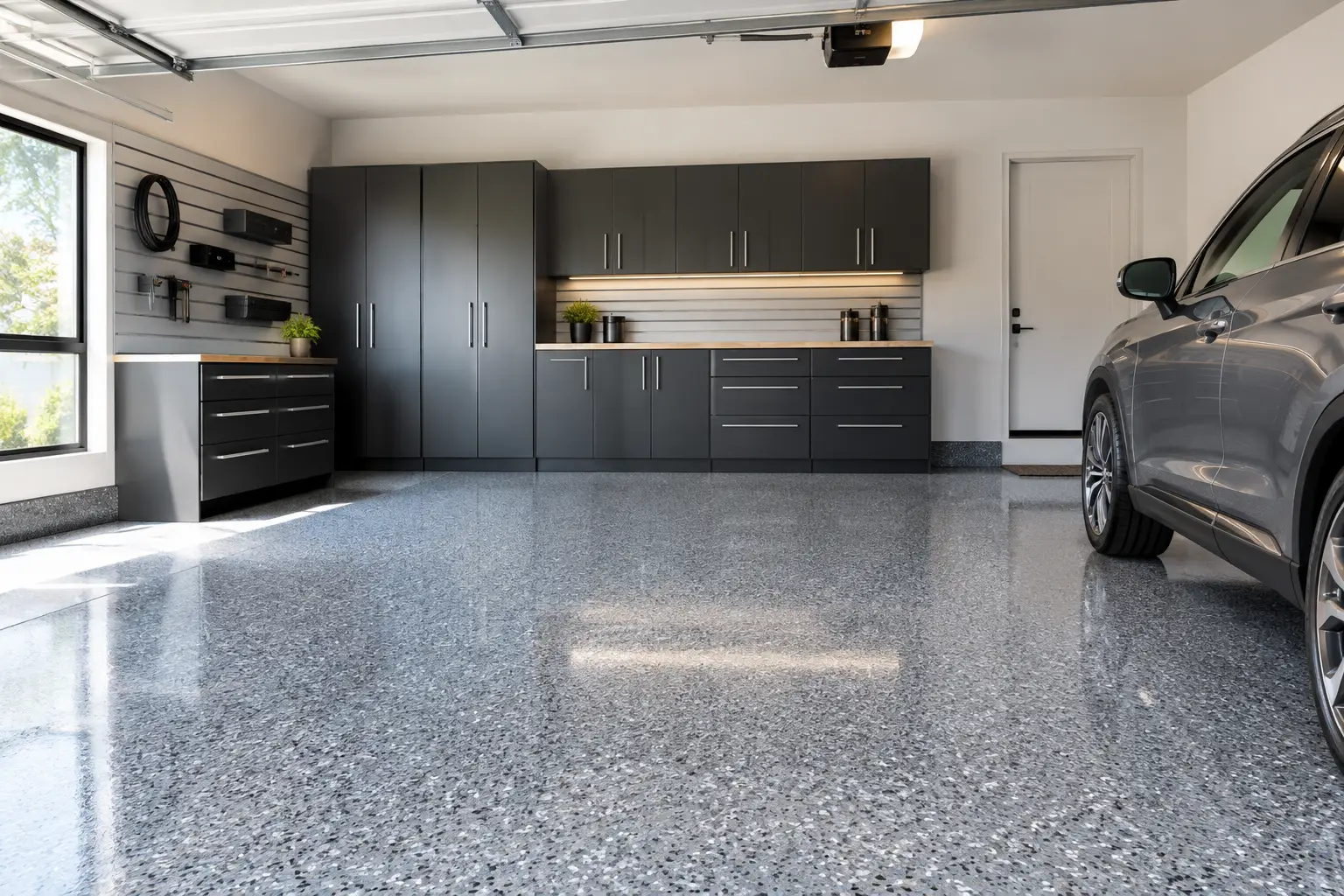
A garage floor can look finished on installation day and still begin failing far sooner than expected. The difference is rarely just the product chosen. Garage flooring lifespan is shaped by what happens below the surface: the condition of the concrete, the preparation behind the coating, the demands of daily use, and the care it receives once the garage returns to service.
For homeowners investing in a more refined, organized garage, flooring deserves the same thoughtful planning as cabinetry and storage. It establishes the visual foundation for the entire space, but it also has to stand up to parked vehicles, lawn equipment, dropped tools, moisture, road debris, and the heat that comes with a North Texas summer.
What Is a Realistic Garage Flooring Lifespan?
There is no single number that applies to every garage floor. A simple concrete paint kit may last one to three years before it begins peeling, especially in areas that see tire traffic. A professionally installed epoxy system can often perform for five to 10 years, depending on product quality, surface preparation, sunlight exposure, and maintenance.
Premium polyaspartic and polyurea-based coating systems are designed for a longer service life. When installed on properly prepared concrete and maintained thoughtfully, a full-flake polyaspartic floor can commonly perform for 15 to 20 years or more. That does not mean it will remain completely untouched. High-traffic paths may eventually show signs of use, and an exceptionally hard impact can still chip a coating. It means the floor is far more likely to retain its protection, color, and polished appearance through years of normal residential use.
The most useful way to think about lifespan is not as a warranty-style countdown. It is a measure of how long the floor continues to protect the concrete and support the way your household uses the garage.
Why Concrete Preparation Determines So Much
Concrete is not a perfectly sealed, inert surface. It can hold moisture, collect oils, develop hairline cracks, and contain a weak top layer that is not suitable for bonding. Applying a quality coating over those issues does not solve them. It often hides them briefly, then allows failure to appear later as peeling, bubbling, or delamination.
Professional preparation begins with evaluating the slab. Moisture concerns, existing sealers, oil contamination, and cracks all need attention before a coating is applied. Diamond grinding is especially valuable because it mechanically opens the concrete surface and creates the profile needed for a secure bond. It is a much more reliable foundation than relying on an acid wash or a quick cleaning alone.
Crack repair also matters, although homeowners should expect a little nuance here. A repaired crack can become far less noticeable, but concrete naturally moves over time. A coating system can bridge and improve the appearance of minor cracks, yet no flooring installer can promise that every moving slab crack will never telegraph through again.
The Garage Flooring Lifespan by Material
The material you select sets the baseline, but it should match the space rather than follow a one-size-fits-all rule.
Bare or sealed concrete
Bare concrete has no coating to peel, but it can stain easily, create dust, and absorb automotive fluids. A basic penetrating sealer may help reduce absorption for several years, though it does not provide the finished appearance or chemical protection of a high-performance coating. This is a practical choice for a utility-first garage, not typically for a full garage transformation.
Concrete paint and DIY coatings
Paint is accessible and inexpensive, but it is generally the shortest-lived option. Tires, hot tire pickup, moisture vapor, and imperfect surface preparation can cause visible wear quickly. DIY epoxy kits may offer a modest improvement, but their thinner application and limited prep process often restrict their longevity. They can be appropriate for a low-use garage or a temporary refresh, provided expectations remain realistic.
Traditional epoxy coatings
Epoxy can create a durable, attractive surface and remains a common garage flooring option. It is often thicker than paint and can resist many household chemicals. Its trade-offs include longer cure times and limited UV stability. In garages with substantial sunlight, some epoxy products can amber or yellow over time. Epoxy performance also depends heavily on proper temperature conditions and concrete preparation during installation.
Polyaspartic full-flake systems
A professionally installed polyaspartic system is designed for homeowners who want durability without compromising on finish. Polyaspartic coatings are UV-stable, helping the floor maintain its intended color rather than yellowing in sun-exposed areas. With full vinyl flake coverage and a protective top coat, the surface is also slip-resistant, easy to clean, and well suited to chemical exposure from common garage fluids.
At Orga Spaces, the process includes diamond grinding, crack repair, a polyurea primer and base coat, a full vinyl flake broadcast, and a final polyaspartic top coat. The system can be installed directly over existing concrete and typically completed in one day, which is particularly helpful for households that do not want their garage out of service for a prolonged project.
What Shortens a Garage Floor’s Life?
The most common cause of early coating failure is poor adhesion, which usually traces back to inadequate preparation. A floor may be swept and still have invisible contaminants, moisture issues, or a surface profile that prevents the coating from bonding correctly.
Moisture vapor is another factor worth addressing early. Concrete slabs can transmit moisture from below, and excessive vapor pressure can push against a coating system. This does not mean every garage needs major remediation, but it does mean the slab should be evaluated instead of treated as a blank canvas.
Daily habits also make a difference. Repeatedly dragging metal stands, tossing sharp tools, or leaving corrosive spills unattended will challenge any surface. Hot tires are less concerning with quality professional systems than with thin paint products, but it is still wise to choose a coating engineered for vehicle traffic rather than assuming every decorative floor finish will perform the same way.
Sunlight deserves attention in Dallas-Fort Worth garages with windows, glass doors, or doors left open for long periods. UV exposure may not damage the concrete, but it can change the appearance of coatings that are not UV-stable. A floor that looked bright and clean at installation can gradually take on an uneven amber tone.
Simple Habits That Protect Your Investment
A premium floor should make garage care easier, not create another demanding household task. Regular sweeping removes grit that can act like sandpaper under tires and foot traffic. For deeper cleaning, use a gentle cleaner and a soft mop or floor squeegee rather than harsh abrasives.
Wipe up oil, brake fluid, fertilizer, paint, and other spills promptly. High-quality coatings offer excellent chemical resistance, but allowing any chemical to sit indefinitely is unnecessary risk. If you use jack stands, welding equipment, or particularly heavy machinery, place protective pads beneath contact points to prevent concentrated damage.
Avoid using metal snow shovels or aggressive scraping tools on the coating. While snow is not a frequent concern for most North Texas homes, the principle applies to any hard-edged tool used to remove debris. A plastic scraper and a controlled cleaning routine are gentler choices.
Plan Flooring as Part of the Whole Garage
Flooring lasts longer when the garage is designed to work better. Wall storage keeps bicycles, yard tools, and sports equipment from being dragged across the floor. Cabinets contain chemical products and reduce the risk of spills. Overhead storage clears bulky seasonal items from the areas where they become tripping hazards or get shifted around unnecessarily.
This is where a garage makeover becomes more than a cosmetic upgrade. When every item has a considered home, the floor is easier to clean, the room feels calmer, and the finish you selected has a better chance to look exceptional for years.
A long-lasting garage floor is not simply the toughest product on a specification sheet. It is the result of skilled preparation, materials suited to your home, and a space designed around how you actually live. Choose a system that lets you reclaim your time and create room for you to breathe every time you pull into the garage.