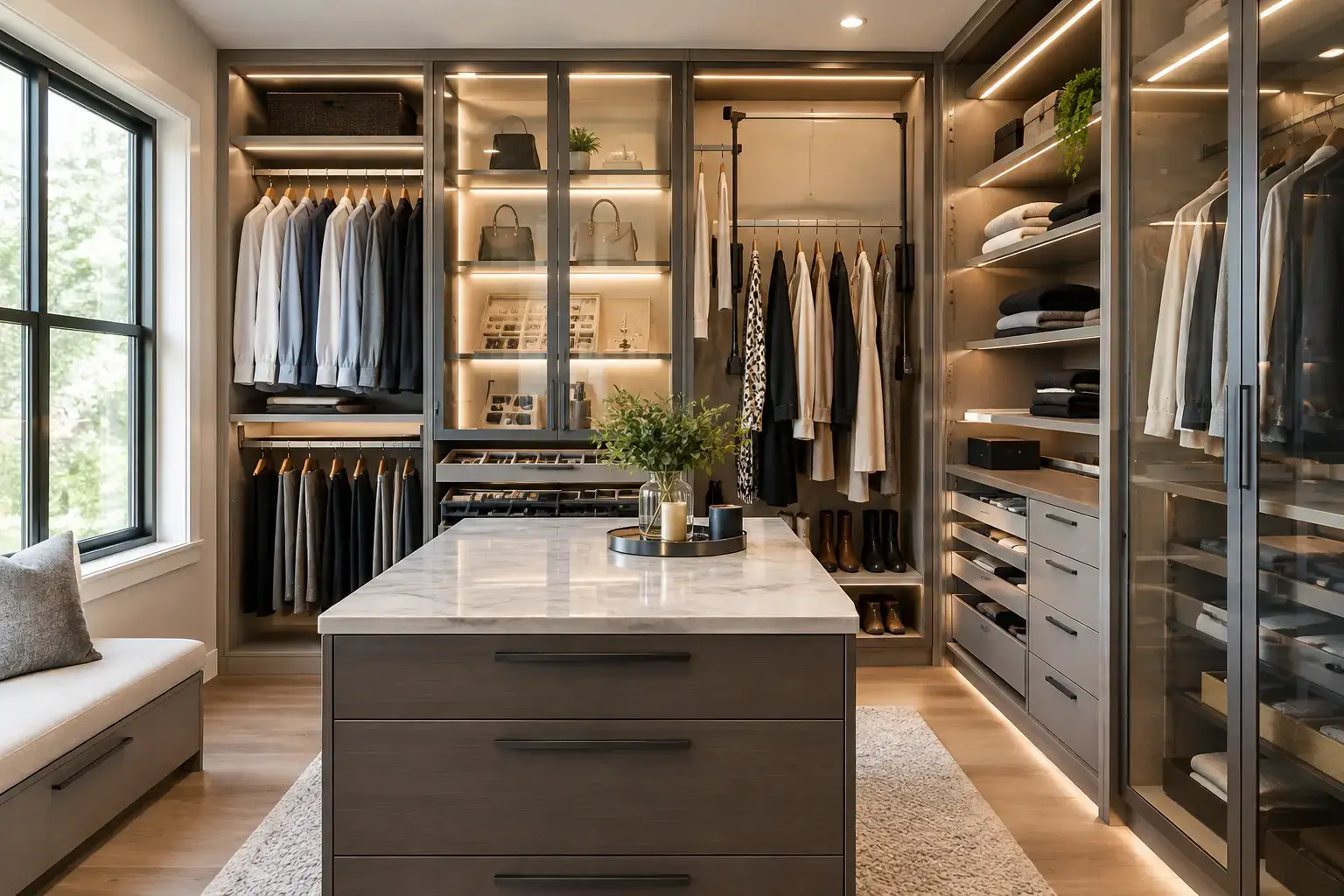
A closet can look full even when it is not working hard enough. Shoes pile up beneath hanging clothes, seasonal pieces disappear into back corners, and the morning routine becomes a daily search. That is why homeowners often ask: are custom closets worthwhile? For the right home and household, the answer is yes – not because a custom closet simply holds more, but because it makes the space support the way you actually live.
A thoughtfully designed closet can turn an overlooked part of the home into a calmer, more efficient part of your day. Still, it is a premium home improvement decision, and its value depends on the space, the design, and what you need it to solve.
What Makes a Custom Closet Different?
Off-the-shelf organizers are designed for broad appeal. They may add a few shelves or hanging rods, but they rarely account for the dimensions of your room, the volume of your wardrobe, or how your household gets ready each day. A custom closet is planned around all three.
Rather than forcing your belongings into a standard layout, the layout is built around your belongings. That could mean double hanging sections for workwear, deeper drawers for knitwear, adjustable shelves for handbags, dedicated shoe storage, pull-out hampers, or a center island that adds both storage and a useful surface.
The difference is especially noticeable in walk-in closets, reach-in closets with awkward proportions, and primary suites where storage needs have outgrown the original builder-grade layout. A tailored system uses vertical space, corners, and wall length with much more intention. Just as important, it creates visual order. When every category has a home, the room feels less crowded even before you remove a single item.
Are Custom Closets Worthwhile for Everyday Life?
The strongest reason to invest is usually not resale value. It is the repeated benefit of a smoother routine.
Think about the first thirty minutes of a weekday morning. When clothing, accessories, laundry, and shoes are scattered across several rooms or hidden in overfilled drawers, getting ready takes longer than it should. A well-designed closet puts frequently used items where they are easiest to reach, while less-used pieces stay accessible without taking over prime space.
For couples sharing a closet, thoughtful zoning can eliminate a surprising amount of friction. Separate hanging areas, drawers, shelves, and shoe storage make it clear whose items belong where. For families, a custom solution can be designed to evolve as children grow, with adjustable components that adapt to changing storage needs.
There is also an emotional benefit that is difficult to measure on a floor plan. An organized closet gives you room to breathe. Instead of beginning or ending the day with visual clutter, you have a space that feels composed, personal, and easy to maintain.
Where the Investment Delivers the Most Value
Custom closets are not equally worthwhile in every situation. They tend to have the greatest impact when there is a clear mismatch between the existing storage and the way the household lives.
A primary walk-in closet is often a strong candidate because it is used every day and typically stores a wide range of items. A custom design can create a place for long garments, folded clothing, shoes, jewelry, luggage, seasonal pieces, and laundry without making the room feel overbuilt.
Reach-in closets can also benefit greatly, particularly in older homes where space is limited. A professional design can replace a single rod and shelf with layered storage that uses the full wall height. The result is not always a larger closet, but it can feel like one.
Custom closets are also valuable when homeowners are refining a larger area of the home. A newly renovated bedroom, dressing area, or multifunctional space deserves storage that matches the quality of the rest of the design. A beautiful room loses some of its ease when its storage remains an afterthought.
The Trade-Offs to Consider Before You Commit
A custom closet is not a universal answer. If you are preparing to move very soon, have a minimal wardrobe, or need a quick, low-cost storage fix, a modular or freestanding organizer may be the more sensible choice.
Budget matters as well. Custom systems cost more than basic retail shelving because they include design expertise, made-to-fit materials, detailed planning, and professional installation. Features such as integrated lighting, premium finishes, glass-front drawers, specialty hardware, and islands can raise the investment further.
The key is to spend where it changes your experience. Deep drawers may be more useful than decorative display space. Adjustable shelving can be more valuable than a fixed arrangement if your wardrobe changes seasonally. A good design is not about adding every available feature. It is about selecting the details that remove the everyday frustrations you actually have.
It is also worth being honest about maintenance. A custom closet makes organization easier, but it cannot make decisions about what to keep for you. The best systems include enough flexibility that you can reset the space when your needs change, rather than letting it become another place where unused items collect.
How a Custom Closet Can Affect Home Value
A custom closet should first be viewed as a lifestyle investment. You enjoy the benefit every day, which is more meaningful than chasing a guaranteed return at resale.
That said, well-executed storage can strengthen a home’s appeal. Buyers often respond to homes that feel cared for, functional, and thoughtfully finished. A polished primary closet signals that the home offers more than basic square footage – it offers a better daily experience.
The return is rarely about recovering every dollar spent. Like quality flooring, refined cabinetry, or a well-designed garage, the value is partly financial and partly experiential. It can help your home stand apart, but its clearest payoff is the convenience and visual calm it brings while you live there.
What to Look for in a Worthwhile Design
The most successful closets begin with a conversation, not a catalog. Before choosing finishes or accessories, consider what is not working now. Are shoes hard to find? Are folded items constantly toppling over? Do you need more hanging space, better laundry management, or a more balanced setup for two people?
A professional designer should ask about your habits, wardrobe, room dimensions, and preferences before presenting a plan. Seeing the proposed layout in a 3D design is particularly helpful because it lets you evaluate proportions, storage zones, and finishes before installation begins.
Materials and installation quality matter, too. Closets are opened, closed, loaded, and used every day. Shelves should feel stable, drawers should operate smoothly, and the layout should be measured precisely around outlets, baseboards, doors, and architectural details. A tailored project should feel integrated with the home rather than added on afterward.
Make the Closet Serve the Life You Want
The best custom closet does more than make room for clothes. It gives your home a clearer rhythm. It reduces the small moments of searching, shifting, stacking, and settling that quietly take up time every day.
If your current closet creates more friction than function, a tailored design can be a worthwhile upgrade – especially when it is planned around your routines instead of a one-size-fits-all template. Orga Spaces helps homeowners turn underused closets into refined, hardworking spaces through personalized design and professional installation. Start by noticing what slows you down each morning. That is often where the right solution begins.