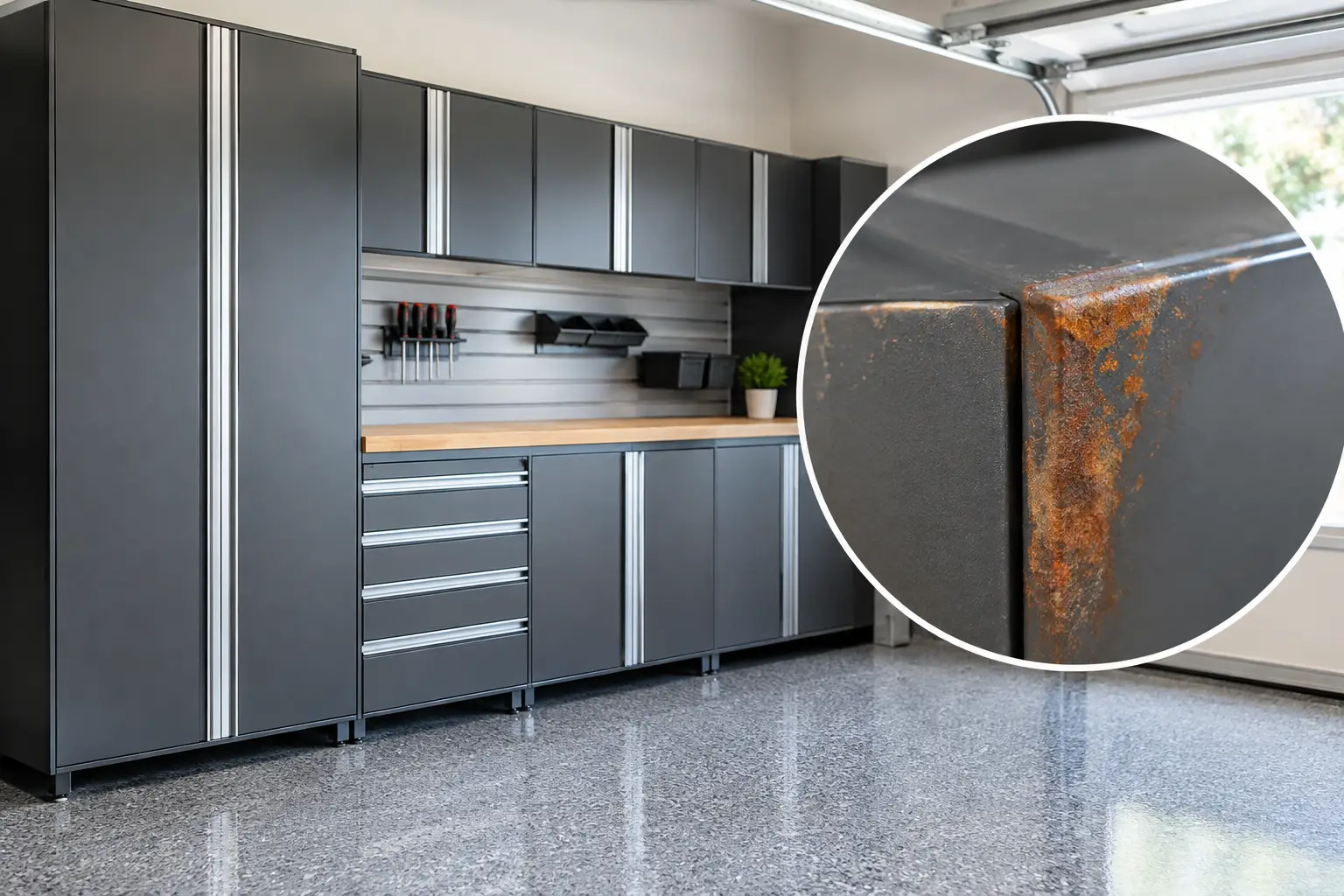
A polished garage can lose its sense of order quickly when orange spots appear along a cabinet seam or beneath a handle. So, can garage cabinets rust? Yes, steel garage cabinets can rust when moisture reaches exposed metal, but corrosion is not an inevitable part of owning them. Material quality, protective finishes, installation details, and the conditions inside your garage all shape how well your storage performs over time.
For homeowners investing in a more functional, design-forward garage, this distinction matters. Cabinets should do more than conceal clutter. They should create a dependable foundation for tools, sports gear, seasonal items, and the daily rhythm of your household without becoming another maintenance concern.
Why garage cabinets rust
Rust is the result of iron or steel reacting with oxygen and water. A garage does not need to flood for that process to begin. Persistent humidity, condensation, wet vehicles, a leaking water heater, and damp items stored against cabinetry can all introduce enough moisture to create a problem.
The risk is usually highest at the small vulnerabilities: a deep scratch in a finish, an unsealed cut edge, a poorly protected fastener, or a cabinet base that sits in standing water. Once corrosion starts beneath a coating, it can spread outward and cause bubbling, flaking, or staining.
Not every cabinet marketed as “metal” performs the same way. Thin, lightly finished steel is more susceptible to dents and coating damage. Inexpensive modular units may also have folded edges and exposed seams where moisture can linger. Well-built steel cabinetry with a durable, properly applied finish offers substantially better protection, especially when it is planned for the realities of a working garage.
Humidity is only part of the picture
Warm-weather humidity can contribute to corrosion, but it is rarely the only culprit. Dallas-Fort Worth homeowners often see more direct sources of moisture: vehicles brought in during heavy rain, condensation from air-conditioning equipment, irrigation overspray near an open garage, or a slab that allows moisture to move upward.
Temperature swings can make matters worse. When humid air meets a cooler metal surface, condensation can form even when the garage appears dry. This is why cabinets located near exterior walls, garage doors, or utility equipment may need closer attention than cabinets on a protected interior wall.
Can garage cabinets rust if they are powder coated?
They can, but a quality powder-coated finish gives steel a meaningful layer of defense. Powder coating is a dry-applied finish that is cured onto the metal, creating a durable surface that resists ordinary scratches, stains, and moisture better than basic paint.
The trade-off is that no finish is invincible. A major impact from a lawn tool, a sharp edge dragged across a door, or damage during installation can compromise the coating. If bare steel is exposed and regularly gets wet, rust may eventually form at that point.
This is one reason cabinet design and installation deserve as much consideration as the color of the doors. A premium system should feel intentional from every angle, with thoughtful clearances from moisture-prone areas, secure wall attachment, and a layout that keeps cabinet interiors accessible and dry. Good design is preventative, not merely decorative.
The places corrosion tends to start
Garage cabinet rust is often subtle at first. Rather than looking only at the front panels, inspect the lower corners, door hinges, drawer slides, hardware, and the rear or underside of cabinets near plumbing or exterior walls. Look for pinprick orange marks, blistered finish, rough patches, or discoloration around screw heads.
Cabinet bases deserve special attention. Water can pool along the floor after rain, car washing, or a plumbing issue, and the bottom edge of a cabinet may stay damp long after the visible puddle is gone. Raising cabinetry appropriately off the floor or integrating it into a well-planned wall-mounted system can reduce this exposure while making the space easier to clean.
Inside cabinets, avoid placing wet extension cords, damp gardening gloves, or recently used pool equipment directly against steel surfaces. Let those items dry first or give them a dedicated ventilated zone. A garage that supports your routine well has a place for the messy parts of life too.
How to prevent rust on garage cabinets
The best prevention plan combines quality cabinetry with simple habits. First, address water at its source. Repair leaks promptly, check weatherstripping around the garage door, and make sure downspouts and landscape grading direct water away from the garage foundation.
Next, keep the floor and cabinet bases dry. Wipe up pooled water after storms, avoid hosing down the garage without a clear drainage plan, and do not store wet items against cabinet sides. If the garage floor is cracked, uneven, or difficult to clean, improving the surface can also help support a drier, better-maintained environment.
A few ongoing practices make a noticeable difference:
- Clean cabinet exteriors periodically with a soft cloth, mild soap, and water, then dry the surface completely.
- Inspect scratches, chipped coating, and rust spots before they grow beyond a small repair.
- Keep corrosive materials such as pool chemicals, fertilizer, road salt, and harsh cleaners in tightly sealed containers.
- Maintain airflow, particularly in garages that feel damp or have limited ventilation.
Avoid abrasive scouring pads and aggressive cleaners. They can dull or damage a protective finish, leaving the surface more vulnerable than the original dirt or mark ever was.
What to do if you find a small rust spot
Small, isolated spots can often be managed before they become a larger cabinet issue. Start by identifying and correcting the moisture source. Then clean the affected area and dry it thoroughly. For surface rust, carefully remove the corrosion with a non-aggressive method appropriate for the cabinet finish, following the manufacturer’s care guidance.
If the coating has chipped, a compatible touch-up product may help reseal the exposed area. But if rust is spreading from a seam, appearing across multiple panels, or returning after cleaning, the issue may be more than cosmetic. Moisture could be trapped behind the finish or entering through an installation detail that needs professional assessment.
Choose cabinetry for the garage you actually use
A garage is rarely a showroom-only space. It is a workshop on Saturday morning, a landing zone after a long day, a storage room for family gear, and often the first entrance into the home. The right cabinet system should be engineered for that reality while still giving the room a composed, elevated appearance.
When planning custom steel cabinets, ask how the metal is protected, how cabinet bases are handled, and where the system will sit in relation to water sources and vehicle traffic. Consider whether wall-mounted cabinets, overhead storage, or a combination of closed and open storage will keep frequently used items off the floor and easier to access.
Professional design adds value here because it considers the full environment rather than selecting cabinets in isolation. A tailored plan can account for your garage dimensions, moisture-prone zones, utility access, storage habits, and preferred finish palette before anything is installed. The result is a space that works harder without feeling crowded.
At Orga Spaces, garage transformations begin with how you want the space to support your life, then build toward a storage plan that is practical, refined, and made for the long term. Protecting cabinetry from rust is part of that larger goal: creating room for you to breathe, move, and enjoy a garage that feels as considered as the rest of your home.
A dry, well-designed garage does more than preserve steel cabinets. It protects the investment you have made in a calmer daily routine, so every tool, bike, bin, and seasonal item has a place that stays ready when you need it.