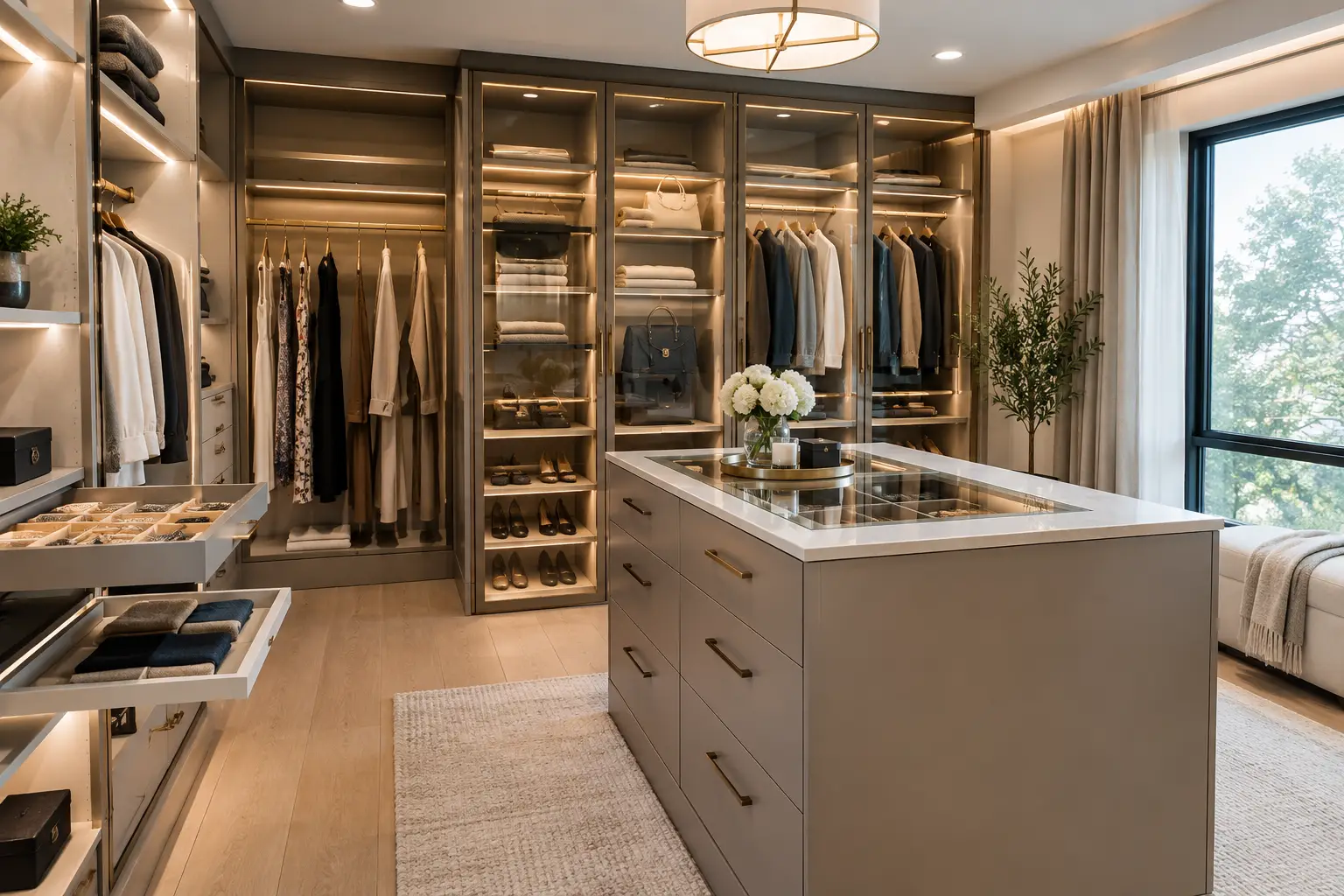
A closet should not make the busiest part of your day harder. Yet many homeowners begin each morning moving clothes from chair to bed, searching for a matching shoe, or trying to find one item behind a crowded hanging rod. Thoughtful closet design changes that rhythm. It gives every category a place, brings the items you use forward, and creates a more polished start and finish to each day.
The best closet is not simply the one with the most shelving. It is the one shaped around how you actually live: the workwear you reach for on weekdays, the bags that otherwise land on the floor, the seasonal pieces that need to be stored without disappearing, and the small details that make getting ready feel calm instead of rushed.
Start Closet Design With Your Routine
Before choosing finishes, drawer fronts, or hardware, look closely at the way your current closet functions. A beautiful system can still feel frustrating if it was designed around assumptions rather than your habits. The right questions are practical: Do you fold more than you hang? Do you wear long dresses or suits? Do two people share the space? Are shoes a collection, an afterthought, or both?
A closet built for a professional wardrobe needs a different balance than one serving an active family. Long-hang space is valuable for dresses, coats, and formalwear, while double-hang sections can make far better use of vertical space for shirts, blouses, skirts, and trousers. If you prefer knits and denim folded, deep adjustable shelves or drawers may serve you better than another long stretch of hanging rod.
This is where custom planning has a clear advantage over a one-size-fits-all organizer. Rather than adapting your belongings to a preset configuration, the configuration is created around your belongings. That distinction is what turns storage into a true lifestyle upgrade.
Give Every Category a Clear Home
Clutter often returns because a closet has storage, but not the right kind of storage. A high shelf may technically hold handbags, for example, but it is not especially useful if you need to pull down several boxes to find the one you want. Good design considers visibility and reach as much as capacity.
A well-organized closet usually benefits from four distinct zones:
- Daily-access storage for the clothing, shoes, and accessories used most often
- Folded storage for denim, sweaters, fitness wear, and casual essentials
- Protected storage for jewelry, handbags, watches, and delicate items
- Seasonal storage for pieces that need to be kept, but not accessed every week
The placement of these zones matters. Frequently used items should sit between waist and eye level whenever possible. Seasonal bins and occasional-use luggage can move up high. Shoes deserve more intention than a pile on the floor, whether that means open shelves for quick visibility, angled displays for a curated collection, or enclosed cabinetry for a quieter visual finish.
Drawers are particularly valuable in a closet because they contain the small items that create visual noise. Socks, undergarments, workout gear, belts, and accessories are easy to lose inside open shelving. With dividers or tailored inserts, a drawer becomes a controlled, easy-to-maintain space rather than a catchall.
Make the Most of the Space You Have
A spacious walk-in closet provides flexibility, but even a compact reach-in closet can feel significantly larger with the right layout. The goal is not to fill every inch with cabinetry. It is to use vertical and horizontal space intentionally while preserving enough openness to move comfortably and see what you own.
In smaller closets, double-hang sections are often one of the highest-value improvements. They can nearly double usable hanging space for shorter garments. Adjustable shelves also allow the closet to evolve as your wardrobe changes, whether you need space for taller boots now or more folded items later.
For larger walk-in closets, the design conversation expands. A center island can offer substantial drawer storage and a convenient surface for folding, packing, or laying out an outfit. A bench can make the room more comfortable, though it should only be added when there is enough clearance to avoid making the layout feel crowded. Mirrors, thoughtful lighting, and a balanced mix of open and closed storage can make the space feel like a private dressing room rather than a utility area.
There are trade-offs. Open shelving is visually appealing and makes selection easy, but it asks you to maintain a tidy presentation. Closed cabinets create a calmer look and protect items from dust, but they can hide pieces you may forget to wear. Many homeowners find the best answer is a mix: open storage for regularly used clothing and shoes, plus drawers or doors for smaller items and seasonal overflow.
Design for Better Visibility, Not Just More Storage
If you cannot see an item, it is unlikely to become part of your regular rotation. That is why visibility should guide many closet decisions. Clear categories, dedicated shoe shelving, illuminated hanging areas, and drawers with practical inserts reduce the visual and mental effort of getting dressed.
Lighting deserves special attention. A central ceiling fixture may brighten the room generally, but integrated lighting can make a dramatic difference inside deeper cabinetry or along hanging sections. It helps you distinguish colors accurately, locate accessories quickly, and enjoy the finish quality of the space. Warm, well-placed lighting also adds a sense of ease at the beginning of an early morning or the end of a long day.
Finishes should support that experience. Lighter materials can help a compact closet feel open, while warm wood tones bring depth and a more tailored character. Matte hardware often feels modern and understated. Glass-front cabinets can elevate handbag or accessory storage, although they are best reserved for collections you enjoy keeping visually organized.
Plan for Life Beyond This Season
A closet should serve your household now without becoming obsolete after one change in routine. A growing family, a new job, a shift in hobbies, or a move toward more travel can all change what you need to store. Flexible components such as adjustable shelves, movable hanging rods, and configurable drawer inserts make a design more resilient over time.
It also helps to leave a little breathing room. A closet designed to hold every available item at maximum capacity may look impressive on installation day, but it offers no room for a new coat, an unexpected gift, or a seasonal wardrobe change. Purposeful empty space is not wasted space. It is what allows the system to stay functional without feeling overfilled.
During the planning process, edit with care. There is no need to chase minimalism for its own sake, but clothing that no longer fits your life should not dictate the layout of a premium closet. Keep what you wear, love, or genuinely need. Then let the design support those choices with a place for everything.
Why Professional Planning Changes the Result
Closet projects can appear straightforward until measurements, clearance requirements, existing construction, and installation details enter the picture. Professional design brings those factors together before anything is built. A detailed consultation can identify missed opportunities in corners, vertical space, awkward walls, and shared storage needs. A 3D design presentation makes it easier to see how the finished closet will function and feel before installation begins.
For homeowners who want a refined result without managing the complexity themselves, Orga Spaces combines tailored closet planning with premium installation. The process is designed to respect your home, your schedule, and the routines that the finished space is meant to improve.
Your closet does not need to be extravagant to feel exceptional. It needs to make room for you to breathe, protect the things you value, and remove small points of friction from every day. Start with how you live, design around what you use, and let the space bring a little more order to the moments that matter.