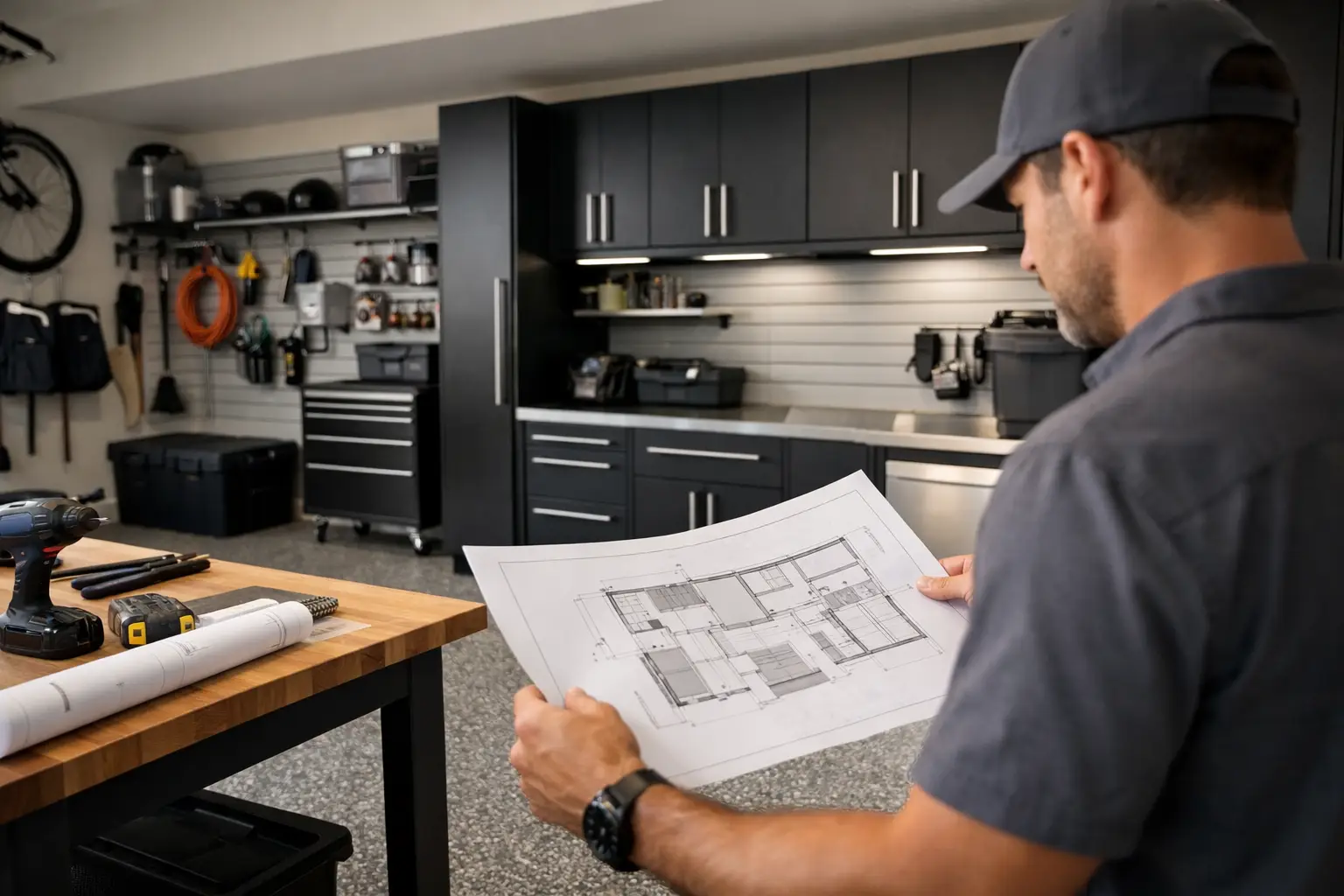
The garage is often asked to do too much. It holds vehicles, tools, sports gear, seasonal décor, garden supplies, recycling bins, and the items that never found a proper place inside. Learning how to upgrade garage storage starts with a simple shift: stop treating the garage as a catch-all and start planning it as a hardworking extension of your home.
A well-designed garage does more than hide clutter. It makes weekday mornings faster, weekend projects easier, and every square foot feel intentional. For homeowners who value both order and a refined finish, the strongest upgrades combine practical storage engineering with a layout that reflects how the household actually lives.
Start With How You Use the Garage
Before choosing cabinets or wall racks, look at the routines that happen in the space. A family that uses the garage as the main entry needs a different system than a homeowner who restores cars, cycles every weekend, or stores landscaping equipment. The most attractive storage solution will still feel frustrating if it puts frequently used items out of reach.
Take everything out of the garage in categories, then separate it by frequency of use. Daily and weekly items deserve the most accessible zones. Seasonal items can live higher up or farther back. Anything broken, duplicated, expired, or no longer useful is taking up valuable room that could support a better routine.
It also helps to decide what the garage should not store. Paperwork, delicate keepsakes, unsealed food, and temperature-sensitive belongings generally belong elsewhere in a Texas home. Removing those categories creates a clearer brief for the storage system you actually need.
Measure the Space You Need to Protect
Storage planning is not only about the walls. Protect enough floor area for vehicles, door swing clearance, walkways, and access to major equipment. Measure vehicle dimensions with doors and liftgates open, especially if the garage is tight. A cabinet run that looks perfect on paper can become inconvenient if it crowds parking or blocks the route to the house.
Ceiling height matters, too. Overhead storage can reclaim a surprising amount of square footage, but it needs to preserve safe clearance for garage doors, openers, lighting, and vehicles. This is one reason a professional site assessment is valuable: it turns measurements and daily habits into a plan that works before installation begins.
Build Your Garage Storage Around Zones
The most efficient garages are organised by activity rather than by whichever shelf happens to be empty. Zoning reduces the small frustrations that create clutter over time. When every category has a logical home, putting things away becomes the easy choice.
Create a transition zone near the interior door for shoes, bags, pet supplies, and items that travel in and out of the house. Place automotive supplies near the vehicle area, provided they are stored safely in enclosed cabinetry. Keep gardening tools close to the exterior door, and group sports equipment near the point where it is loaded into the car.
For many households, four zones cover the essentials: daily-entry items, tools and projects, outdoor equipment, and long-term or seasonal storage. The exact labels matter less than the logic. Each zone should make it obvious where an item belongs and how easily it can be retrieved.
Choose Storage That Matches the Item
A mix of closed, open, vertical, and overhead storage creates a cleaner result than relying on one product type. The goal is not to fill every wall. It is to give each category the right level of visibility, protection, and access.
Use Steel Cabinets for a Calm, Finished Look
Premium steel cabinets are ideal for items you want protected from dust and visual clutter. They offer a polished architectural presence while keeping chemicals, power tools, paint supplies, and household overflow behind closed doors. Countertop space above lower cabinets can also create a useful work surface for small repairs, potting, or packing for a trip.
Cabinets are an investment, so their placement should be purposeful. They are best for categories that benefit from containment and for walls where you want a more refined appearance. If your garage doubles as a workshop, deeper base cabinets and a durable worktop may be worthwhile. If the goal is primarily decluttering, a balanced cabinet run with wall storage can deliver more flexibility for the budget.
Keep Frequently Used Gear on the Wall
Wall-mounted systems make excellent use of vertical space while keeping the floor clear for parking and cleaning. Hooks, adjustable rails, baskets, and specialised holders can accommodate rakes, brooms, ladders, bicycles, golf bags, and other awkward equipment.
The advantage is visibility. You can see what you own, grab it quickly, and return it without moving several other items. The trade-off is that open storage needs visual discipline. Wall systems look best when they are planned with enough spacing and when loose, mismatched items are moved into cabinets or labelled bins.
Reserve Overhead Storage for Seasonal Belongings
Overhead racks are valuable for décor, camping bins, luggage, and other items used a few times a year. They free up wall and floor space without forcing you to give up belongings that still have a purpose.
However, overhead storage is not the right home for heavy items you may need regularly. Store lighter, clearly labelled bins there, and keep a safe step stool or ladder strategy in mind. A system that requires lifting an awkward tote above shoulder height every month will not support an easy routine.
Treat the Floor as Part of the Storage Plan
An unfinished concrete floor can make even a well-organised garage feel incomplete. It absorbs stains, collects dust, and creates a rough backdrop for cabinetry and wall systems. A professionally coated floor changes how the whole room feels while making clean-up much simpler.
For a long-lasting finish, consider a polyaspartic full-flake coating rather than a conventional epoxy system. Polyaspartic coatings are UV-stable, slip-resistant, chemical-resistant, and designed to resist yellowing or cracking. They can be installed directly over existing concrete and are typically completed in one day, which is especially convenient when the garage remains central to your daily routine.
Preparation is what gives the finished surface its performance. A premium installation includes diamond grinding, crack repair, a polyurea primer and base coat, a full vinyl flake broadcast, and a protective polyaspartic top coat. With multiple flake colour options available, the floor can complement your cabinetry and create a cohesive, designed space rather than a collection of separate upgrades.
Design for Change, Not Just Today
Garage needs evolve. Children take up new sports, tools accumulate, hobbies change, and seasonal storage expands. The best plan includes some adjustable capacity so the space can evolve without becoming chaotic again.
Choose wall accessories that can be repositioned, leave room for future bins, and avoid assigning every centimetre to a single purpose. At the same time, too much empty space can invite clutter. The right balance is planned flexibility, not an unfinished system.
This is also where custom design provides a meaningful advantage over buying pieces one at a time. A consultation and 3D design presentation make it easier to see clearances, storage heights, finish combinations, and traffic flow before any materials are installed. You can make informed decisions early instead of trying to correct a layout after the garage is full again.
Make the Upgrade Easy to Maintain
A garage makeover should reclaim your time, not create another area to manage. Keep like items together, label opaque bins, and set a simple rule: nothing stays on the floor unless it is a vehicle, a large piece of equipment, or intentionally placed furniture.
Plan a short reset at the end of each season. Return misplaced items to their zones, donate gear that no longer serves your household, and check that overhead bins are still clearly labelled. With a strong foundation of cabinets, wall storage, overhead capacity, and a cleanable floor, maintenance becomes a quick reset rather than a full-day project.
For Dallas-Fort Worth homeowners ready to turn an underused garage into a polished, purposeful space, Orga Spaces can guide the process from consultation and 3D design through premium installation. The right garage storage plan does not simply create more room for things. It creates room for you to breathe, move, and enjoy the home you have invested in.