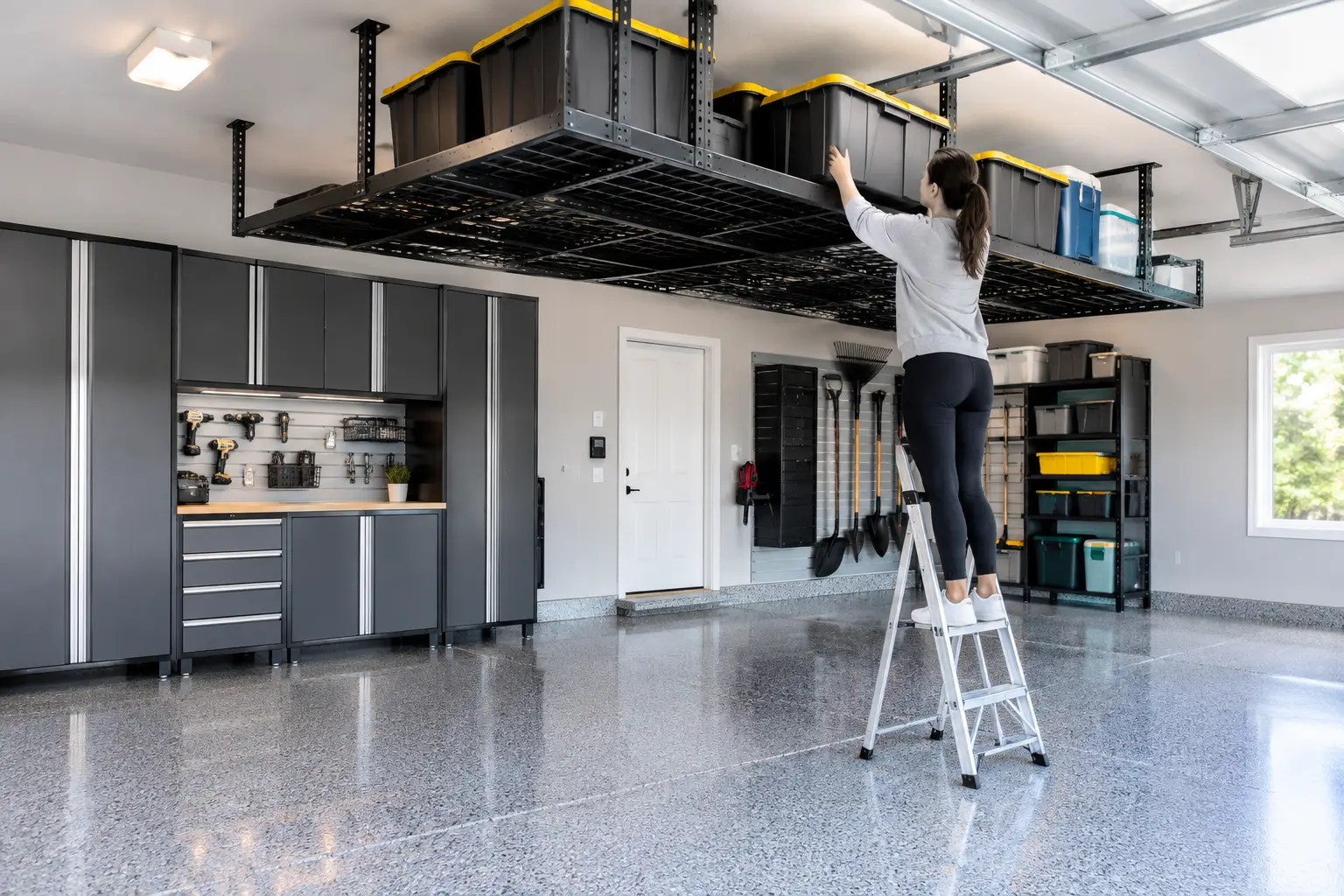
The floor is clear, the cabinets are organized, and yet the garage still feels crowded. The reason is often sitting overhead: seasonal bins, camping equipment, holiday décor, and bulky items that have no real home. To maximize overhead garage storage well, the goal is not simply to hang more racks from the ceiling. It is to create a considered storage plan that protects your belongings, preserves easy access, and makes the entire garage feel more open.
For homeowners investing in a refined, functional garage, overhead storage is one of the smartest ways to reclaim square footage without sacrificing the space needed for vehicles, workbenches, or daily routines. Done thoughtfully, it turns the upper portion of the garage into a reliable extension of your home.
Start With What Belongs Overhead
Overhead storage works best for items you need occasionally, not every morning. Think holiday decorations, luggage, coolers, keepsakes, seasonal sports equipment, and bins of clothing waiting for the next season. These belongings can take up a surprising amount of floor and cabinet space, yet they do not need to remain within arm’s reach all year.
The test is simple: if retrieving an item requires a step ladder, it should not be something you use weekly. Frequently used tools, pet supplies, cleaning products, and everyday recreational gear are better suited to wall storage or cabinets where they can be accessed safely and quickly.
This distinction matters because overhead storage should reduce friction, not create it. A garage can look beautifully organized while still being inconvenient if every routine task involves moving vehicles or climbing to retrieve a basic item.
Measure the Ceiling, Door Clearance, and Daily Use Zones
The ceiling is not one blank storage surface. Garage door tracks, openers, lights, attic access, sprinklers, and structural framing all influence what can be installed and where. Before selecting a rack or lift system, assess the full ceiling layout rather than measuring only the open area above the cars.
A well-designed plan accounts for garage door movement first. Nothing should interfere with the door in either its open or closed position. Storage also needs enough clearance from the vehicle roof, especially if your household includes an SUV, truck, roof rack, or future vehicle upgrade.
Consider the zones below the ceiling as well. The area above a parked car can be useful for lighter seasonal items, while the space above a workbench or cabinet run may offer more practical access. If you regularly load sports gear, host projects, or use the garage as a transition point for busy family life, keep those pathways open.
Plan for the Items You Actually Own
Generic overhead racks are often sized around a product specification rather than your belongings. A custom approach begins with a real inventory: the number of storage bins, their dimensions, the length of ladders or skis, and the volume of bulky items that need to disappear until next season.
Matching the storage system to the inventory prevents two common frustrations. The first is installing too little overhead storage and continuing to stack bins on the floor. The second is creating a large overhead platform that becomes a catch-all for forgotten items. Intentional capacity keeps the system useful and easier to maintain.
Choose the Right Type of Overhead Garage Storage
Not every garage needs the same overhead solution. Fixed ceiling-mounted racks are a strong choice for labeled bins and lightweight seasonal items. They make excellent use of high, open ceiling areas and provide a visible boundary for what belongs there.
Ceiling-mounted lifts can be more suitable for heavier or awkward equipment, such as bicycles, kayaks, cargo boxes, or certain recreational items. Because these systems bring belongings down to a manageable height, they can make access safer than lifting heavy objects above shoulder level. The trade-off is that they require careful placement and more clearance beneath them.
Overhead shelving integrated with wall storage and steel cabinets creates a more composed result. Rather than adding racks as an afterthought, the storage is planned as part of the entire garage environment. This is especially valuable when the garage needs to serve multiple roles: parking, household storage, hobbies, fitness, or a workspace.
Safety Is Part of Good Design
Ceiling storage has real structural and weight considerations. The storage system must be anchored to appropriate framing, installed with hardware rated for the intended load, and kept within the manufacturer’s weight limits. Drywall alone is never a safe mounting surface for a loaded overhead rack.
Weight distribution matters just as much as total capacity. Store heavier bins evenly and keep the densest items as low as the system allows. Avoid placing loose, unstable objects overhead, even if they technically fit. Clear, durable bins with secure lids protect contents from garage dust while making it easier to identify what is stored without pulling everything down.
Labeling is a small detail with a large payoff. Use broad, easy-to-read labels such as Winter Décor, Camping, Pool Supplies, or School Keepsakes. If several bins hold similar categories, add a simple contents note on the side facing the garage entrance. You will save time every season and avoid opening six containers to find one set of string lights.
Do Not Forget Temperature and Moisture
Dallas-Fort Worth garages can experience significant heat, humidity, and temperature swings. Overhead storage keeps belongings away from floor-level moisture and accidental spills, but it may also place items closer to a hot ceiling. That makes material choice important.
Avoid storing candles, delicate electronics, photographs, important documents, paint, pressurized containers, and products with temperature-sensitive instructions overhead. Reserve this space for durable items that can handle garage conditions. If an item is valuable, irreplaceable, or heat-sensitive, it belongs inside the home or in a climate-controlled area.
Create a Layered Storage Plan
The most functional garages use storage by frequency and function. Overhead space handles long-term and seasonal items. Upper cabinets can hold supplies that are used occasionally. Lower cabinets and wall systems keep daily essentials within reach. The floor remains clear for vehicles, movement, and the activities the garage needs to support.
This layered approach makes the garage feel calmer because every category has a logical place. It also helps prevent the familiar cycle of spring cleaning followed by months of clutter returning. When there is no designated home for an item, it eventually lands on the floor.
A polished garage makeover can take this further by aligning overhead storage with cabinet finishes, wall organization, lighting, and flooring. The result is not just more storage. It is a space that feels intentional from the moment the garage door opens.
Why Professional Planning Makes a Difference
The most difficult part of overhead garage storage is rarely the rack itself. It is deciding what to store, how much capacity you need, where the system will be safest, and how it should work with every other element of the garage. A professional design process replaces guesswork with a complete plan.
With a consultation and 3D design presentation, homeowners can see how ceiling storage, cabinets, wall systems, and open floor space will work together before installation begins. This is particularly useful for garages with unusual ceiling heights, multiple vehicles, existing storage challenges, or a desire for a more elevated finished look.
Orga Spaces designs and installs customized garage systems that make better use of the space you already have while respecting how your household lives. The right plan can create room for you to breathe, make departures and arrivals easier, and turn an overlooked garage into a refined part of your home.
The best overhead storage is not the system that holds the most bins. It is the one that lets you park comfortably, find what you need without effort, and enjoy a garage that finally feels as considered as the rest of your home.