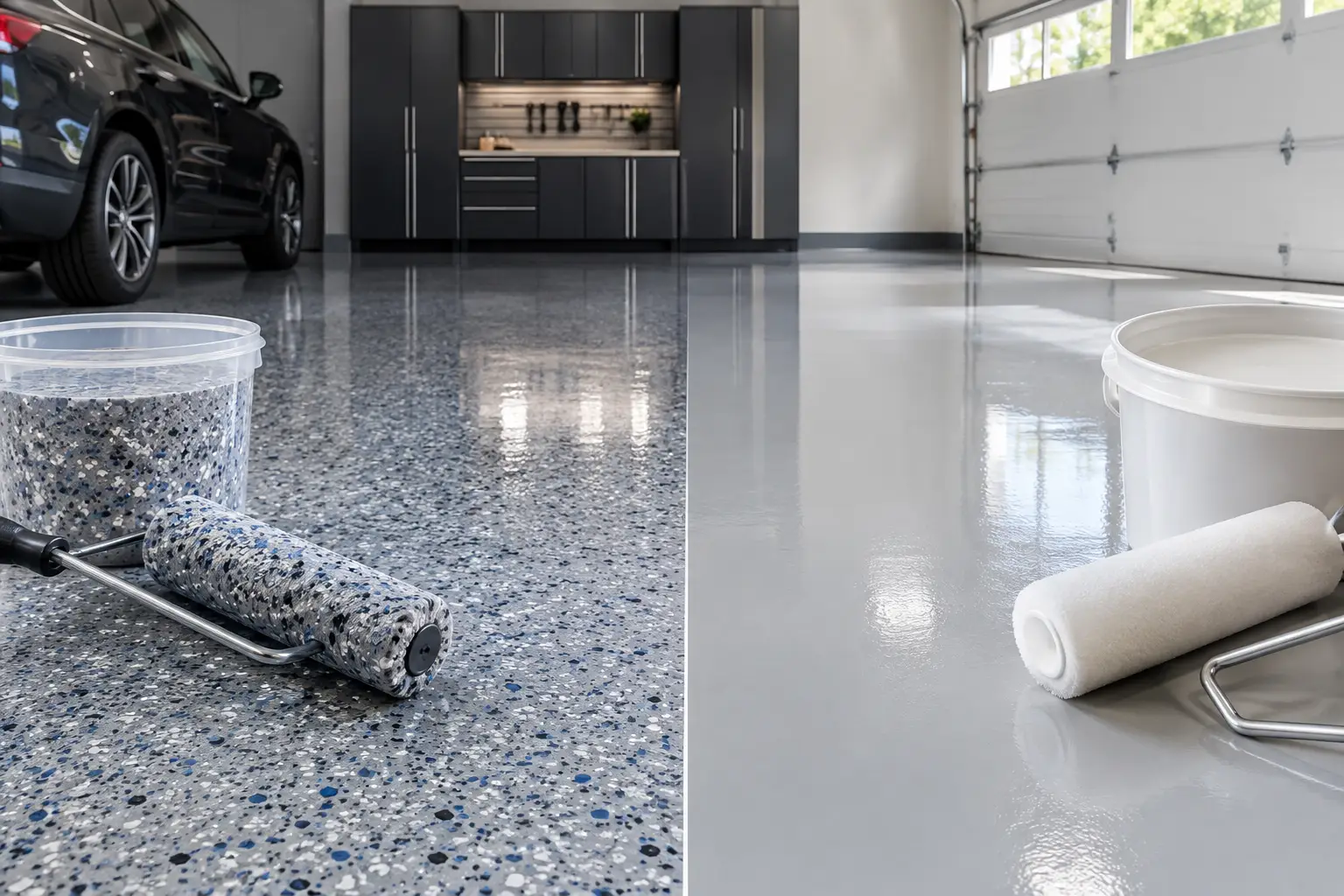
A garage floor has a bigger role than most homeowners give it credit for. It supports vehicles, projects, storage, muddy shoes, sports equipment, and the daily movement of a busy household. When comparing polyaspartic vs polyurethane coating, the best choice is not simply about picking the toughest material on a spec sheet. It is about choosing a floor system that suits your concrete, your schedule, the amount of sunlight in the space, and the way you want the garage to look and feel for years.
For a finished garage, the coating should do more than hide stains. It should make the room easier to maintain, more comfortable to use, and polished enough to belong with the rest of your home.
Polyaspartic vs Polyurethane Coating: The Key Difference
Polyurethane is a broad family of coatings used across many applications, including floors, furniture, automotive finishes, and industrial surfaces. Floor-grade polyurethane coatings can offer valuable benefits, particularly abrasion resistance, chemical resistance, and a clear protective finish. Their exact performance depends on whether the product is water-based, solvent-based, aliphatic, aromatic, or part of a multi-coat flooring system.
Polyaspartic is a type of aliphatic polyurea coating. It is often selected for garage floors because it cures quickly, offers strong resistance to ultraviolet exposure, and can perform well in a wide range of conditions. While people often frame the decision as polyaspartic versus polyurethane, the comparison is more nuanced: a polyaspartic coating is usually part of a purpose-built garage floor system, while polyurethane may be used as a topcoat or finish within other systems.
That distinction matters. A floor is only as reliable as the surface preparation, crack repair, base coat, broadcast material, and topcoat working together.
Where Polyaspartic Has an Edge in a Garage
UV stability and color retention
Sunlight can reach farther into a garage than expected, especially near open doors, windows, or glass side entries. Some coatings can amber, fade, or change tone as they age under UV exposure. Aliphatic polyaspartic topcoats are valued for their UV stability, helping the floor retain a cleaner, more consistent appearance over time.
Not every polyurethane finish yellows at the same rate. Aliphatic polyurethane can also provide good UV resistance, while aromatic polyurethane is more likely to discolor when exposed to light. The practical question is not whether a product carries the polyurethane label, but whether its chemistry is designed for a sunlit residential floor.
Faster return to use
A traditional polyurethane coating may require longer cure windows between coats and before the floor can handle vehicle traffic. That can be perfectly acceptable on projects with flexible timelines, but it may not fit a household that needs its garage back quickly.
Polyaspartic systems are known for faster curing. With the proper preparation and site conditions, a professional full-flake garage floor can often be installed in one day. Fast curing is not just a convenience. It reduces the period in which dust, debris, or unexpected weather can interfere with a freshly coated surface.
A more forgiving finish for real garage life
Garage floors see dropped tools, tire traffic, water, oil, fertilizer, cleaning products, and the abrasive grit carried in on tires. Both polyurethane and polyaspartic coatings can offer useful chemical and wear resistance, but polyaspartic is commonly chosen for high-performance decorative systems because it combines durability with a refined finish.
A full vinyl flake broadcast also adds more than visual interest. The flakes help conceal minor dust and everyday marks while creating a textured surface that can improve traction. The final topcoat locks that finish in place and makes routine cleanup far easier than bare concrete.
Appearance and Safety Are Part of the Decision
A garage renovation should not force a choice between a beautiful floor and a practical one. Polyurethane can create a smooth, clean finish, but smooth coatings may become slippery when water is present unless a traction additive is included. Polyaspartic full-flake systems naturally introduce visual depth and texture, creating a surface that feels considered rather than utilitarian.
For homeowners choosing cabinets, wall storage, and overhead systems, flake color matters as well. A well-selected blend can complement cabinet finishes, coordinate with the home’s exterior palette, and make the garage feel like an intentional extension of the house. Lighter blends can brighten a darker space, while medium-toned blends tend to hide dust and tire marks particularly well.
No coating makes a floor completely slip-proof. Proper texture, sensible housekeeping, and quickly addressing spills still matter. But a professionally specified flake system provides a more practical starting point than a glossy, featureless finish.
The Better Question: What Floor System Is Being Installed?
Comparing topcoats alone can distract from the work that determines whether a garage floor lasts. Concrete is porous, often uneven, and sometimes affected by moisture, old paint, oil contamination, or previous patching. Applying a premium coating over an inadequately prepared slab can lead to peeling, weak adhesion, or visible imperfections regardless of the label on the can.
A professional system begins with diamond grinding. This mechanically opens the concrete surface and removes contaminants so the coating can bond properly. Cracks should be repaired before coating, not hidden beneath it. From there, a high-quality polyurea primer or base coat can be applied, followed by a full vinyl flake broadcast and a protective polyaspartic topcoat.
This layered approach is why a full-flake floor often delivers a different result from a thin, single-coat application. It provides color, texture, coverage, and protection in a coordinated system. It also allows for a tailored look rather than a generic gray slab with a glossy finish.
When Polyurethane May Still Make Sense
Polyurethane is not an inferior material by default. It can be a sensible choice for certain interiors, specialty finishes, or projects where a slower cure is acceptable and a particular product system has been designed around it. A quality aliphatic polyurethane topcoat may also be used in commercial and residential settings where UV resistance and wear protection are priorities.
The right choice depends on the specific formulation, the concrete’s condition, installation requirements, and expected use. A homeowner who parks vehicles indoors, uses the garage as a workshop, or wants a rapid transformation will often find a polyaspartic-based system better aligned with the space. Someone coating a low-traffic utility room may have different priorities.
Be cautious of comparisons that promise one coating solves every problem. Concrete moisture, structural cracks, severe oil contamination, and substrate movement each require their own assessment. Premium materials perform best when they are matched to the project rather than sold as a one-size-fits-all answer.
What to Expect From a Professional Garage Floor Installation
The cleanest-looking floors are usually the result of disciplined preparation rather than a dramatic final topcoat. Before installation, the garage should be cleared so the team can inspect the slab, identify cracks and surface concerns, and create the right mechanical profile through grinding.
After repairs and coating application, full flake coverage creates an even decorative layer across the floor. Excess flakes are removed once the base has set, then the final polyaspartic coat is applied for durability, chemical resistance, UV protection, and an easy-to-clean finish. Installation timing can vary with slab condition and site conditions, but a well-planned system can minimize disruption to your household.
At Orga Spaces, garage flooring can be designed as part of a complete transformation, alongside custom steel cabinets and storage that bring clarity to every square foot. The result is not merely a coated floor. It is a garage that works more easily and looks finished from the ground up.
Keeping a Coated Floor Looking Its Best
Maintenance is simple, but it should be consistent. Sweep away abrasive dirt and grit, wipe up chemical spills when they happen, and clean periodically with a soft mop and a coating-safe cleaner. Avoid harsh acidic products and abrasive pads that can dull the finish over time.
Place protective pads beneath heavy equipment that stays in one location, and use care when moving sharp metal objects across the floor. If your garage doubles as a workspace, a small mat beneath a workbench can help catch metal shavings and reduce concentrated wear. These modest habits preserve the finish while keeping the room ready for whatever the day brings.
The best garage floor is one you stop worrying about. Choose a system built for the way you live, then let the space support smoother mornings, cleaner projects, and more room for you to breathe.