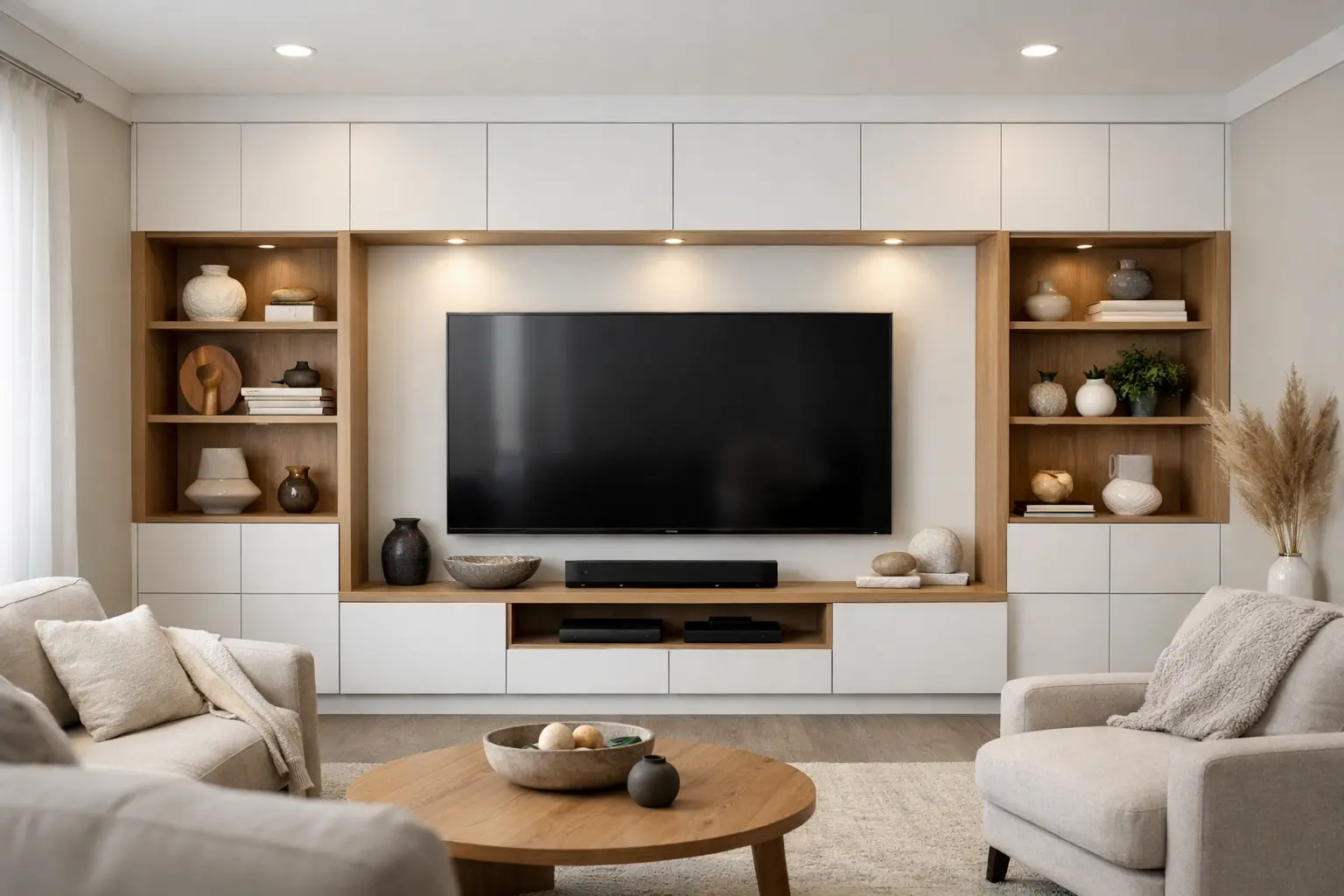
A television wall can easily become the busiest visual zone in the room – cords, consoles, speakers, remotes, decor that never quite fits, and a large black screen pulling all the attention. Good tv wall unit design changes that. It gives the room a clearer focal point, hides the clutter that disrupts the space, and turns everyday media storage into something intentional and refined.
The best part is that a well-designed unit does more than frame a TV. It supports how you actually live. In a family room, that may mean closed storage for games, charging drawers, and durable finishes that handle daily use. In a more formal living area, it may mean a quieter profile with integrated lighting, fewer visible accessories, and materials that feel architectural rather than furniture-like.
What makes tv wall unit design work
A strong wall unit starts with proportion. This is where many rooms go off balance. The television may be the centrepiece, but it should not feel like it is floating on an oversized wall or squeezed into a unit that looks too small. The width of the composition, the depth of cabinetry, and the relationship between open and closed storage all matter.
Scale is especially important in open-concept homes, where the TV wall is visible from the kitchen or dining area. In those spaces, the unit is not just for media. It becomes part of the home’s overall design language. Clean lines, consistent finishes, and a layout that feels calm from every angle can make the whole main floor feel more composed.
Storage is the other key factor. Most homeowners do not need more open shelving. They need a better place for the things that create visual noise. Closed cabinets help the room breathe. Open niches can still play a role, but they work best when used selectively – perhaps for a soundbar, a few books, or one or two display pieces that earn their place.
Built-in or furniture-style
This is one of the first decisions to make, and the right answer depends on the room and your goals.
A built-in wall unit creates the most tailored result. It can run wall to wall, reach the ceiling, wrap around architectural features, and make the television feel integrated instead of added later. This approach is ideal if you want the room to feel finished and custom, especially in newer homes where large blank walls often need more structure.
A furniture-style unit is more flexible and can be a good fit for smaller spaces or homeowners who prefer a lighter visual footprint. It usually costs less and can feel less permanent. The trade-off is that it rarely solves cable management, awkward wall proportions, or storage as completely as a custom installation.
If your room has unusual dimensions, asymmetrical windows, or a niche that needs to work harder, custom usually gives a better outcome. It lets the design respond to the room instead of forcing the room to adapt to a standard piece.
The layout should follow the room, not trends
Some TV wall designs look impressive in photos but feel overdone in a real home. A better approach is to design around how the room is used.
In a family media room, symmetry often works well because it feels grounded and easy on the eye. The TV can sit at the centre with balanced cabinetry, lower storage, and a combination of shelves or vertical panels on either side. This type of layout works especially well when you want the unit to feel substantial without looking busy.
In a living room with a fireplace, the design gets more nuanced. Mounting a TV above a fireplace is not always ideal for viewing height, and it can force the wall to do too much at once. Sometimes the better solution is placing the television beside the fireplace and building the unit to create visual balance across the full wall. It depends on the room dimensions, seating arrangement, and whether comfort or strict symmetry matters more.
For narrow rooms, horizontal emphasis helps. Long lower cabinetry with a restrained upper section can make the space feel wider. In taller rooms, vertical panels, ceiling-height millwork, or stacked storage can make the wall feel more connected to the architecture.
Finishes that elevate the room
Material choice has a huge effect on whether a wall unit feels current in five years or dated in two.
Woodgrain finishes bring warmth and are especially effective in rooms that need softness around technology. White or light neutral cabinetry can feel bright and tailored, though it needs enough contrast elsewhere in the room to avoid looking flat. Darker finishes create drama and can help the television blend in visually, but they work best when the room has sufficient natural light or layered lighting to keep the space from feeling heavy.
Matte finishes tend to feel more sophisticated than high gloss for most homes. Textured laminates, painted millwork, and wood veneer can all work beautifully when they are chosen to align with the rest of the interior. The goal is not to make the TV wall stand apart from the room. It is to make it feel like it belongs there.
This is also where restraint matters. Too many competing materials – stone, slats, metal accents, open shelving, bold lighting, contrasting cabinet colours – can make the wall feel designed for attention rather than daily life. One or two strong moves are usually enough.
TV wall unit design and hidden function
The most satisfying spaces are often the ones where the function is there, but not shouting for attention. That is especially true for entertainment walls.
Cable management should be planned from the start, not treated as an afterthought. The same goes for outlet placement, ventilation for electronics, and access points for internet equipment or gaming systems. A beautiful wall unit loses its impact quickly if cabinet doors have to stay open for airflow or wires remain visible behind decor.
Lighting is another detail that can quietly improve the experience. Integrated LED shelf lighting or soft backlighting can give the wall depth and make evening viewing more comfortable. It should be subtle, not theatrical. You want the room to feel polished, not like a showroom.
There is also the question of what else the unit needs to hold. Some homeowners want room for family photos and books. Others want almost everything concealed. Neither is better. The right answer depends on your visual tolerance and how much effort you want to spend styling and maintaining the wall over time.
Common mistakes to avoid
The most common mistake is choosing a design based only on the TV size. The television matters, but the wall unit has to respond to the room, the ceiling height, the seating distance, and the amount of storage required. Designing only around the screen often leads to a result that feels either undersized or overly bulky.
Another issue is too much openness. Open shelves often look appealing at first, but they require discipline to keep tidy. If you know daily life includes kids, multiple devices, board games, or accumulated accessories, more closed storage will almost always serve you better.
There is also a tendency to over-decorate the wall to soften the TV. In practice, clutter around a television usually makes the whole area feel louder. A cleaner composition with fewer objects, stronger lines, and concealed storage tends to create the calm most homeowners are actually after.
Why custom design changes the result
When a wall unit is designed specifically for your home, the improvement is not just visual. The room starts working harder for you. Storage is sized to the items you use. The wall feels integrated with the architecture. The finished result looks intentional because it was planned that way from the beginning.
That planning stage matters. Seeing a design in advance, understanding the proportions, and selecting finishes in context removes guesswork and helps avoid expensive revisions later. For homeowners who want a polished outcome without managing every detail themselves, a full design-and-installation approach creates room for you to breathe.
For custom entertainment wall solutions and other refined home organization projects, Orga Spaces offers consultation, 3D design, and professional installation tailored to how you live.
A well-considered TV wall should make the room feel quieter, more useful, and more complete every time you walk into it.