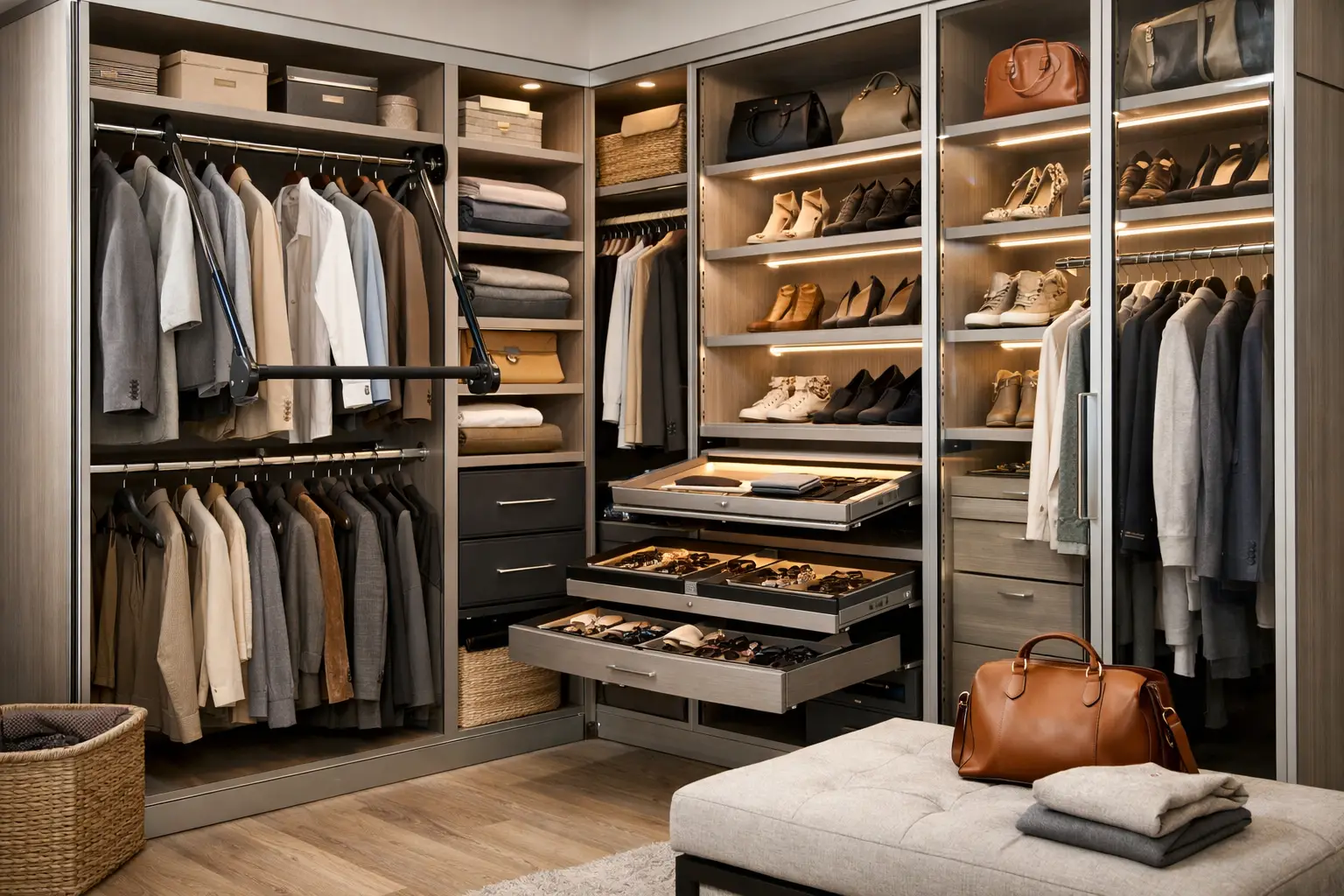
The morning rush exposes every weakness in a walk-in closet. Shoes disappear beneath seasonal clothing, folded items lose their shape, and a generous footprint somehow still feels crowded. Learning how to organize walk in closets is not about fitting more into the room. It is about creating a place where every item is easy to see, easy to reach, and worth putting away.
A well-planned closet can reclaim time at the beginning and end of every day. It also brings a welcome sense of calm to the home, particularly for busy Dallas-Fort Worth households balancing work, family, and full schedules. The difference comes from designing around your routines rather than trying to force your routines around generic storage.
Begin With the Life You Actually Live
Before choosing bins, shelves, or hanging rods, take stock of what belongs in the closet and how often you use it. A closet for two working professionals needs a different layout than one shared by a family, a frequent traveller, or someone with an extensive collection of dresses, boots, or handbags.
Start by removing what is no longer serving you. Set aside damaged pieces, items that no longer fit, and clothing that has not been worn in a year or more. This step is not about creating an empty, minimalist closet. It is about giving the pieces you genuinely enjoy enough room to function well.
Then assess the remaining wardrobe by category. Count long garments, shorter hanging pieces, folded clothing, shoes, accessories, and out-of-season items. This simple inventory reveals where a typical closet system may fall short. For example, someone with thirty pairs of shoes needs more than a single low shelf. Someone who wears tailored jackets daily will benefit from uninterrupted hanging space rather than a crowded stack of drawers.
How to Organize Walk-In Closets by Zone
The most useful walk-in closets are arranged in zones. Instead of seeing one large room that needs filling, divide it according to access and purpose. The items you reach for every day should occupy the most comfortable locations, usually between knee and eye level. Less frequently used pieces can move higher or lower without creating daily friction.
A practical closet usually includes four core zones:
- Everyday clothing: Shirts, trousers, dresses, workwear, and favourite casual pieces belong where they can be selected quickly.
- Folded storage: Sweaters, denim, activewear, and knitwear need shelves or drawers that prevent overstacking and sagging piles.
- Shoes and accessories: Dedicated shoe shelves, pull-out trays, jewellery drawers, and handbag storage protect these items while keeping them visible.
- Seasonal and occasional items: Luggage, formalwear, extra bedding, and out-of-season clothing can live in higher cabinets or less accessible areas.
This structure is simple, but its effect is significant. When every category has a clear home, maintaining order becomes far easier. You are not asking family members to follow a complicated system. You are giving them an intuitive place to return each item.
Make Hanging Space Work Smarter
Hanging space often determines whether a closet feels generous or cramped. Many builder-grade closets rely on one long rod, which wastes valuable vertical space. Shorter garments such as shirts, blouses, skirts, and folded-over trousers can be placed on double-hang sections, creating two levels of storage in the same wall area.
Reserve a full-height section for long dresses, coats, jumpsuits, and other longer pieces. The right proportion depends on the wardrobe. If formal clothing is rarely worn, a smaller long-hang area may be enough. If it is a daily part of your professional or social life, giving it proper clearance prevents hems from bunching and makes the room feel more considered.
Use matching, slim-profile hangers for a cleaner visual line and more efficient spacing. It may seem like a minor detail, yet uneven hanger shapes can make a carefully designed closet feel visually busy and harder to manage.
Give Folded Items a Better Home
Shelves can be useful, but open shelves alone are not always the answer. High stacks of sweaters or T-shirts quickly become unstable, especially in shared closets. Drawers offer a more contained solution for small and soft items, while adjustable shelving lets you adapt as your wardrobe changes.
Keep shelf stacks low enough that you can remove one item without disturbing the rest. As a general rule, a stack of five to seven folded pieces is easier to maintain than a tall column that requires reshuffling each morning. Shelf dividers can also help separate handbags, clutches, or neatly folded denim.
For accessories, shallow drawers with fitted inserts offer both protection and visibility. Watches, sunglasses, belts, and jewellery are less likely to become clutter when they are stored individually rather than gathered in a catch-all tray.
Use Vertical Space Without Making It Feel Out of Reach
Walk-in closets often have underused space above the top shelf. Custom cabinetry can turn this area into enclosed upper storage for seasonal pieces and less frequently used belongings. Doors are especially helpful here because they create a quieter visual backdrop and keep dust away from stored items.
The trade-off is accessibility. High cabinets are ideal for holiday attire, spare linens, and travel bags, but not for something you need every Tuesday morning. Keep a small, stable step stool nearby if needed, and avoid storing heavy items where lifting them down could be awkward or unsafe.
Where space allows, a centre island can add drawers, a folding surface, and a natural place to set out an outfit. It is a premium upgrade that works best when there is sufficient clearance around all sides. In a narrower walk-in closet, an island can interrupt movement and make the room feel smaller. A shallow drawer bank or a built-in bench may provide the same benefit with a lighter footprint.
Bring Light, Finish, and Visibility Into the Plan
Organization is easier when you can see what you own. Layered lighting can make a walk-in closet more functional and more inviting, especially in areas with limited natural light. Good overhead lighting supports dressing, while integrated lighting in hanging sections, shelves, or drawers helps illuminate the details that tend to disappear in shadow.
Finishes matter, too. Light, warm cabinetry can make a compact closet feel more open, while darker wood tones can create a tailored, boutique-like atmosphere in a larger space. Neither choice is automatically better. Choose a finish that suits the rest of your home and gives you the experience you want from the room.
Consider a full-length mirror as part of the layout, not an afterthought. It can reduce trips back to the bedroom and add depth to the space. A seated area can also be valuable for putting on shoes, provided it does not become a landing spot for laundry or half-finished outfits.
Build a System You Can Maintain
The best closet organization does not demand a major reset every weekend. It supports small, quick habits. Return clothing to its category after laundry, keep donation items in a designated bag or bin, and review seasonal storage twice a year. These light touchpoints prevent clutter from quietly rebuilding.
Avoid buying organizers before defining the layout. A collection of attractive baskets may solve a temporary problem, but it can also conceal poor storage planning. First decide what needs drawers, what needs hanging space, and what needs display-quality shelving. Then choose accessories that serve that design.
For homeowners ready to turn an underperforming closet into a personalized dressing space, a custom approach can remove much of the guesswork. Orga Spaces begins with how you use your home, develops a tailored 3D design, and installs a refined system built around your wardrobe and daily rhythm.
Your closet should not be the room where decisions start with searching. Give each item a place that makes sense, leave room for your life to evolve, and let the space make every day feel a little more composed.