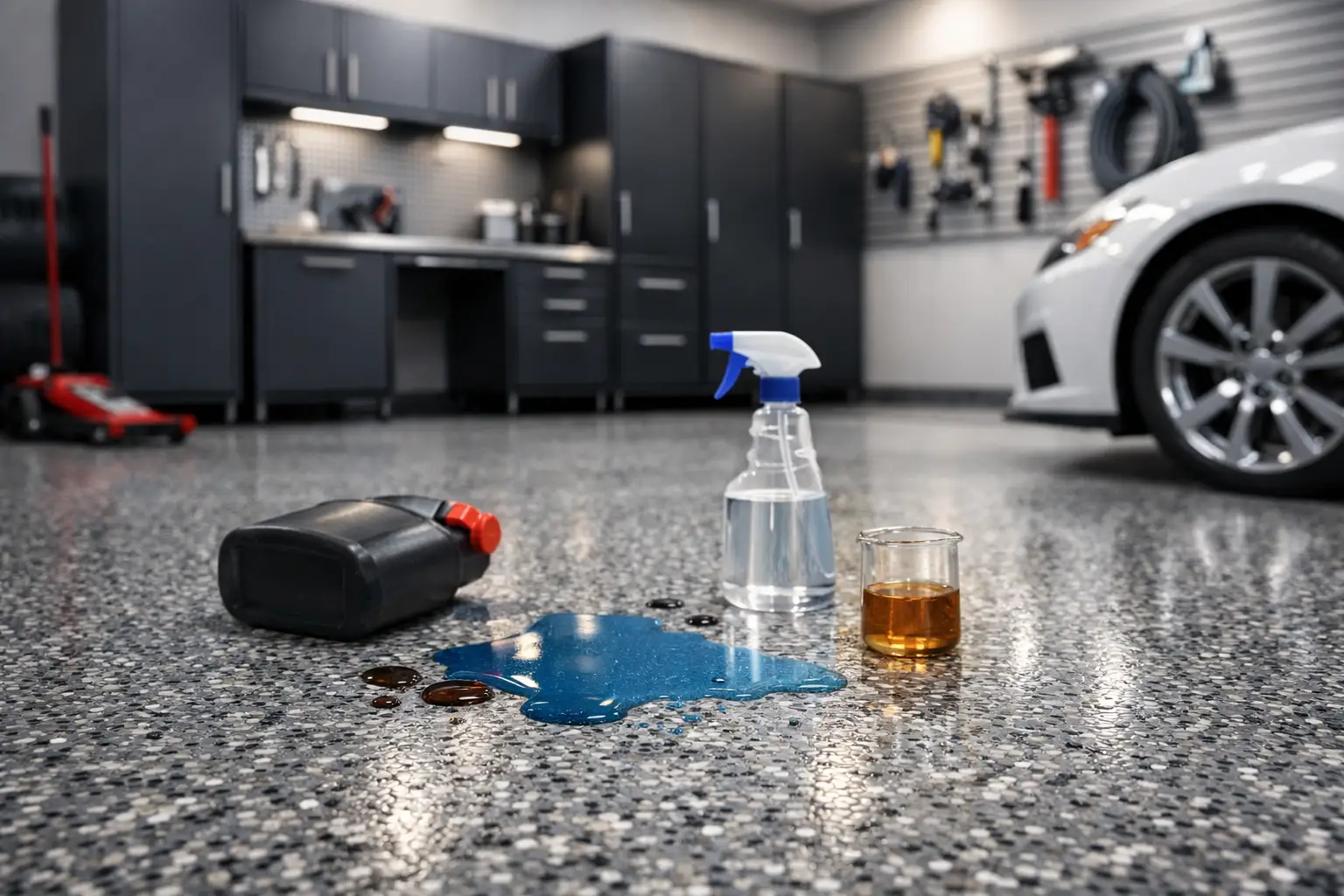
A garage floor sees the parts of home life most rooms are spared: leaking fluids, wet tires, fertilizer bags, dropped tools, paint projects, and the relentless dust that blows in from a Dallas-Fort Worth driveway. A chemical resistant garage floor coating changes how that space performs. Instead of treating the floor as a rough surface to tolerate, you can make it a durable, easy-to-clean foundation for a garage that feels considered from wall to floor.
For homeowners investing in custom cabinetry, overhead storage, or a complete garage makeover, flooring is not a finishing detail. It is the surface beneath every vehicle, workbench, sports bin, and weekend project. The right system protects the concrete while giving the entire room a cleaner, more refined presence.
What Chemical Resistance Really Means
Chemical resistance is not simply about surviving a dramatic oil spill. It is about preventing ordinary garage substances from leaving lasting marks, softening the finish, or working their way into porous concrete. Motor oil, gasoline, brake fluid, road salt residue, household cleaners, lawn chemicals, and automotive products can all create problems on an unfinished slab.
Bare concrete absorbs. Once a fluid penetrates, it can leave a dark stain that is difficult to remove and can carry odours long after the spill has been cleaned. A quality coating forms a protective layer over the surface, giving you time to wipe up common spills before they become part of the floor.
That distinction matters in a busy household. Protection should make the garage easier to live with, not turn every small accident into a maintenance concern. A properly installed coating lets the floor handle real use while maintaining the polished look that makes an organized garage feel like an extension of the home.
Why the Coating System Matters More Than a Label
Many products are marketed as garage floor coatings, but their performance can vary widely. The material, the preparation work, the installation conditions, and the top coat all affect whether the floor holds up over time.
Traditional epoxy has been a familiar option for years. It can improve the appearance of concrete and provide a degree of protection, but it has limitations in a Texas garage. Some epoxy systems can yellow with UV exposure, take longer to cure, and may become more prone to peeling or cracking when the concrete expands and contracts. A low-cost do-it-yourself kit can be especially vulnerable if surface preparation is rushed or moisture is present in the slab.
Polyaspartic systems are often a stronger fit for homeowners who want a premium, long-term finish. They cure quickly, resist UV-related yellowing, and are designed to stand up to chemicals, abrasion, and changing temperatures. That does not mean every polyaspartic floor is automatically equal. The installation method and the quality of each layer still determine the finished result.
At Orga Spaces, garage floors are finished with a polyaspartic full-flake coverage system. The flakes create visual depth and help disguise everyday dust and minor debris better than a single-colour painted finish. They also contribute to a more slip-resistant texture, while the protective top coat keeps the surface easy to clean.
Chemical Resistant Garage Floor Coating: The Right Build-Up
A lasting floor is built in layers, starting below the visible finish. Applying a coating directly over dusty, sealed, or weak concrete may look acceptable at first, but poor adhesion eventually reveals itself through peeling, bubbling, or worn patches.
Professional preparation begins with diamond grinding. This mechanically opens the concrete surface and removes contaminants so the coating can bond properly. It is a more dependable approach than relying on acid etching alone, particularly on garage slabs that have years of vehicle traffic, residue, or prior sealers.
Cracks are then repaired before the coating is applied. A coating can help create a unified appearance, but it cannot make active slab movement disappear. Hairline cracks and stable surface imperfections can often be addressed effectively; larger structural issues may require a separate assessment. This is one area where a clear conversation before installation protects the quality of the result.
After preparation, a polyurea primer or base coat is applied, followed by a full broadcast of vinyl flakes. “Full broadcast” means the flakes cover the surface thoroughly rather than being sprinkled lightly over a painted floor. Once the system has cured, the excess flakes are removed and a polyaspartic top coat seals the finish for maximum durability and chemical protection.
This layered process creates more than a decorative floor. It creates a surface designed to handle the practical demands of garage life without asking you to compromise on appearance.
A Better Floor Makes Garage Organization Work Harder
Storage and flooring solve different problems, but they work best together. Cabinets elevate tools and supplies off the floor. Wall systems keep bulky equipment within reach. Overhead storage clears seasonal items from daily pathways. A finished floor completes that transformation by making the open space feel purposeful rather than unfinished.
It also changes daily cleanup. When a shelf is reorganized, a bicycle comes in wet, or a project leaves sawdust behind, the floor can be swept, blown out, or mopped without the anxiety of pushing grime deeper into concrete. With fewer stains and less visual noise, the garage is easier to maintain and more pleasant to enter.
Colour selection has a practical role, too. Flake blends can complement cabinet finishes, wall colours, and the overall character of the home. A lighter blend can brighten a garage with limited natural light, while a mid-tone blend may be more forgiving in a high-traffic family space. The best choice is not necessarily the boldest sample – it is the one that supports the way you use the room.
What a Coating Can and Cannot Protect Against
Even a high-performance coating deserves sensible care. It is highly resistant to common automotive and household chemicals, but it is not an invitation to leave harsh substances sitting on the floor indefinitely. Wipe up leaks promptly, especially strong solvents or corrosive products, and follow product instructions for any cleaners used in the garage.
Avoid using highly abrasive pads or harsh cleaning methods that can dull the top coat over time. For routine maintenance, sweeping followed by a mild cleaner and water is generally enough. A soft-bristle brush can help with textured areas when needed.
It is also wise to be realistic about mechanical damage. Sharp metal edges, dragging heavy equipment, and severe impact can damage almost any finished surface. The advantage of a professionally installed polyaspartic system is that it is engineered to resist the normal abrasion of daily use far better than bare concrete or a thin, lightly applied coating.
Why One-Day Installation Has Real Value
A garage renovation can disrupt a household, especially when the garage is used for parking, storage, or project space. Fast-curing polyaspartic technology can allow for a one-day installation in suitable conditions, reducing the time your belongings and vehicles need to be displaced.
Speed should never mean skipping preparation. The value is in combining thorough concrete grinding, crack repair, carefully applied layers, and a coating chemistry that cures efficiently. Before installation, the garage needs to be cleared, and the concrete must be evaluated for conditions such as excessive moisture or significant damage. Those details help set appropriate expectations and support a finish that performs as intended.
A well-planned garage should give back more than storage capacity. It should remove friction from the routines that begin and end there: unloading groceries, finding a tool, parking without stepping around clutter, or walking into a home that feels cared for. Start with a floor that can handle the mess, then create room for you to breathe above it.