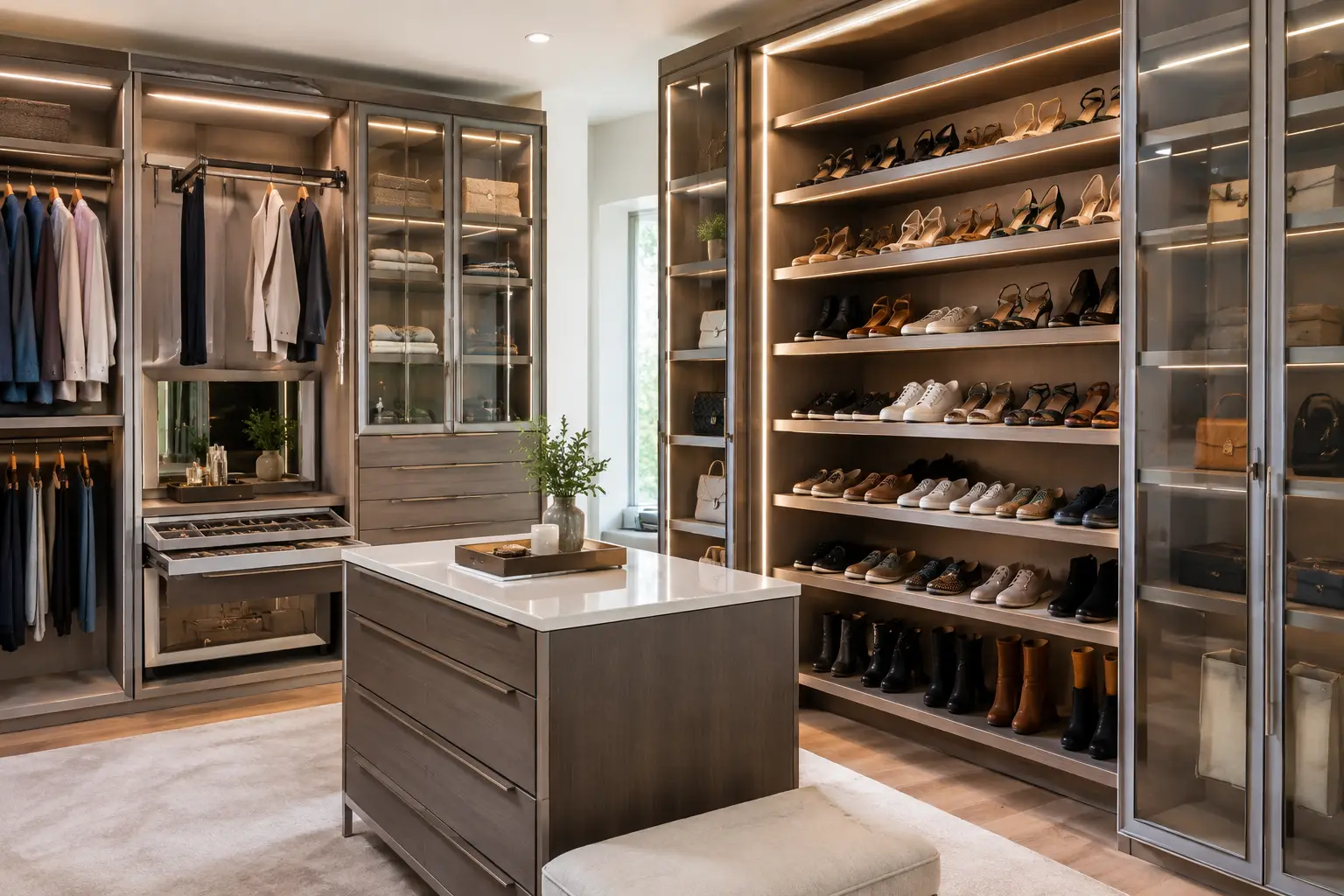
The shoes on your closet floor are rarely just a storage problem. They are a daily friction point: the missing mate when you are leaving the house, scuffed leather from stacked pairs, boots that never quite fit, and shelves that look crowded even after a cleanout. Custom closet shoe storage gives every pair a considered place, so getting dressed feels more composed from the moment you open the door.
For homeowners who have invested in quality footwear, a few standard shelves or plastic bins are seldom the best long-term answer. A well-designed closet treats shoes as part of your wardrobe, not an afterthought. It protects the pairs you wear, makes them easy to see, and creates a finished look that supports a calmer routine.
Why Custom Closet Shoe Storage Changes the Whole Closet
A shoe collection has more variety than most people realize. Sneakers need different clearance than pumps. Tall boots need a different solution than loafers. Seasonal sandals should remain accessible without taking the prime space reserved for the shoes you wear every week.
Off-the-shelf organizers tend to impose one shelf height across the entire collection. That creates wasted vertical space for flats and not enough room for heels or ankle boots. It also encourages overstacking, which can bend materials, crush delicate straps, and leave your closet looking less intentional than the rest of your home.
Custom closet shoe storage begins with the collection you actually own and the way you move through your mornings. Instead of asking you to adapt to a pre-made organizer, the storage is designed around your habits. The result is functional, but it also makes the closet feel more like a dressing space than a holding area for belongings.
Start With How You Wear Your Shoes
The best layout is not necessarily the one with the highest pair count. It is the one that keeps your most-used shoes within easy reach and gives less-frequent pairs a logical home.
Begin by considering the rhythm of your week. If you rotate between work shoes, casual sneakers, and evening footwear, those categories should be visible and accessible at about eye level or just below. Shoes used for special occasions can be placed higher, while seasonal boots may be stored in a dedicated section that does not interrupt everyday access.
It also helps to take an honest inventory before designing. A closet with twenty pairs of low-profile shoes needs a different configuration from one with a growing sneaker collection, several boot styles, or designer heels. Planning for the collection you expect to have over the next few years, rather than only what fits today, can prevent an otherwise beautiful system from becoming crowded too quickly.
Give Every Shoe Type the Right Clearance
Adjustable shelving offers flexibility, but fixed shelf heights can create a cleaner, more tailored appearance when your collection is consistent. Low shelves are efficient for flats, loafers, and many sneakers. Slightly taller openings suit heels, while boots often require a dedicated vertical bay.
Slanted shoe shelves are appealing because they put each pair on display and make selection quick. They work especially well for heels and shoes you enjoy seeing as part of the closet design. Flat shelves, however, can be the more practical choice for sneakers, structured handbags placed nearby, or collections that need more depth and stability.
For tall boots, avoid folding shafts into cramped cubbies when possible. A vertical boot section preserves their shape and prevents creasing. If space is limited, a combination of boot storage for favorite pairs and seasonal storage for the rest may be the most sensible balance.
Design for Visibility, Not Just Capacity
When shoes disappear behind clutter, people stop wearing them. Visibility is one of the strongest arguments for custom storage, especially for a collection built over years. Open shelves make it easy to scan options quickly, while thoughtful lighting can help distinguish colors and finishes during early mornings or evening preparations.
That does not mean every pair needs to be on full display. Closed drawers or cabinet sections are useful for athletic shoes, travel footwear, or pairs that create visual noise. A mix of open shelving and concealed storage keeps the closet feeling refined while still offering a home for every category.
Consider the view when the closet doors open. Matching shelf widths, consistent spacing, and carefully selected finishes give footwear an organized presentation without making the room feel overly formal. This is where design choices matter as much as storage capacity. A closet should support your life, but it should also feel good to enter.
Make Room for the Details That Keep Shoes Looking Their Best
A shoe storage plan should account for more than shelves. Small design decisions can protect footwear and reduce visual clutter over time.
A bench or small seating area can make putting on shoes more comfortable, particularly in a walk-in closet. Pull-out trays can offer easy access to shoes stored lower down, without requiring you to crouch and search. Integrated drawers can hold shoe-care supplies, spare laces, insoles, and polishing cloths so they do not migrate to other parts of the home.
Ventilation is also worth considering. Shoes need time to air out, especially athletic footwear. Open-backed shelving or breathable storage zones can be preferable to tightly packed boxes for pairs in regular rotation. For delicate or collectible footwear, clear-front containers may offer protection while keeping the contents visible.
The trade-off is simple: more display shelving creates a lighter, boutique-inspired look, while more enclosed storage creates a calmer visual field and offers greater protection from dust. A skilled designer can blend both approaches instead of forcing one solution throughout the entire closet.
Plan the Closet Around Movement
A beautiful shoe wall is only useful if you can stand in front of it comfortably. In a walk-in closet, aisle width, door swings, drawer clearance, and the placement of hanging clothes all influence how the shoe area works day to day.
Shoes are often placed at the bottom of closet walls because they use lower space efficiently. That can be an excellent choice, but lower shelving should not become a hidden strip behind long garments. A dedicated shoe wall, a short-hang section above shoes, or a bench-adjacent display can provide much better access.
In reach-in closets, the design may need to work harder. Pull-out shelves, carefully sized cubbies, and vertical use of the back wall can make a modest footprint feel far more capable. The goal is not to make a small closet imitate a large walk-in. It is to use every available inch with purpose and avoid the frustration of deep, dark storage where shoes get lost.
Avoid These Common Shoe Storage Mistakes
The most frequent mistake is designing only for a neat, edited collection and leaving no room for real life. New running shoes, a winter boot purchase, or a growing teen’s changing sizes can quickly strain a layout with no flexibility.
Another is making every compartment identical. Uniform cubbies can look orderly, but they may waste significant space and force taller shoes into awkward positions. Finally, avoid placing every shoe at floor level simply because it seems convenient. That approach can make even a spacious closet feel bottom-heavy and can turn valuable wall space into an underused zone.
A better design gives priority to daily pairs, reserves room for the collection to evolve, and uses proportions that suit individual shoe categories. It feels effortless because the planning behind it is precise.
From Closet Frustration to a Designed Solution
A custom project is most successful when it begins with a conversation, not a catalog. Your designer should understand how many people use the closet, which items create the most frustration, what you want visible, and how the finished space should feel. A 3D design presentation is particularly valuable because it lets you assess shelf placement, finishes, circulation, and capacity before installation begins.
At Orga Spaces, that tailored planning turns shoe storage into one cohesive part of a professionally designed walk-in closet. The goal is not simply to contain more. It is to create room for you to breathe, move through your routine with less effort, and enjoy the home you have invested in.
The right shoe storage should make the next morning easier before the day has even started. When each pair has a place that suits how you live, putting your closet back in order becomes less of a task and more of a quiet daily reset.