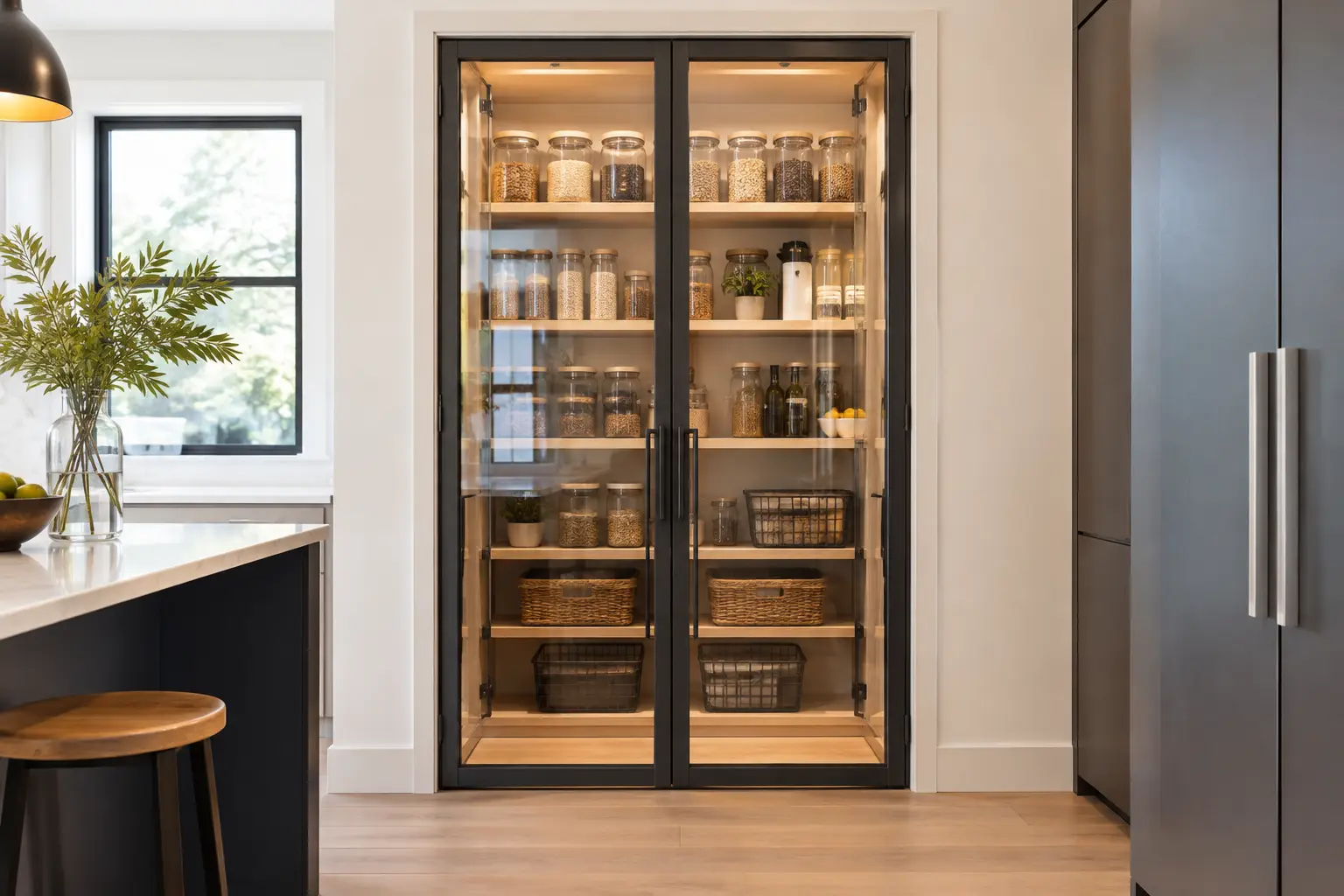
A pantry door is one of those small design decisions that can change how a kitchen feels every day. The right pantry glass door design turns a purely practical storage zone into an intentional feature, bringing light, depth, and a sense of order to the room. The wrong one can put every snack box and bulk purchase on display. The goal is not simply to add glass. It is to choose a door, finish, and storage plan that support the way your household actually lives.
Start With What You Want the Door to Do
Glass pantry doors work best when they solve a specific problem. In a darker kitchen, clear or lightly obscured glass can borrow natural light and make the pantry feel less enclosed. In an open-concept home, the door can create a visual connection between the kitchen and an adjacent hallway or dining area. For homeowners who value an edited, elevated look, it can also make a well-organized pantry feel like part of the overall kitchen design rather than an afterthought.
Visibility is the central trade-off. A clear glass door offers the brightest, most open effect, but it requires a pantry that stays consistently tidy. Frosted, reeded, seeded, or smoked glass softens the view while preserving light. These options are often the more forgiving choice for busy families, especially when the pantry stores a mix of everyday groceries, small appliances, and oversized serving pieces.
Before selecting a style, stand where guests and family members will most often see the door. Consider the sightline from the island, breakfast table, and main entry into the kitchen. A pantry door may be a focal point or a background element. That distinction should guide every decision that follows.
Choose the Right Glass for Daily Life
Not all glass creates the same experience. Clear glass is timeless and works beautifully with uniform containers, labeled bins, and orderly shelving. It is particularly effective in a walk-in pantry where there is enough depth to create a composed visual scene rather than a close-up view of crowded shelves.
Frosted glass provides privacy with a clean, contemporary finish. It lets daylight through but disguises packaging, which makes it a smart choice for a hardworking family pantry. A light frost feels crisp and minimal; a heavier frost offers greater concealment but can reduce the airy effect that attracts many homeowners to glass in the first place.
Reeded or fluted glass has become a favorite for kitchens that need texture without visual noise. The vertical lines blur pantry contents and add a tailored architectural detail. It pairs especially well with warm wood cabinetry, soft neutral paint, and dark metal hardware. Seeded glass brings a more traditional character and can feel at home in transitional or cottage-inspired interiors.
Smoked or bronze-tinted glass creates depth and a more dramatic mood. It is best used thoughtfully. In a kitchen with limited daylight or dark cabinetry, overly dark glass can make the pantry feel heavy. In a bright space with warm brass, oak, or walnut accents, it can look quietly sophisticated.
Safety matters as much as appearance. Tempered glass is a sensible standard for a frequently used pantry door because it is designed for greater impact resistance than ordinary glass. A professional designer or installer can also help you confirm that the selected door construction is appropriate for the opening, swing, and hardware.
Pantry Glass Door Design Should Match the Kitchen
The door should feel connected to the room, not like a decorative object added at the end of a renovation. Start by repeating one or two established elements: cabinet color, hardware finish, wood tone, or the profile of nearby interior doors.
A black-framed glass door delivers a crisp, modern contrast against white or pale cabinetry. It works especially well when the kitchen already includes black lighting, window frames, or faucet details. For a softer approach, paint the pantry door to match the cabinetry and allow the glass texture to provide the distinction. This creates a layered look without introducing another strong color.
Warm wood doors with glass inserts bring character to kitchens that lean organic, transitional, or European-inspired. The key is matching undertones. A cool gray oak door beside warm maple cabinetry can look disconnected, even when both materials are beautiful on their own.
The scale of the glass panel matters, too. A single large pane reads cleaner and more contemporary, while divided lites feel more classic and architectural. If your kitchen has simple slab-front cabinets, a divided-lite door can add welcome detail. If the room already has decorative tile, veined stone, and statement lighting, a simpler glass panel may create better balance.
Framed, French, or Sliding?
A hinged single door is the most familiar option and typically suits standard pantry openings. It can swing into the pantry or kitchen depending on clearance, though the direction should never interfere with appliance doors, traffic paths, or open drawers.
French doors create a gracious, symmetrical look for a larger walk-in pantry. They make a strong statement but require enough room for two door swings. They are best reserved for layouts where the pantry deserves visual prominence and circulation is generous.
A sliding barn-style door can save swing space, but it does not seal as tightly as a hinged door. That may not matter for a dry-goods pantry, yet it can matter if noise control, odor containment, or a fully concealed interior is a priority. Pocket doors save space without exposed track hardware, although they need wall cavity room and early planning.
Treat Organization as Part of the Design
A glass door makes the interior plan more visible, so pantry storage deserves the same design attention as the door itself. This does not mean every shelf must look staged. It means creating repeatable homes for the items your household reaches for most.
Use a combination of adjustable shelving, pull-out drawers, and dedicated zones so the pantry can adapt as routines change. Deep shelves are useful for small appliances and bulk paper goods, but shallow shelves or pull-outs are usually better for cans, spices, snacks, and baking supplies. When items are easy to see and reach, less gets lost behind larger packages.
If you choose clear glass, consistent containers can calm the visual field. Decant only what makes sense. Flour, rice, cereal, and pasta are good candidates; individually wrapped snacks and irregular grocery items can stay in attractive, labeled bins. The aim is efficient maintenance, not creating another household chore.
Lighting can elevate the result. Warm LED strips beneath shelves or along vertical sides help you find what you need and give the pantry a finished, custom feel after dark. Avoid overly cool lighting, which can make food packaging and wood finishes look stark. A sensor or door-activated switch keeps the experience effortless.
Details That Keep the Door Looking Refined
Glass shows fingerprints, especially at eye level and around the handle. Select a hardware style that is comfortable to grasp and gives family members a clear place to pull. Handles are often more practical than small knobs on a heavier glass door. Matte finishes can also be more forgiving than polished metal, depending on use.
For privacy, consider a simple shade only if the room genuinely needs it. Interior shades can add softness, but they also introduce another surface to clean and another element to coordinate. In many homes, textured glass is the more enduring answer.
Finally, think beyond the first reveal. A beautiful pantry glass door should still work when the family brings home warehouse-store purchases, hosts a holiday meal, or changes routines. Flexible storage, durable materials, and a finish that suits the rest of the home will outlast a trend-driven choice.
A well-planned pantry is not about displaying perfection. It is about creating room for you to breathe when daily life gets full. When the door, interior layout, and kitchen style are considered together, this small threshold can make the entire room feel calmer, brighter, and more intentionally yours. For a custom storage plan that brings that level of clarity to your home, Orga Spaces can help turn the vision into a professionally designed and installed space.