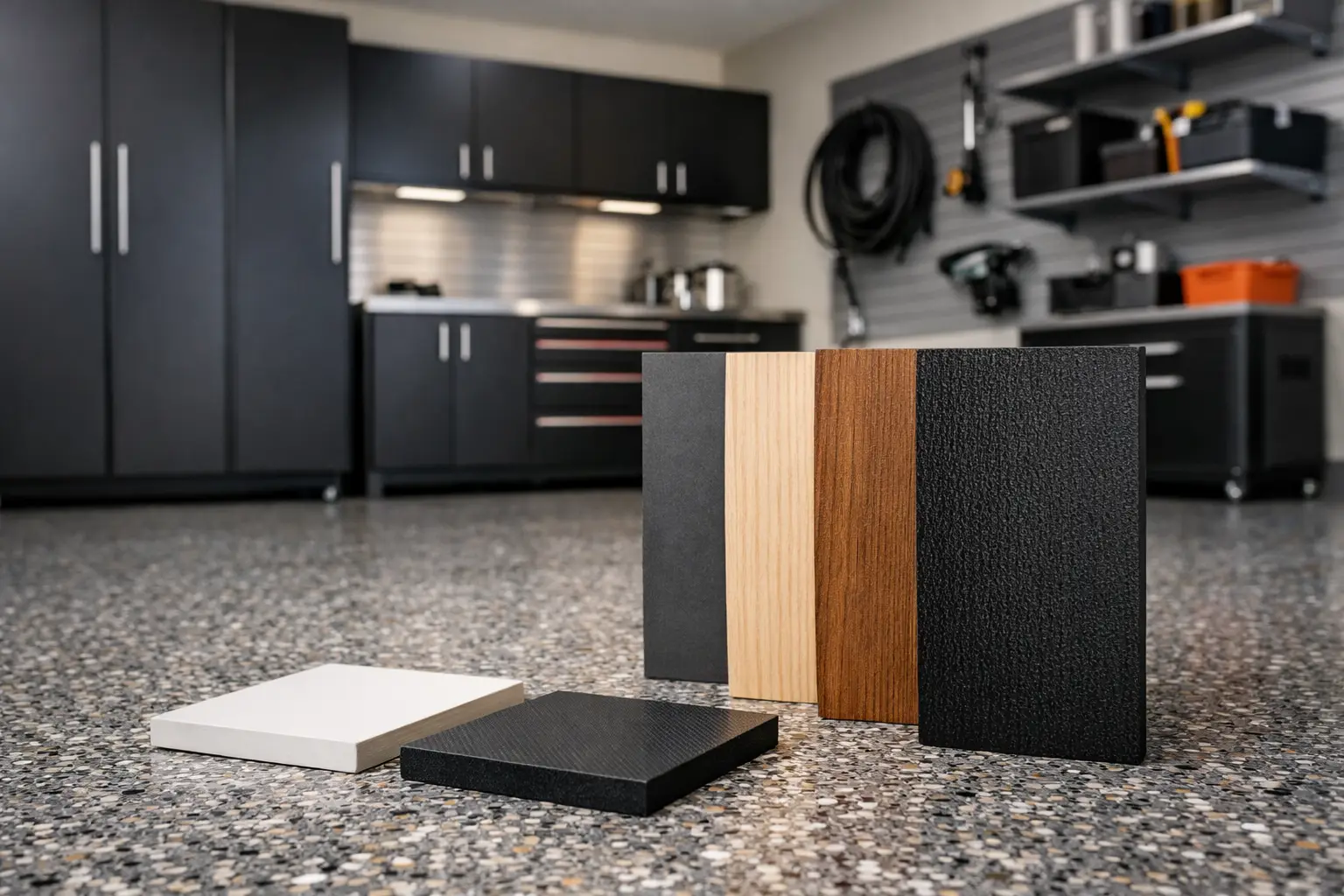
A garage cabinet can look impressive on day one and still become the wrong choice a year later. Warped panels, rust spots, sagging shelves, and chipped finishes usually come down to one decision made too early – the material. If you are weighing the best garage cabinet materials, the real question is not just what looks good in a showroom. It is what will still perform well after heat, dust, tools, seasonal humidity, and daily use all have their say.
For most homeowners, the garage is no longer a forgotten storage zone. It is part workshop, part entry point, part utility room, and often the space that absorbs everything the rest of the house cannot. That means cabinet material matters just as much as layout. Strength, maintenance, finish quality, and long-term appearance all shape whether your garage feels calm and intentional or just better hidden.
What makes the best garage cabinet materials?
The best garage cabinet materials balance four things: durability, resistance to moisture and temperature swings, visual finish, and how well they support the way you actually use the space. A family storing sports gear and cleaning supplies has different needs than a homeowner keeping heavy tools, automotive products, and seasonal bins.
This is why there is no single universal winner. Some materials are affordable but less refined. Others look elevated but need the right environment. The strongest options often come with a higher upfront cost, but they tend to reward that investment with a cleaner look, fewer maintenance issues, and a longer service life.
Steel garage cabinets
Steel is often the benchmark in conversations about premium garage storage, and for good reason. It is strong, stable, and especially well suited to a space where weight, impact, and frequent use are part of everyday life. Properly built steel cabinets can handle heavy loads without shelves bowing or doors going out of alignment.
They also bring a cleaner architectural look than many homeowners expect. Today’s powder-coated finishes feel polished rather than industrial, which makes steel a natural fit for garages that are being designed as a full extension of the home rather than a purely utilitarian room.
That said, not all steel cabinets are equal. Thin-gauge metal can feel flimsy, dent easily, and disappoint quickly. Quality construction matters. Welded or well-engineered systems generally perform far better than lower-end units with loose connections and lightweight panels.
Moisture resistance is another strength, but only when the finish is done properly. Powder-coated steel holds up well in garage conditions and is easy to wipe down. If the coating is poor or becomes damaged, exposed metal can eventually become vulnerable to rust. In a professionally designed system, this is far less of a concern.
For homeowners who want long-term performance and a refined finish, steel is often one of the best garage cabinet materials available.
MDF and laminate cabinets
MDF, often finished with a laminate or thermofoil surface, is common in storage systems because it offers a smooth, consistent look at a more accessible price point than metal or hardwood. It can be visually appealing, especially when the goal is a clean built-in appearance.
In the right setting, MDF can work well. It machines cleanly, allows for sleek door fronts, and can suit garages that are more lifestyle-oriented than workshop-heavy. If you are mostly storing household overflow, holiday decor, or lighter everyday items, it may meet your needs.
The trade-off is moisture. MDF does not respond well to water exposure. If it gets wet or sits in a damp environment, swelling and edge damage can follow. Even in garages that seem dry, tracked-in rain, humidity shifts, or a nearby water source can create risk over time.
Laminate finishes can help protect the surface, but the core material remains the weak point. This is why MDF is usually better for controlled interior spaces than hard-working garages. It can still have a place, but it depends heavily on the environment and how demanding the storage needs are.
Plywood cabinets
Plywood sits in an interesting middle ground. It is generally stronger and more moisture-resistant than MDF, while still offering a warmer, more furniture-like quality than steel. High-grade plywood cabinets can be durable, attractive, and a strong option for custom projects.
Because plywood is made in layers, it tends to hold screws and hardware better than particle board or MDF. That makes it a more reliable choice for cabinet boxes and shelving where structural integrity matters. It also handles moderate garage conditions better, especially when properly sealed or finished.
Still, plywood is not immune to wear. Lower-grade plywood can delaminate, show voids, or feel rough in execution. And while it can tolerate more than MDF, it is still a wood-based material. In garages with significant humidity, water exposure, or harsher use, it may not deliver the same longevity as steel.
Aesthetically, plywood appeals to homeowners who want the garage to feel more designed and less commercial. When paired with a thoughtful layout, it can produce a warm, tailored result. The key is making sure the finish quality and construction are high enough to justify the investment.
Particle board and low-cost composite cabinets
If budget is the top priority, particle board or low-cost composite cabinets often enter the conversation. They are widely available and can look acceptable at first glance, especially online or in a retail display. The issue is that garages tend to expose their weaknesses quickly.
Heavy loads can cause shelves to sag. Moisture can break down edges and fastener points. Repeated use often shows up in hinges loosening, surfaces chipping, and cabinets losing their crisp appearance faster than expected.
For a temporary or very light-duty solution, these materials may serve a purpose. But for homeowners investing in a more intentional garage transformation, they are rarely the material that supports the result they want. The lower upfront price can become less appealing once replacement or repairs enter the picture.
Stainless steel and specialty metal options
Stainless steel is sometimes considered a premium upgrade beyond standard powder-coated steel. It offers excellent resistance to corrosion and a sleek, modern appearance. In the right home, it can look striking.
But it is not automatically the best fit for every garage. Stainless steel is typically more expensive, can show fingerprints and smudges more easily, and may deliver a more commercial aesthetic than some homeowners want. For many residential applications, high-quality powder-coated steel provides the better balance of durability, finish, and value.
Specialty aluminum options can also appear in the market. These are lightweight and resistant to corrosion, but they do not usually offer the same strength or substantial feel as a well-built steel system.
How to choose the right material for your garage
The best decision starts with how your garage needs to function. If the space stores heavy tools, automotive supplies, sporting equipment, and bulk household items, strength should lead the conversation. If the garage is more of a clean drop zone with lighter storage demands, appearance and finish may carry more weight.
Climate and exposure matter too. Even in relatively stable environments, garages face more temperature variation and wear than interior rooms. If your space is exposed to moisture from vehicles, weather, or routine wash-downs, wood-based materials become a more cautious choice.
Then there is the design question. A garage that has been thoughtfully renovated deserves cabinetry that supports the overall finish of the space. Material choice affects not only performance but also whether the room feels elevated, cohesive, and easy to maintain.
Our view on the best garage cabinet materials
For most premium garage projects, steel stands out as the strongest all-around choice. It offers the durability homeowners need, the long-term stability lighter materials often lack, and the refined finish that suits a fully designed garage environment. That does not mean wood-based options never make sense, but they are usually more dependent on controlled conditions and lighter use.
A well-designed cabinet system should do more than hide clutter. It should reclaim floor space, support daily routines, and create room for you to breathe when you step into the garage. Material is what determines whether that feeling lasts.
If you are planning a custom garage upgrade and want guidance that balances performance with design, Orga Spaces can help you evaluate the right cabinet solution for how you live. Learn more at https://orgaspaces.com.
The right material is rarely the cheapest one or the trendiest one. It is the one that keeps your garage working beautifully long after installation day.