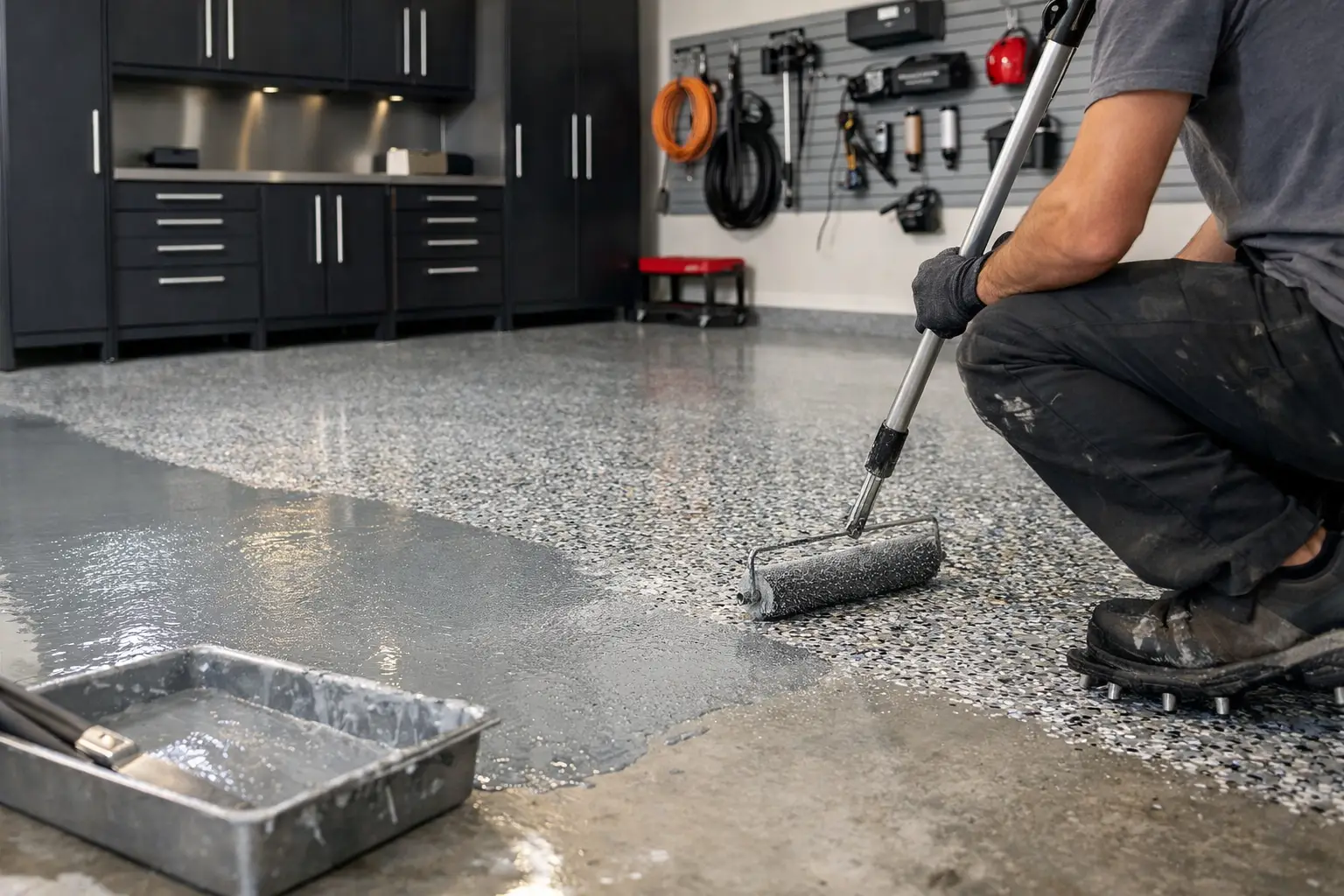
A garage floor usually tells the truth about how a space is being used. If the concrete is dusty, stained, chipped, or permanently marked by hot tires and spills, the whole garage can feel harder to maintain – even when everything else is organized. This garage floor coating installation guide is designed to help homeowners understand what goes into a floor that looks polished, performs well, and stays that way.
For many homes, the garage is doing far more than storing vehicles. It may be the entry point for daily routines, a workshop, a home gym, or the place where seasonal storage lives. That is why floor coating is not just a cosmetic upgrade. It changes how the space feels underfoot, how easy it is to clean, and how confidently you can use the room every day.
What a garage floor coating should actually do
A good coating system does more than add colour and shine. It should bond tightly to the concrete, resist chemicals, handle temperature shifts, and reduce the visual wear that plain concrete shows over time. It should also make maintenance simpler. Dusty concrete has a way of spreading grime everywhere, while a properly coated floor creates a cleaner, more finished surface.
This is where many homeowners run into confusion. Not all garage floor systems perform the same way, and not all installations are equal. A floor can look great on day one and still fail early if the prep was rushed or the product choice was wrong for the conditions.
Garage floor coating installation guide: start with the substrate
The floor itself matters more than the colour chart. Concrete may look solid from the surface, but coating success depends on what is happening underneath. Moisture, previous sealers, oil contamination, surface weakness, and cracks all affect adhesion.
That is why the first real step in any garage floor coating installation guide should be assessment, not product selection. A professional installer will inspect for spalling, pitting, hairline cracks, and low spots. They will also look at whether the slab has been painted before or treated with anything that could interfere with bonding.
If the concrete is in poor condition, a coating can still be possible, but the repair process becomes part of the job. Skipping that step usually leads to peeling, bubbling, or uneven texture later.
Why surface preparation matters so much
Surface preparation is where quality is won or lost. Coatings need a mechanically prepared surface to grip properly. In premium installations, that usually means diamond grinding rather than simple acid etching.
Diamond grinding removes weak material at the top of the slab and opens the concrete pores so the coating can bond. It also creates a cleaner, more consistent profile across the floor. Acid etching is often marketed as the easier route, but it is less precise and far less dependable for long-term performance.
This is one of those trade-offs that matters. Faster and cheaper prep may lower the upfront price, but it raises the risk of coating failure. For homeowners investing in a garage transformation, that short-term saving rarely feels worth it.
Choosing the right coating system
When people compare floor coatings, they often default to epoxy because it is the most familiar term. But familiar does not always mean best. In a residential garage, especially one expected to look refined and hold up for years, epoxy has limitations. It can yellow with UV exposure, take longer to cure, and may become brittle over time.
A polyaspartic system with a polyurea base is typically a stronger choice for performance and appearance. It cures quickly, resists chemicals well, stands up to wear, and remains UV-stable so the finish is less likely to yellow. It is also well suited to one-day installation, which is a major advantage when the garage is part of the household’s daily flow.
For homeowners who want a finish that feels elevated rather than purely utilitarian, full flake coverage is worth considering. It creates visual depth, helps disguise dust and minor debris, and adds slip resistance when paired with the right top coat.
The basic installation sequence
A professional installation usually follows a clear sequence. First comes diamond grinding and detailed crack repair. Then a polyurea primer or base coat is applied to promote strong adhesion. After that, vinyl flake is broadcast across the full surface for texture and coverage. The final step is a polyaspartic top coat that seals the system and provides durability, stain resistance, and long-term protection.
Each layer has a purpose. If one is rushed or omitted, the floor may still look finished at first glance, but it will not perform the same way over time.
Timing, curing, and what to expect during installation
One of the most common homeowner questions is how long the garage will be out of use. The answer depends on the system. Traditional epoxy projects can stretch over several days, especially with cure time between coats. Faster-curing systems can often be completed in a single day, which makes the disruption much easier to manage.
That said, completion day is not always the same as full use day. Homeowners should still follow installer guidance on when to walk on the floor, when to move items back in, and when to park a vehicle on the surface. Respecting cure times helps protect the finish while it reaches full strength.
A well-run project should also include expectations around dust control, odour, access to the space, and how adjacent areas will be protected. In a finished home, professionalism is not just about the floor result. It is also about how carefully the work is carried out.
Design choices that affect the final result
Colour selection is not a minor detail. In a garage, the floor sets the tone for the entire space. A flake blend that is too light may show dirt more quickly, while one that is too dark can make the room feel heavier than intended. Mid-tone blends often strike the best balance for everyday use, especially in garages that are doubling as storage, fitness, or hobby spaces.
This is also where design and function should work together. The right floor should complement cabinetry, wall storage, and the rest of the garage environment. A coating does not need to be flashy to feel premium. Often, the most successful results are the ones that look clean, intentional, and easy to live with.
Common mistakes homeowners should avoid
The biggest mistake is assuming all coatings are basically the same. They are not. Product quality, prep methods, and installer experience all shape the outcome.
Another common issue is focusing only on the coating itself and ignoring the broader use of the garage. If the space is about to become more organized, more design-forward, or more heavily used, the floor should be chosen as part of that bigger plan. A beautiful storage system on top of a failing floor never feels complete.
DIY kits are another tempting route, but they often promise simplicity that the actual process does not deliver. Homeowners may save initially, yet uneven prep, moisture issues, and inconsistent application can quickly turn the project into a do-over. For a space you use every day, reliability matters.
Garage floor coating installation guide for long-term value
The best garage floors are not the ones that only photograph well after installation. They are the ones that still look clean and feel easy a year later, after bikes, bins, vehicles, sports gear, and weekend projects have all had their turn. That durability starts with proper prep, continues with the right coating chemistry, and is protected by careful installation.
For homeowners in the Dallas-Fort Worth area planning a more complete garage transformation, it often makes sense to coordinate the floor with cabinetry and storage from the start. That creates a more cohesive result and removes the stop-and-start hassle of separate projects. Orga Spaces uses a professional process that includes concrete preparation, crack repair, full flake coverage, and a polyaspartic top coat designed for a cleaner, longer-lasting finish.
A garage floor should do more than cover concrete. It should support the way you want the space to function, look, and feel every time you come home. When the foundation of the room is done well, everything else around it works harder and looks better too.