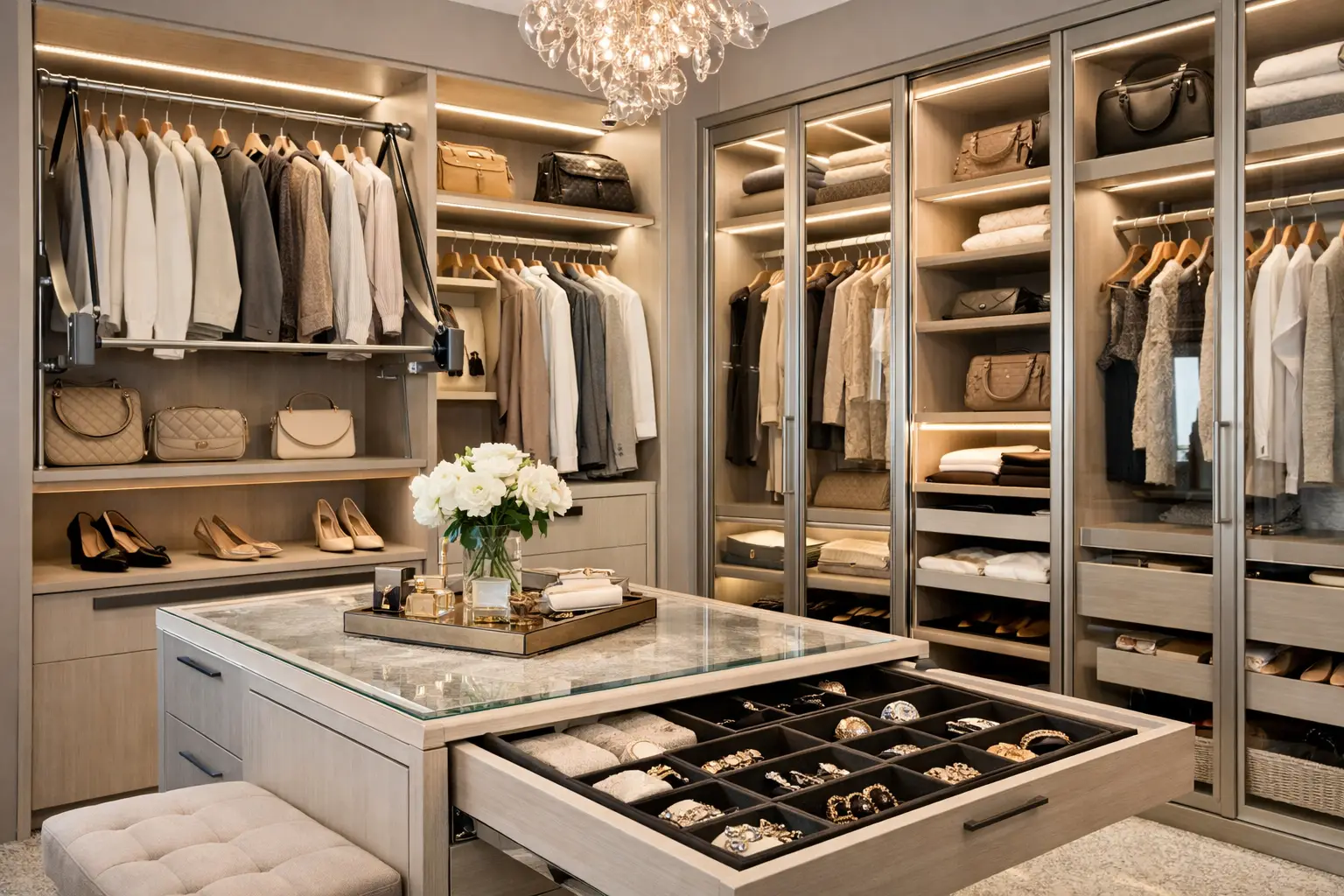
A walk-in closet usually starts as a promise. More space, more order, less stress in the morning. But for many homeowners, it slowly becomes a larger version of the same problem – shelves that do not fit what they own, wasted corners, piles on the floor, and a layout that looks generous on paper but feels awkward every day. That is why Dallas walk in closets are not really about square footage alone. They are about how well the space supports your routine.
When a closet is planned properly, it does more than hold clothing. It shortens the morning scramble, protects the pieces you have invested in, and makes the room feel calm instead of crowded. A well-designed closet can create room for you to breathe, even on the busiest weekday.
What makes Dallas walk in closets feel custom
The difference between a basic closet system and a truly custom one is not only appearance. It is the way the layout responds to real habits. Two people can have closets with the same dimensions and need completely different solutions. One homeowner may need long hanging space for dresses and coats, while another needs more double hanging for workwear, shelves for handbags, and drawers for accessories that would otherwise disappear into bins.
That is where custom planning matters. A refined closet begins with inventory, not guesswork. How many shoes need visible storage? How much folded clothing do you actually keep? Do you prefer open shelving because you like to see everything, or do you want more drawers to keep the visual field quieter? These choices shape whether a closet feels effortless or frustrating.
The best spaces also account for movement. If an island looks beautiful but interrupts the path between storage zones, it may not belong there. If shelving reaches too high to use comfortably, it becomes decorative dead space. A premium closet should feel polished, but it also has to perform at 7 a.m. when no one has patience for a pretty inconvenience.
Why off-the-shelf systems often fall short
There is a reason many homeowners replace builder-grade shelving or modular kits after living with them for a while. Standardized solutions are made to fit broadly, not precisely. They can improve a closet, but they rarely solve the whole problem.
The most common issue is wasted vertical space. Another is a mismatch between the storage style and the wardrobe itself. A person with tailored clothing, seasonal items, and a growing shoe collection has different needs from someone storing mostly casual wear. Generic systems tend to flatten those differences.
There is also the design question. In a home where finishes, millwork, and furnishings have been carefully chosen, a closet should not feel like an afterthought. It is part of the home experience. If the materials, proportions, and layout feel cheap or temporary, the room can undermine the sense of quality found elsewhere in the house.
That said, custom is not about overbuilding. More drawers are not automatically better. More shelving is not always more useful. Good design requires restraint. The right plan gives every category a place without crowding the room or forcing storage where it is not needed.
The layout choices that matter most
Hanging space versus shelving
This is often the first trade-off. Long hanging is essential for certain wardrobes, but too much of it can consume valuable square footage. Double hanging is far more efficient for shirts, jackets, and trousers, yet it is not ideal for every garment. A balanced design usually includes a mix, calibrated to what the homeowner actually wears.
Drawers versus open storage
Drawers create a more tailored, quieter look. They are ideal for smaller items, undergarments, jewellery, and anything you would rather keep out of sight. Open shelves make items easier to spot quickly, which some people love and others find visually stressful. It depends on how you like to live and how disciplined you are about keeping categories neat.
Shoe storage
Shoes often reveal whether a closet was planned carefully. Fixed shelves may waste height on flats or crush taller footwear. Adjustable shelving gives more flexibility, especially as collections change over time. If visibility matters, angled shoe shelves can elevate the experience. If capacity matters most, straight shelving may be more efficient.
Lighting and finish choices
A closet can have an excellent storage plan and still feel disappointing if the lighting is poor. Soft, even illumination improves visibility and makes colours easier to read. Finishes matter too. Lighter materials can make the room feel more open, while darker finishes create mood and drama but may require stronger lighting and more disciplined upkeep.
Dallas walk in closets and the reality of daily life
A great closet should reflect the people using it, not an idealized version of them. Families with children may need overflow flexibility for laundry baskets, extra linens, or seasonal hand-me-downs. Professionals may want space for workwear, accessories, and travel essentials that need to be easy to grab. Couples often need shared spaces that feel balanced, even when storage needs are not equal.
This is where thoughtful design earns its value. Instead of forcing everything into a standard formula, the closet can be divided into zones that make daily life easier. One side may prioritize hanging and drawers, while the other uses more shelving and display storage. One section may support everyday dressing, while another handles luggage, keepsakes, or out-of-season items.
The point is not perfection. The point is reducing friction. When every category has a logical home, maintaining order takes less effort. That is what helps a closet stay beautiful after installation day.
Why the design process matters as much as the materials
Homeowners often focus first on finishes, hardware, and features. Those details matter, but the process behind the project matters just as much. A closet transformation should not feel like a gamble.
A strong process starts with consultation. That means understanding the room, the wardrobe, and the frustrations that need solving. From there, a 3D design can be especially valuable because it lets homeowners see how the space will function before anything is built. That visibility helps avoid common regrets, like not enough drawer storage, awkward clearances, or a centre island that overwhelms the room.
Professional installation matters for another reason: fit and finish. A custom closet should feel integrated into the home, not simply placed inside it. Clean lines, accurate measurements, aligned components, and careful workmanship are what create that refined final result.
For homeowners investing in premium interiors, this level of planning removes guesswork. It turns the project from a product purchase into a considered upgrade.
When a walk-in closet is worth the investment
Not every closet needs a full redesign. If the current system works reasonably well and the issue is mostly editing what you own, a simpler reset may be enough. But if the space consistently creates bottlenecks, hides items, wastes square footage, or feels visually chaotic, a custom solution can deliver value every single day.
That value is practical, but it is also emotional. A well-composed closet can make the start and end of the day feel calmer. It supports better habits without demanding constant effort. It also adds a layer of intention to the home, which many homeowners are looking for when they invest in spaces that support how they actually live.
In the Dallas-Fort Worth area, where homes often have the square footage to do more with interior storage, the opportunity is not just to add shelves. It is to create a room that feels aligned with the rest of the home – polished, purposeful, and personal.
If you are considering a custom closet, the smartest first step is not choosing colours or counting drawers. It is asking how the space needs to work for you six months from now, not just how you want it to look next week. That is where a good design starts, and where lasting satisfaction usually follows.
For homeowners ready to rethink underused storage with a more tailored approach, Orga Spaces offers custom design and professional installation built around the way you live. Learn more at https://orgaspaces.com.
The best closet is not the one with the most features. It is the one that makes your home feel lighter, your routine simpler, and your space more fully your own.