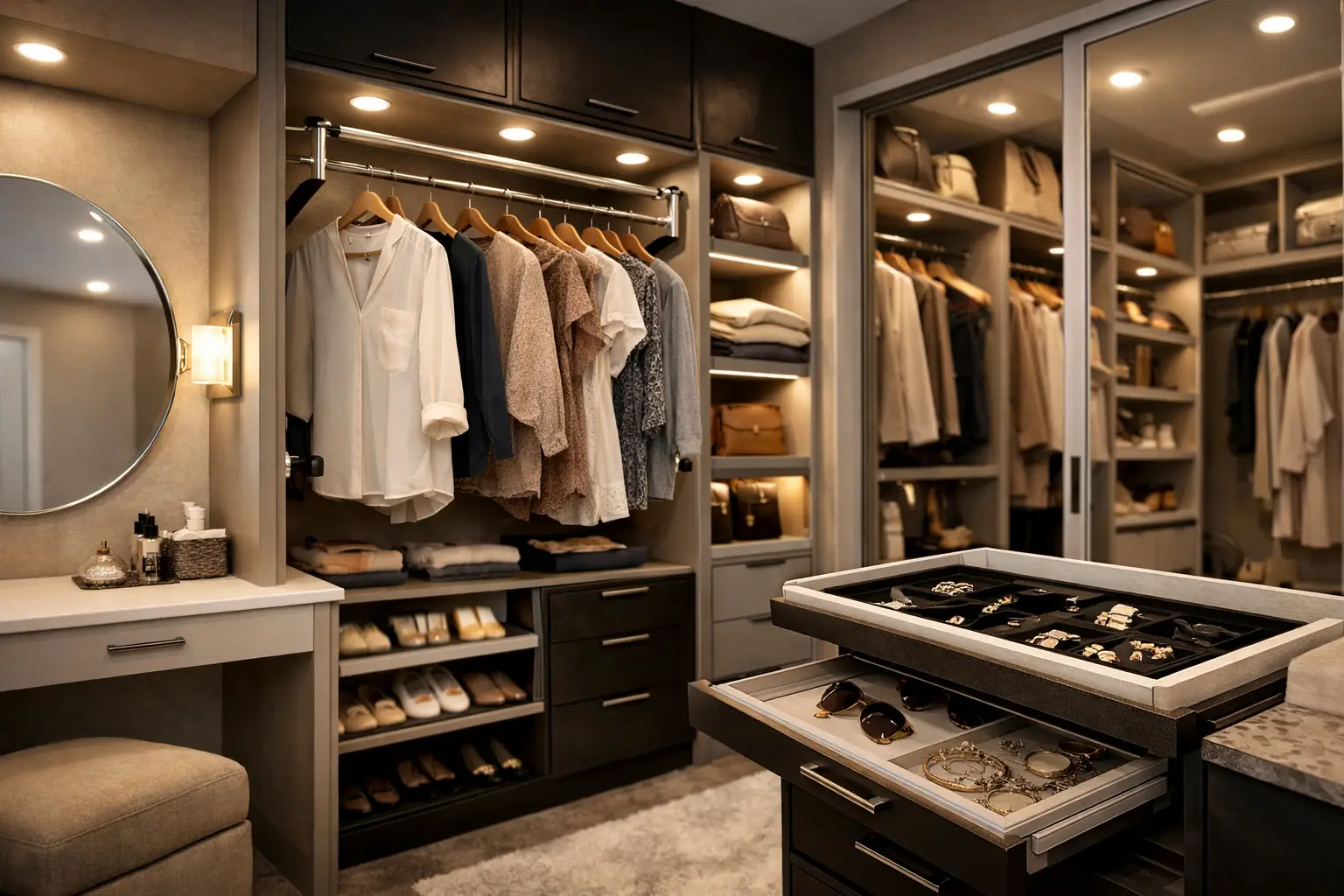
A beautifully planned closet can still feel frustrating at 6:30 a.m. if the navy blouse looks black, the shoe shelves disappear into shadow, or you need to hold your phone flashlight over a drawer. Walk in closet lighting is not a finishing touch. It is what makes every shelf, finish, and carefully organized category work as intended.
The best approach is layered and purposeful: bright enough for accurate colour selection, soft enough to feel welcoming, and placed so your body does not cast a shadow over the space you are trying to use. When lighting is considered alongside the closet layout, it turns a storage room into a calm, efficient part of your daily routine.
Start with the way you use the closet
Before selecting fixtures, consider when and how the room is used. A primary walk-in closet shared by two people may need independent controls and stronger general illumination. A boutique-style dressing room may benefit from accent lighting that highlights glass-front cabinetry, handbags, or a centre island. A compact closet needs fewer fixtures, but their placement matters even more.
Look at the areas that need clear visibility: hanging sections, deep drawers, shoe shelves, mirrors, and the route from the door through the room. Light should reach the contents of the closet, not simply brighten the ceiling. This distinction is where many standard closet lighting plans fall short.
Natural light can be welcome during the day, but it should not carry the design. Windows can create glare, fade fabrics over time, and leave the closet dim on cloudy mornings or after sunset. A reliable electrical lighting plan gives the space consistency in every season.
Build walk in closet lighting in layers
A polished closet typically needs three types of light working together. The goal is not to fill the room with fixtures. It is to give each light source a clear job.
Ambient light creates a comfortable foundation
Ambient lighting provides the overall illumination that lets you move confidently through the room. Recessed ceiling lights are a popular choice because they keep the ceiling clean and distribute light evenly. In larger closets, a decorative flush-mount or semi-flush fixture can introduce personality while recessed lights handle the practical work around the perimeter.
Placement is more important than fixture count. A ceiling light centred in the room may look balanced on a floor plan, yet it can leave hanging clothes in shadow. Positioning fixtures slightly in front of wardrobe runs helps light fall onto the clothing rather than behind it. For closets with an island, plan general lighting around it so the island does not become a dark obstacle in the middle of the room.
Task lighting helps you see what you own
Task lighting is directed toward the places where detail matters. Integrated LED strips beneath shelves, inside display cabinets, and above drawers make it easier to distinguish colours, find accessories, and use every inch of storage without rummaging.
Vertical LED lighting on the sides of a mirror is especially effective. Overhead-only mirror lighting can create unflattering shadows under the eyes and chin, while light at face level provides a more even reflection for dressing, skincare, or a final check before leaving.
Lighted hanging rods can be useful in deep or enclosed wardrobe sections, although they are best reserved for areas where standard shelf lighting cannot adequately reach. They add a tailored visual effect, but should support the main lighting plan rather than replace it.
Accent lighting adds depth, not clutter
Accent lighting brings the refined, custom feel that makes a closet enjoyable to enter. It may illuminate a glass display cabinet, wash light across a textured backing panel, or add a quiet glow beneath a floating shelf. Used with restraint, it gives the room depth and highlights the craftsmanship of the cabinetry.
This layer is optional in a simple reach-in or utility-focused closet. In a spacious walk-in, however, it can make the room feel intentional without becoming theatrical. The key is subtlety. If every shelf, toe kick, rod, and ceiling edge glows at once, the result can feel busy rather than elevated.
Choose the right brightness and colour temperature
Two lighting specifications have an outsized effect on how a closet feels: colour temperature and colour rendering.
For most walk-in closets, LEDs in the 2700K to 3000K range offer a warm, welcoming light that still feels clean and useful. A 2700K light is softer and more residential, which suits a closet connected to a bedroom with warm finishes. A 3000K light appears slightly crisper and can help white cabinetry, pale wood, and clothing colours read more clearly.
Cooler lighting above 4000K may feel bright, but it often gives a dressing space a clinical cast. It can be appropriate for highly modern interiors or detailed grooming zones, yet it is rarely the most relaxing choice for a room used at the beginning and end of the day.
Choose LEDs with a colour rendering index, or CRI, of 90 or above. High-CRI lighting is better at showing the true difference between charcoal and black, cream and white, or two similar shades of blue. For homeowners who coordinate outfits in the closet or store a significant wardrobe there, this is a practical investment rather than an unnecessary upgrade.
Brightness depends on the room size, ceiling height, finishes, and cabinetry depth. Dark wood, black shelving, and deep compartments absorb more light than a closet with white surfaces and open shelving. Dimmers are valuable because they let one lighting plan serve different moments: full brightness for packing and outfit selection, lower light for an early start or winding down in the evening.
Make controls feel effortless
The most sophisticated lighting is often the lighting you do not have to think about. Door-activated sensors can turn on general illumination as you enter the closet and switch it off after you leave. Motion sensors work well for interior cabinet lights and drawers, where they provide visibility exactly when needed.
For a larger walk-in, consider separate control zones. General ceiling lights, mirror lights, and accent lighting can each have their own switch or dimmer. This makes the closet more flexible and prevents you from turning on every light just to retrieve one item. If two people use the closet on different schedules, controls near multiple entrances or bedside-compatible smart controls may be worth considering.
Automation should match your habits. A sensor that turns lights off too quickly can become annoying while you are standing still in front of a mirror. An experienced design team can help determine which functions deserve automation and which are better handled with a simple, well-placed dimmer.
Plan lighting before cabinetry is installed
Integrated lighting looks best when it is planned before construction begins. Wiring, drivers, channels, switch locations, and outlets can be concealed within cabinetry or coordinated with the closet layout. Retrofitting is possible, but it may limit fixture placement or leave visible cords and components that distract from the finished design.
This is particularly relevant for illuminated shelves, glass-door displays, lighted rods, and vanity areas. The cabinet design needs to account for the physical space required for lighting hardware, access for maintenance, and heat management. LED fixtures run far cooler than older technologies, but quality components and proper installation still matter.
Electrical work should always meet local code and be completed by qualified professionals. Closets contain fabric, paper goods, and other stored materials, so fixture selection and clearance are not merely visual decisions. A professional installation protects the finish of your home as well as the reliability of the system.
Let the finish of the room guide the fixtures
Lighting should feel connected to the rest of the closet. Warm brass or bronze fixtures can add softness to natural wood cabinetry. Matte black details create definition in modern, high-contrast spaces. Low-profile white recessed trims often disappear into a painted ceiling, allowing the cabinetry and wardrobe to remain the focus.
Avoid choosing a statement ceiling fixture solely because it photographs well. In a closet with low ceilings, tall cabinetry, or limited circulation space, an oversized pendant can interfere with movement and sightlines. A decorative fixture earns its place when the room has the scale for it and when it complements, rather than competes with, functional illumination.
A custom closet should make the everyday easier: shoes visible at a glance, accessories within reach, and every outfit seen in its true colour. At Orga Spaces, lighting can be considered as part of the larger design conversation, so storage, finishes, and illumination support one another from the first 3D concept through installation. The result is more than a brighter closet. It is room for you to breathe before the day begins.